




The director of the leading MEP and sustainability consultancy on finding his calling at 15, a remarkable mentor’s golden advice, why The Colosseum in Rome stopped him in his tracks and what his real superpower is
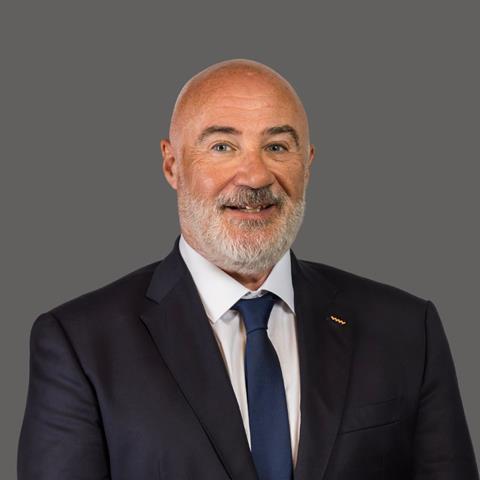
Why did you choose construction as a career?
I left school at 15 with no great plan and went along to an apprenticeship interview at Blyth and Blyth Consulting Engineers largely because I was curious about what a building services engineer actually was. I asked a lot of questions and, apparently, that got me the job.
My dad was in the police and my mum was a hairdresser, so there was no construction heritage in the family at all. I was also offered an apprenticeship in electronics at the same time but decided building services suited me far better – and I have never looked back.
What are you most proud of in your career to date?
Still being relevant, genuinely. I have been with Wallace Whittle for 20 years now and I worked out that I travel the equivalent of twice around the world every single year, which means I have literally clocked the distance to the moon and back in total.
Beyond the travel, it is the people. So much of what I have achieved comes down to the friends and colleagues I have built relationships with over the decades and who make the whole journey as enjoyable as possible. We have responsibility for hundreds of millions of pounds of clients’ money and there is a level of trust in that relationship which I take very seriously. Clients recognise that and I think it is a big part of why we continue to do well.
The projects themselves also leave something lasting. Buildings I have worked on over the years are now lived in, worked in and enjoyed by hundreds of thousands of people every day, and that sense of tangible legacy is something I find genuinely humbling. To still be relevant after all of it is probably what I am most proud of.
What has been the biggest challenge of your career?
The current climate is genuinely tough, and it has been a consistent pattern throughout my career that every headwind you can imagine ends up affecting construction in some way. Right now it is legislation – planning, economic uncertainty and geopolitics layered on top of each other, because real estate is an international market and investment flows from all over the world.
UK planning in particular does not help. Politicians talk about addressing things and then push decisions further down the road. Jobs get squeezed from both directions, financially and technically, with expectations that only keep rising.
If you could change one thing about the industry, what would it be?
Planning reform – specifically around speeding up the process. If an area genuinely needs regeneration and a scheme is put forward with strong, well-evidenced criteria, it should be able to be fast-tracked.
The current approach involves consulting an enormous number of people and, if you consult enough people, you will always find objections. Sometimes the industry needs to be more entrepreneurial and back its own judgment.
What is the best piece of advice you have ever been given?
It came from one of my first bosses, a man called Jack Baldry. He only had one leg after an accident playing ice hockey for Great Britain before the 1948 Olympics and lived on the top floor of a classic Edinburgh tenement in the city centre, climbing those three flights of stairs every single day just to prove he could.
The advice he gave me was: “Make all your medals half-crowns.” It means always make sure you get paid what you are worth. Do not worry too much about job titles or status. If someone is paying you the most, it means they value you the most. I have applied that principle throughout my career and it has served me very well.
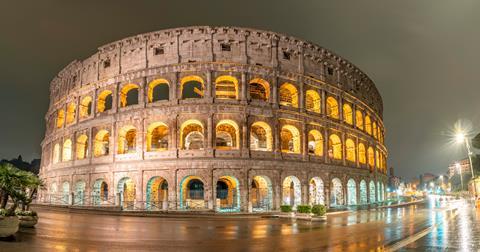
What is your favourite building in the world?
The Colosseum in Rome is amazing given the history that must have occurred in there. A true wonder of the world in my view. From an engineering perspective, while not a highly serviced building given the era, it is extraordinary to stand there and think about what was achieved millennia ago with the tools and knowledge available at the time. It had a profound impact on me when I visited with my wife, and I have never forgotten it.
And which building do you like the least?
Business parks and retail parks. The sheer number of generic, uninspiring commercial developments that exist is staggering. Offices in general tend to disappoint me from a design ambition perspective.
I will always admire a building which takes a bold or original approach, even if opinion is divided on the result. I was actually in the room when one well-known Edinburgh landmark was presented to clients as a ribbon of life running through the city. I thought the concept was compelling and the building delivered on it.
Which famous building do you wish you had worked on?
The Sydney Opera House. For a building services engineer, a theatre and performance venue of that scale presents the most extraordinary technical challenges – from acoustics and stage engineering through to climate systems within an iconic shell that was not originally designed to accommodate them. And the finished result is one of the most recognisable buildings on the planet.
The fact that the weather in Sydney would have been wonderful throughout the project is very much a bonus. We did work on the SSE Hydro in Glasgow, which is a genuinely impressive building, however Sydney has the edge on the sunshine front.
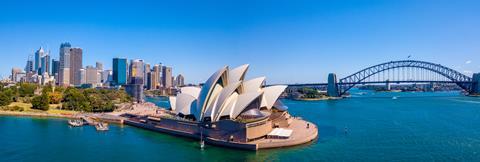
What single piece of advice would you give to someone starting out in construction?
Be curious and be inquisitive. There will be so many things you do not know – and that is completely fine. Just find out. I think younger engineers today are very good at following standards and guidance, but throughout my own career I always tried to go beyond the guidance rather than simply rely on it, and that curiosity is what I would encourage in anyone starting out.
You do not need to become an expert in everything either. Sometimes you just need to know the right person who is the expert and know what questions to ask them. Build your network, find people you trust and always try to understand what drives the people around you: clients, architects, structural engineers and fire engineers. If you understand their needs, you can anticipate them and be one step ahead.
Who do you admire most in the construction industry?
My mentors, without question: Jack Baldry, Ken Jeffs and Brian Mayberry, the previous managing director of Wallace Whittle who brought me on board 20 years ago, were the people who genuinely shaped my career and made me who I am professionally. The people who take the time to invest in you personally are the ones who make the real difference, and I was fortunate to have some outstanding individuals in my corner at the right times.
What is it like being you and doing your job?
It is pretty good, honestly. I have a job I love, I travel constantly and I get to work on fantastic projects with brilliant people. It does require real commitment and my family sacrificed a great deal over the years to support that, which I am deeply grateful for. My wife Sherree passed away seven years ago at just 45, which was a profound loss for me and for our family.
The support of the people around me, friends and colleagues who have been there throughout, has been everything and meant a lot to me. Now, I am in a genuinely happy place and I try not to take any of it for granted.
Do you have a life philosophy?
Get up every day and enjoy it as much as you can. Always treat people the way you want to be treated and try to inject some fun into things wherever possible, even in challenging situations.
I look around a lot of rooms now and I am usually the most experienced person there, which I find energising rather than anything else. There is a lot to be said for that perspective.
What is your best quality?
Optimism, without question.
And what trait do you most dislike in others?
Hubris. I try to see the positive in everyone, and I give people the benefit of the doubt as a default. I think it is important to be nice and to be liked, so what I find difficult is when people are unnecessarily unpleasant or unreasonable with others.
Name three things you like
Football, Guinness and golf (albeit it drives me mad). I should also add my kids, who I do love rather more than the three things on my list.
If I leave any kind of legacy, it will be that people enjoyed working with me and wanted to keep doing so
Tell us a secret skill we don’t know about
I can do nearly five keepy-uppies with an orange, and it typically tends to come out at Christmas with the satsumas. I would not call it much of a secret though, because if I have a skill I have usually demonstrated it to someone at some point.
Early bird or night owl?
Night owl, without a doubt.
What is your favourite food?
Italian. Seafood pasta, specifically spaghetti in a lobster bisque. Ideally enjoyed somewhere warm and preferably by the sea.
And finally, what would your superpower be?
The ability to walk into any room, connect with anyone in it and turn that conversation into something meaningful for the business. I genuinely love meeting people, and I think that comes through.
If I leave any kind of legacy, it will be that people enjoyed working with me and wanted to keep doing so.







No comments yet