













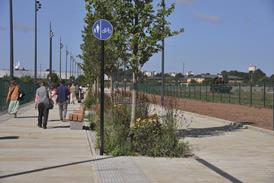


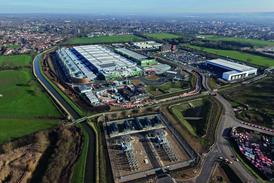

Delivered well, the large-scale infrastructure for new homes creates the foundation for sustainable communities, but financing upfront investment is a challenge. Simon Rawlinson and James Knight of Arcadis examine how new financing approaches might unlock future development of housing
01 / Introduction
Infrastructure can be either the key or the blocker to long-term housing delivery, affecting progress on many schemes across the UK. The level of investment required ranges from on-site phases including roads, paths and utilities to offsite strategic works including junction upgrades and network reinforcement that will benefit a much larger population. While each phase has different stakeholders and funding streams, all have the common characteristic that the bulk of the work is completed in advance of income from housing receipts.
Three issues need to be addressed to unlock infrastructure development:
- Viability – ensuring that the completed development generates enough value to cover all costs and the required returns
- Finance – accessing capital to meet expenditure in advance of sales receipts
- Funding – the income or contributions that pay for the infrastructure and financing costs.
These three issues will be repeatedly addressed as a scheme goes through the key stages of land promotion, starting at land assembly, running through planning consent, infrastructure development, serviced plot sales and housebuilding until sales finally generate the receipts that ultimately provide most of the funding.
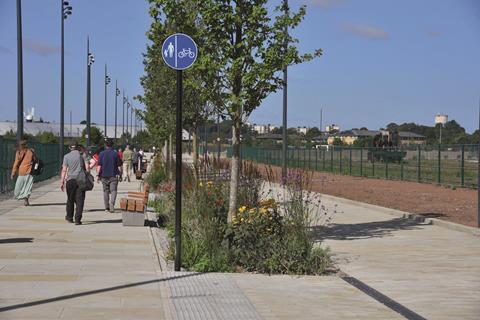
As part of this process, the creation of site infrastructure plays a critical role in unlocking land for housing. As with much development in the UK, constraints on the capacity and capability of key players – including master-developers, public landowners, funds and planners – act as a limiting factor on the range of schemes that can be put forward.
Housing infrastructure is developed at a series of levels, depending on the scale of the overall development. Strategic on-site and offsite investment plays an important role in the opening-up of greenfield sites and contributing to viability. Wastewater treatment capacity is, for example, a significant binding constraint on development in many locations that can only be addressed through investment in new capital assets. By contrast, early interventions in soil investigation and sustainable earthwork design can significantly reduce early expenditure through material reuse.
Infrastructure development for housing is a long-term play. At any one time, there is a stock of more than a million consented dwellings that are not recorded as complete. These units are on schemes that are being built in phases, are being replanned or are constrained by viability, infrastructure or other delivery issues. The carry costs associated with the infrastructure for consents under development are a significant barrier to increasing land supply.
The UK’s ambitious plans to accelerate housebuilding, and the long-term nature of large site development, have prompted a series of government-sponsored schemes aimed at bridging the gap between investment and delivery. Between 2016/17 and 2023/24 successive governments allocated £10.5bn to a range of initiatives, including the Housing Infrastructure Fund. Collectively land for 713,000 homes should eventually be unlocked by this funding. However, a National Audit Office assessment, published in February 2026, highlights that while 140 out of 768 schemes are complete, only 33,000 homes are known to be handed over, based on incomplete data. Some of the largest unlocked sites could still be under development in 2050.
The long-term nature of infrastructure investment means that governments need to find fresh sources of investment capital and new ways of making public money go further. In addition to grant funding totalling £44bn for homes and infrastructure, the Labour government has launched the National Housing Bank with £16bn of recyclable financial capacity through loans, equity and guarantees that will be used to crowd in other sources of finance.
A similar approach to blended finance, combining grants and patient capital (money invested over a long period) to unlock land receipts and income could play a key role in bringing forward urban extensions or new towns, even as constraints on public investment remain in place.
This feature examines how stakeholder requirements are influencing the scope of infrastructure requirements and expenditure, how the new blended investment model stacks up and how whole-life cost and performance are becoming more important considerations.
Table 1: Scope of infrastructure work and sources of funding and finance
| Infrastructure category | Scope | Sponsor | Source of funding and finance |
|---|---|---|---|
| Plot infrastructure | Plot access and paths, utilities connections and EV charging, plot drainage, landscaping and biodiversity net gain measures | Housebuilder | Finance: housebuilder equity and debt; affordable homes grant Funding: sales receipts; payments to utilities for connections |
| Phase infrastructure | Estate roads, services distribution, sub-stations and pumping stations, street lighting, phase-level sustainable drainage systems, local open space and landscape | Land developer | Finance: developer equity and debt; infrastructure grant Funding: land receipts; section 106 contributions; community infrastructure levy |
| Site-wide strategic infrastructure | Primary access roads and active travel corridors, strategic drainage and attenuation, primary service connections, blue-green infrastructure, community facilities | Land developer, development corporation, Homes England, infrastructure delivery vehicle | Finance: land developer equity; long-term infrastructure debt; recoverable public investment; public grant Funding: land receipts; section 106 contributions; community infrastructure levy |
| Offsite enabling infrastructure | Highway junctions and active travel routes, offsite utilities connections and upgrades, social infrastructure, ecological mitigation | Developer directly, utility provider, highways authority and other public bodies | Finance: utility company investment; developer equity and debt; recoverable public investment Funding: public grant; section 106 contributions and community infrastructure levy, including pooled contributions; developer connection and reinforcement charges |
02 / Infrastructure delivery and the placemaking agenda
The outcome of large-scale housing development is the creation of investable places and sustainable growth. Infrastructure has always played a key role and, under the 2026 edition of the National Planning Policy Framework (NPPF), this is made more explicit with, for example, the requirement for local plans to specify infrastructure and utility provision needed to support growth. Green space including places for recreation and room for green and blue infrastructure is also given a central place in the NPPF, meaning that landscape and drainage considerations will be at the heart of the masterplanning of larger sites.
The NPPF also promotes design quality with recommendations for the adoption of design codes and design guides that integrate buildings, public spaces, infrastructure and landscape. Homes England’s Building for a Healthy Life initiative, which has created design toolkits and an assessment framework, is a good example of work that promotes practical examples of good- quality design in support of discussions between developers, planners, designers and communities. As well as being used to assess new proposals, the toolkit is also likely to play an influential role in setting appropriate expectations for future development.
Guidance like the toolkit is increasingly important as site infrastructure is expected to work harder to make best use of land – for example, to integrate a wider range of activities and uses including car travel and by combining active transport, recreation and biodiversity with mixed-use development and social interaction. National policies for design, transport and infrastructure are typically developed in isolation and are not necessarily aligned, so well-developed guidance will help resolve conflicting requirements – reducing complexity and cost. Guidance also plays a key role in maintaining the consistency of public realm design delivered by the master developer and housebuilders at different stages of the development, including aspects of public realm such as boundary treatments between phases.
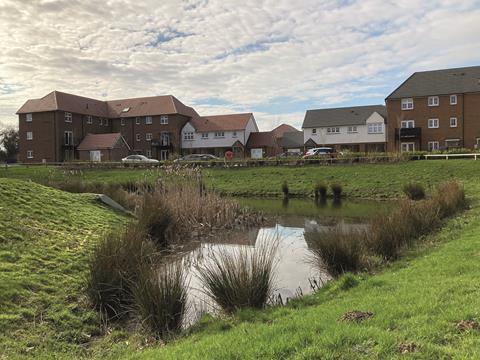
Requirements around long-term stewardship, operation and maintenance have proved tricky, and this is an unresolved aspect of the development of investable places. Latest planning requirements – including, for example, the 30-year stewardship of biodiversity net gain as an outcome of development – require more active management of sites than was previously the case. The same goes for recreation spaces and sustainable drainage system (SuDS) features such as swales that require occasional maintenance but which are provided as a development contribution through section 106. Typically, a management company is put in place, with implications for residents’ service charges for affordable and for-sale homes alike.
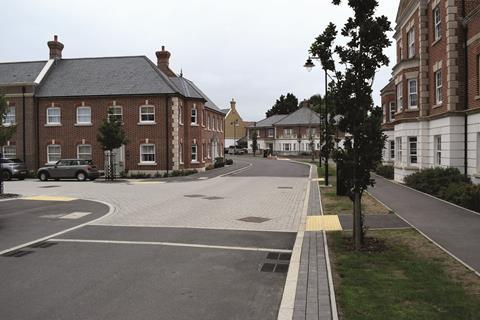
The long-term management of roads, paths and drainage has long been a problem with new-build development, with fewer than 10% of roads adopted by local authorities in the past three years, according to the Home Builders Federation. One unintended consequence of high-quality placemaking is that solutions proposed often differ from the more practical expectations of adopting authorities, making the pathway to wider adoption even more difficult.
This potentially leaves well-capitalised new places in a less sustainable position with respect to future funding, particularly if the main source is service charges. The challenge can be addressed during the design and development phases through the consideration of low lifecycle-cost solutions, but ultimately the management vehicle will need access to funding, either through commuted sums or through the creation of income sources from parking and other services.
>> Click here for more infrastructure market reports
Case study: Langarth Garden Village, Cornwall
Langarth Garden Village demonstrates how the public sector can take a land developer role to assemble land, invest in enabling infrastructure and establish the framework for a high‑quality new community before housing development takes place.
Located to the west of Truro, Langarth is being led by Cornwall Council and is planned to accommodate around 3,550 conventional homes, alongside community facilities. Rather than relying on the incremental delivery of a series of private-sector housing schemes, the council has sought to create an integrated settlement through co-ordinated land assembly, masterplanning and infrastructure investment.
Central to the approach has been early investment in infrastructure serving the whole development, including a new 3.4km road providing a strategic connection from the A390. Its construction has been co-ordinated with drainage, utilities, communications and provision for a geothermal district heating network, creating an infrastructure corridor around which subsequent development can take place. The road, supported by around £47.5m of Housing Infrastructure Fund investment from Homes England, opened to traffic in May 2026.
The investment also illustrates a broader definition of enabling infrastructure. Langarth’s masterplan combines transport and utilities with schools, community and sports facilities and substantial green infrastructure. At least 48% of the site will be retained as green space. Work is already progressing on the park and sports hub.
The financial model is deliberately infrastructure-led rather than housing-led and has been enabled by Homes England grant funding as well as local resources. Public investment, land assembly and servicing have created development-ready parcels within a defined placemaking framework, enabling housing receipts to follow in due course.
Delivery has not been without challenges. Changing market conditions have prompted Cornwall Council to review aspects of phasing, financing and tenure to maintain viability. But the
underlying approach remains consistent. Langarth shows that large-scale housing delivery depends not simply on allocating or consenting land, but also on assembling and financing the infrastructure needed to turn it into a thriving place.
03 / Financing large-scale infrastructure for housing development
Housing development releases significant land value for investment in supporting infrastructure. Agricultural land might have a value of £8,000 to £10,000 an acre, whereas consented housing land might have a value that is 60 to 100 times higher. Many variables will affect the equation but, where development is viable, the value of the completed homes will cover construction, infrastructure and other development costs and required returns, leaving a residual sufficient to secure the land.
Large-scale housing development is inevitably capital intensive. It also faces a major cash flow challenge, bridging the gap between extensive site development work and the generation of housing receipts over an extended period. The process of land promotion can take five to 10 years, and although payments to the landowner may be staged through the development process, the costs of planning and site-wide infrastructure will build as a capital requirement ahead of house construction and sale. This will mostly be financed through private capital.
Infrastructure costs typically range from £50,000 to £80,000 per unit, depending on the extent of capacity reinforcement required for roads, schools and other social infrastructure. These costs will be shared by the housebuilder, the land developer and, in some cases, statutory providers such as water companies. With revenues being determined by the rate at which housing is sold and by receipts from other tenures including build-for-rent and social/affordable housing, cash flow and peak capital requirements are a binding constraint on development over and above the viability of the homes themselves.
Land receipts are the key element of the funding equation but are generated after much of the infrastructure is complete. Cash flows affecting landowners, land developers and housebuilders are complex, and deals are often structured to time payments to optimise the balance of risk and the cost of borrowing. The landowner, for example, might receive only a partial payment when planning approval is secured and a development option is taken. Similarly, a housebuilder might pay on deferred terms in line with house sales. The land developer’s costs will eventually be covered by development receipts over an extended period, which is why low-cost patient capital and equity are such a vital part of the finance mix.
Part of the cost of development is land value capture (LVC): contributions for community purposes, through either section 106 provisions or community infrastructure levy. LVC funds affordable homes and social infrastructure, but again it is a call on developer cash flow. Currently, the LVC system faces challenges, which further impede development.
Firstly, the growth of regulation – including the Future Homes Standard, biodiversity net gain rules and other requirements – has added cost in excess of house price growth. The Home Builders Federation (HBF) estimates that 2026 build costs have increased by £76,000 per unit compared with 2021, leaving less money in the residual valuation of land to contribute to on‑site facilities and housing.
Secondly, only around half of planning authorities in England operate a community infrastructure levy, limiting the ability to pool contributions for large-scale investment. Thirdly, section 106 negotiations are a common source of delay due to project-specific requirements, and it is hoped that proposals for a standardised process might resolve this.
Finally, community infrastructure levy and section 106 contributions totalling £9bn remain unspent in 2026, according to the HBF, potentially delaying delivery and undermining local support for development.
Grant finance also has a key role, underlined by the government’s 10-year, £39bn Social and Affordable Homes Programme (SAHP) and its separate commitment to a £5bn National Housing Delivery Fund (NHDF) focused on infrastructure. Historically, grant has closed the viability gap, supporting the delivery of affordable housing and enabling infrastructure where this could unlock otherwise viable sites. The problem with grant finance is that it is a finite resource that can be eroded by inflation.
The creation of the National Housing Bank (NHB), with £16bn of financial capacity through loans, equity and guarantees, is intended to significantly increase the government’s long-term capacity to support housing development. This is discussed further in the panel (below) on new towns finance. Other sources of equity investment include “good growth” funds channelling local government, pension fund and private equity into new investment vehicles.
Government support, including NHDF and NHB, is available to private sector development as well as joint ventures such as those promoted by mayoral development corporations. Lessons from previous funding rounds highlight the importance of the maturity of schemes at the point of application, highlighting that deliverability may prove to be one of the most important investment criteria.
In summary, while viability and affordability are the key challenges for the housebuilders delivering the homes, finance and cash flow are additional concerns for land developers bringing forward strategic sites. Land prices do flex in response to market conditions, but land promotion is a long-term activity with a high-risk exposure. By deepening the market for low-cost, patient capital, the government is playing its part in expanding the capacity of the UK housebuilding industry.
How PuFins could make a difference for new towns and urban extensions
The National Housing Bank is what is known as a PuFin – a public financial institution – that enables government to provide loans, equity investments and guarantees for housing-related projects. The National Wealth Fund plays a similar role. NHB investment generates a return that will likely be recycled into future opportunities when repaid. Investments by PuFins like the NHB are also expected to crowd in private capital, so that the government support can go further. The Enable guarantee associated with a £2.2bn deal for 10,000 homes has leveraged double the value of loans covered by the guarantee.
With £16bn of transaction capacity, the NHB is potentially an ideal partner for long-term investment in strategic-scale schemes like urban extensions. It is already working closely with mayors, and the range of products available is well-suited to complex, multi-party deals. The NHB has recently supported a Homes England/Hill Group JV to acquire 700 acres of land east of Cambridge to deliver 10,000 homes and 9,000 jobs.
If the recycling of capital is one valuable feature of a PuFin, then the treatment of its investments under the government’s fiscal framework is another. The framework recognises loans and equity investments as financial assets that can offset the borrowing used to finance them. This can give government greater scope to support housing than equivalent spending on grants. It does not, however, remove fiscal constraints: borrowing costs, investment losses and the value of the assets all matter. Expanding NHB support in the future therefore depends on sound investments that meet policy objectives while remaining within Treasury controls.
04 / Conclusion
Infrastructure will be a key enabler for large-scale housing development in the UK but, with the costs of borrowing soaring, it is becoming increasingly difficult to deploy finance to meet long-term housing need. Housing developments face cash flow as well as viability challenges.
Land promotion is a negotiated process requiring the co‑ordination of a wide range of needs and expectations, together with the contributions from multiple parties. It benefits from a clear vision about the place to be created, a detailed appreciation of the planning context and willing and aligned partners, focused on shared objectives.
Policy developments such as the NPPF are simultaneously strengthening the case for the development of high-quality places while not putting in place the mechanisms to ensure long-term stewardship.
A focus on solving the viability and cash flow problems of today risks leaving unsolved the important question of how the value of place and community can be maintained in the long term.
Looking forward, the public sector may take a more direct role in land assembly on schemes like new towns, adopting new methods to fairly compensate landowners while securing a greater share of land value to provide the necessary infrastructure.
Although such an approach will eventually provide the funding, upfront capital will be required, meaning that early infrastructure investment will remain a binding constraint on housing development in the UK.
Acknowledgments
The authors would like to thank Rob Brandwood, Natalie Grieg, Charles Hill and Adam Parrott for their contributions to this article.







No comments yet