

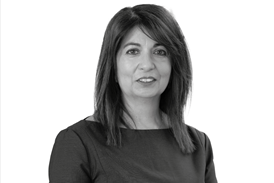





The firm’s head of sustainability on changing the industry mindset, the importance of listening, the value of mentors and his skills with a diabolo

Why did you choose construction as a career?
Coming out of university, I wanted to tackle climate change in the most impactful way possible. My brother, an MEP engineer, had explained the scale of building emissions and told me to research what Passivhaus was. From then on, I was convinced that the construction industry was the place to try to make a positive impact.
What are you most proud of in your career to date?
I don’t know if there is one specific thing. Perhaps it is co-founding a young professionals network with colleagues from my old practice and some friendly consultants. BEF (Built Environment for the Future) is now in its fourth year, and we continue to champion young voices across the industry. We have discussed topics ranging from finance to urban food growing to questioning why we even build. Our audience spans beyond the design team, which makes for meaningful and varied conversations.
What has been the biggest challenge of your career to date?
Getting people on board with new possibilities. To deliver sustainability, you must be able to sell sustainability. Whether that’s an emotional, practical, or financial narrative, you need to be able to empathise with your audience, finding the reason why they should care and explore more sustainable avenues. You have to always bring evidence, as you are not finding problems, you are trying to find solutions.
If you could change one thing about the industry, what would it be?
Its mindset. There are, of course, many extraordinary people working in the built environment, but the mindset shift required to actually place sustainable design at the forefront is not there. We need bold, creative minds to solve problems. We need more people to think critically about design briefs and think laterally about what is possible, using low-carbon solutions – not just materials but strategies too. Work smarter, not harder!
What is the most helpful advice that you have been given?
Allow space to let people talk. At my first job – an internship at the consultancy Etude – I was politely told to save my thoughts for a couple of seconds longer to let those who may not be as forthcoming with ideas to think/speak. It is something I now think about in every meeting I am in; making sure to first think before I speak (always wise) but also to allow space for those who, for any number of reasons, may be quieter in the room.
Name your favourite building in the world?
It would have to be La Sagrada Familia. Being inside and witnessing how the light enters the space, with the columns rising up was a genuinely spiritual moment. All the complex engineering and architecture that has gone into that building, being a multi-generational effort, is undeniably impressive. And it’s quite a fun building to look at, too.

Which famous building do you most dislike?
One Poultry. It hasn’t aged particularly well, especially the pink granite. While I can recognise James Stirling as an adventurous architect, I don’t find that style of building to be timeless.
Which famous building do you wish you had worked on?
That’s a really tough one. Maybe the Mt Fuji World Heritage Centre – a beautiful building with a really cool idea behind it.
What single piece of advice would you give to someone starting out in your profession?
Find good mentors, and ask lots of questions. When starting, we shouldn’t have all the answers, but we should be keen to learn as much as possible.
This starts with asking questions – from simple questions to questioning the status quo. If you are lucky to have a good mentor, don’t be afraid to keep in touch should you stop working with them. If you haven’t found a good mentor, reach out to people via LinkedIn or networking events. People tend to be friendly!
Who do you most admire in the construction industry?
Those who work with LETI, particularly Clara Bagenal George, who set it all up. To galvanise such a broad coalition of voices, demand and set higher standards for buildings, and provide a platform for sharing excitement and energy for sustainability is inspiring. We need more collaboration across the whole supply chain of the built environment to have a unified effort in delivering sustainable (or even regenerative) development.
What is it like being you (and doing your job)?
Pretty fun! I get to talk to lots of people across the practice, engaging in the whole spectrum of projects Sheppard Robson has. My role allows me to engage everyone in the practice. Some listen more than others; but that’s what I love about it. Learning from others and then trying to drive sustainability and innovation on projects is great.
Do you have a life philosophy?
I live through radical optimism. I hadn’t really put a name to it before, but I always try to find optimism in whatever I am doing, intentionally. A colleague I really respect suggested this phrase to me, coined by Christiana Figueres originally, and it has resonated with me ever since.
What do you think your best quality is?
I would like to think I am good at understanding complex problems, but that doesn’t mean I am wise enough to know how to solve them.
What trait do you most dislike in yourself? And in other people?
Stubbornness – I can see in some cases I am slightly dogmatic, which isn’t helpful when trying to listen to all voices equally. When I can tell someone is stubborn against driving sustainability forward, that is similarly frustrating.
Name three things that you like
Music, food, and sports – in that order.
Tell us about a secret skill that we don’t know you have
If anyone knows what a diabolo is, I am fairly handy with one of those.
What is your most prized possession?
Probably one of my jackets.
Early bird or night owl?
Both, if I could, I would live a Spanish life and have a siesta in the afternoon.
What is your favourite food?
Italian. Any and all Italian food is delicious.
What would your superpower be?
Carbon capture? That would save me a lot of hassle…







No comments yet