
















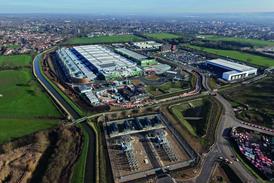


The UK government’s hopes of regeneration-led initiatives to revive the economy will be seriously hampered without proper energy security. Upgrading transmission and distribution networks is now essential, writes John Wilkinson

Energy security has quickly become one of the UK’s most pressing strategic priorities. Defined as the ability to ensure reliable, affordable and resilient energy supplies, it now sits at the intersection of national security, economic stability and the UK’s transition to net-zero.

Recent global issues have exposed vulnerabilities in traditional energy systems, forcing the UK to rethink how we produce, import and consume energy. For many decades, the UK benefited from domestic North Sea oil and gas, complemented by international energy markets.
However, declining offshore production and increased reliance on imports have left the system more exposed to geopolitical disruption and price volatility. The energy crisis which followed Russia’s invasion of Ukraine starkly illustrated these risks, driving up household bills and placing unprecedented strain on businesses and public services.
Years of underinvestment, delays to major projects and bottlenecks in the planning system have left the UK struggling to modernise its energy system at the pace required
Energy security is no longer simply about keeping the lights on for households in the UK. It directly impacts inflation, industrial competitiveness and public confidence. Insecure or expensive energy supplies disproportionately impact lower-income households and energy‑intensive sectors, amplifying existing economic inequalities.
At its simplest, energy security depends on having the right infrastructure in the right places. Years of underinvestment, delays to major projects and bottlenecks in the planning system have left the UK struggling to modernise its energy system at the pace required.
The government’s 10-year infrastructure and planning bill will address the red tapes in planning, providing the predictability we need to invest in skills and training. However, we are awaiting clarity on what this will mean from the government.
From grid infrastructure and power generation to retrofit and low‑carbon materials, construction sits at the heart of the UK’s response. Upgrading transmission and distribution networks is now essential. The rapid expansion of offshore wind, electrification of transport, and growth in data centres and heat pumps are placing unprecedented demands on the grid.
Accelerating network reinforcement, substations and connections will be critical if new generation is to be brought online and homes and businesses are to access secure, affordable power.
Renewable energy is no longer marginal to the construction sector; it is a primary driver of workload. Offshore and onshore wind, solar farms and battery storage are all heavily construction‑led industries, requiring complex civil engineering, manufacturing, installation and maintenance expertise.
Small modular reactors, is another innovative and evolving technology we are helping to deliver, representing a vital solution for meeting future energy needs, with the construction sector playing a central role in making them a reality.
For contractors, energy security creates long‑term visibility. Renewable assets are domestic, predictable and insulated from fuel price volatility. However, delivering them at scale requires changes to the planning system and procurement. Delays to grid connections and consenting are now one of the biggest risks to scheme viability, highlighting the need for joined‑up infrastructure planning.
Energy security is not simply about new buildings. The UK’s poor quality building stock remains one of our greatest liabilities. High energy demand for heating leaves households exposed to price shocks and undermines resilience.
Large‑scale retrofit programmes represent one of the most immediate opportunities for the construction industry to contribute. Insulation, fabric upgrades and low‑carbon heating installations reduce demand permanently, easing pressure on generation and imports.
Ultimately, energy security cannot be delivered without a strong, capable construction industry. This depends on skilled labour, investable projects, clear policy signals and a planning system able to respond at pace. Frequent policy changes and stop start funding undermine confidence and slow delivery.
For construction, energy security is not just a market opportunity; it is a responsibility. By delivering renewable generation, upgrading networks, retrofitting buildings and enabling the net zero transition, the sector is helping to build a more resilient, affordable and secure energy future for the UK.
John Wilkinson is chief operating officer at BAM UK & Ireland

Through ongoing analysis and expert commentary, Regen Connect highlights the policies, funding streams and local priorities that matter most to the construction and development sector.
This coverage will culminate in a special report to be published at our Building the Future Live Conference in London on 7 October.
How you can get involved:
Throughout the year, our team will be gathering insight from across the sector to inform editorial features, debates and events. We welcome contributions from practitioners who want to share experience or shine a light on emerging trends.
Click here for more on the campaign
Be part of the conversation – contact us to contribute or get involved by emailing our deputy editor at dave.rogers@building.co.uk and to find the campaign on social media follow #regenconnect







No comments yet