















Recent defects and near misses suggest the industry needs stronger oversight, better competence checks and a renewed respect for engineering judgement, says Denise Chevin

I’m not generally the sort of person who lies awake worrying the attic floor will collapse because one more storage box has gone up there. Nor do I usually step onto a balcony wondering whether this is the exact moment it detaches itself from the building.
Most of us don’t think like that. We assume buildings obey the laws of physics. We live, after all, in a country with world-class engineers, detailed standards and enough structural calculations to make your eyes glaze over.
Or at least, that’s what I thought until I listened recently to structural engineers discussing the growing number of serious defects now being uncovered across Britain’s buildings including some near misses that could easily have become catastrophes.
The only reason no one was hurt was more luck than judgement
One engineer, a building safety expert, described investigating the collapse of a large new roof over a public building days before opening. The roof design assumed structural bracing was in place. But the bracing had never made it onto the drawings and therefore had never been built. A week later, more than 100 people would have been beneath it. The only reason no one was hurt he said was “more luck than judgement”.
And it is far from an isolated case it seems. Another engineer spoke of roof extensions where no consideration had been given to extra wind loading, and complex building reconfigurations where vital supports had simply been removed.
A catalogue of hidden risks
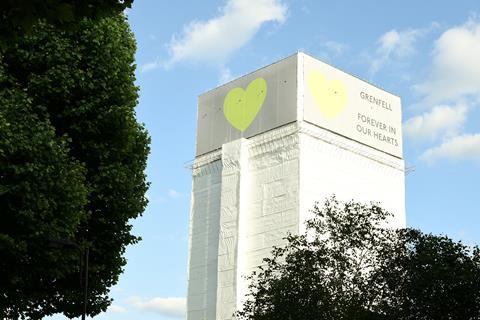
Post-Grenfell investigations have uncovered a catalogue of structural problems across both old and modern buildings: cracked concrete, hidden corrosion, failing fixings, water ingress and defects concealed behind cladding systems.
Several tower blocks built using the large panel system associated with the Ronan Point collapse have now been earmarked for demolition. But concern is no longer confined to older buildings.
Engineers are also scrutinising modern flat slab concrete buildings because of fears around “punching shear”, where heavily loaded columns could potentially punch through floor slabs and destabilise them.
A number of modern apartment developments have had to be slated for demolition by their developers after structural defects emerged. These include a Barratt development in Croydon, called Citiscape, constructed in the early 2000s. Barratt also reported in 2020 that less serious defects had been found in seven further schemes, with an estimated repairs cost of £70m. Meanwhile, Taylor Wimpey’s scheme called The Factory in Hackney was under construction when defects were discovered in 2022, which led to demolition and rebuilding works.
Structural problems are not limited to London, more cases involving different developers have emerged in Ipswich, Plymouth and Cambridge.
Then there are the balconies. Increasingly, balconies are appearing in defect investigations because responsibility for them is often fragmented across subcontractors, suppliers and installers. At one development in Barking, balconies had to be propped after a partial collapse.
Even multi-storey car parks are causing unease because of how they respond to fires. Modern vehicles are heavier than those many older structures were designed for, while electric vehicle fires burn hotter and longer. In the wake of a fire at a car park in Luton Airport in 2023, engineers are starting to ask whether yesterday’s design assumptions still stack up.
And, of course, Britain has already lived through the RAAC crisis, the discovery that an innovative lightweight concrete material (at the time) used widely in schools and hospitals was quietly deteriorating decades after installation.
Meanwhile the Department for Education found structural defects in three schools built by Caledonian Modular, which went into administration in 2022. The schools – Haygrove School in Bridgwater, Somerset, Sir Frederick Gibberd School in Harlow, Essex and Buckton Fields Primary in Northamptonshire had to be demolished after completion because of safety concerns.
The uncomfortable reality is that the industry is simultaneously grappling with ageing materials, poor workmanship, fragmented responsibility and new construction systems whose behaviour is not always fully understood before they are rolled out at scale.
An over reliance on software
But perhaps the most unsettling concern raised by engineers is not about materials at all. It is about competence. In particular, modern software may be making bad engineers look convincing.
Some in the profession are concerned that younger designers are becoming dangerously dependent on software outputs without fully understanding the structural behaviour underneath
That concern is now echoed repeatedly through confidential reports submitted to CROSS UK (Collaborative Reporting for Safer Structures), the industry’s reporting body for structural and fire safety concerns. Reports describe modelling errors, missing reinforcement, construction deviations and overreliance on digital tools without sufficient checking or engineering judgement.
The danger comes when software is treated as gospel rather than as a tool requiring experience, scepticism and common sense
Modern modelling is extraordinarily powerful. The danger comes when software is treated as gospel rather than as a tool requiring experience, scepticism and common sense.
Engineering has always depended partly on intuition, the accumulated understanding of how structures behave in the real world. Older engineers developed that instinct through years of hand calculations and site experience. The fear now is that, as AI becomes ever more powerful, some graduates are becoming highly proficient software operators before they properly understand the basics of structural behaviour.
None of this means Britain’s buildings are on the brink of collapse. Most buildings remain perfectly safe. In fact, one encouraging point is that many of these defects are being identified precisely because inspections and investigations have become far more rigorous after Grenfell and the Building Safety Act. In addition, nothing is ever risk free, it is more a question for government as to how safe is safe enough.
But listening to the profession discuss the sheer volume of issues now emerging, it becomes difficult not to conclude that the system has relied rather heavily on luck.
What a safer system should look like
So what needs to change?
First, competence. Structural engineers are increasingly calling for tighter regulation of the profession, including stronger licensing and mandatory competence requirements for those signing off safety-critical designs. Government is now reviewing regulation of the professions.
Universities may also need to rebalance engineering education away from blind software dependency and back towards first-principles understanding - rather as some architecture schools have reintroduced freehand drawing. If a computer model throws up an answer wildly out of kilter, alarm bells should ring. And as engineers optimise structures ever harder to reduce carbon, margins for error become smaller.
Independent peer review for complex buildings, particularly those using modern methods of construction, may need to become routine
Secondly, buildings may need far more independent checking. There is a clear disparity between buildings and infrastructure. Bridges and tunnels are routinely subjected to multiple layers of independent review. Buildings often are not, largely for cost reasons.
That is becoming harder to justify. Independent peer review for complex buildings, particularly those using modern methods of construction, may need to become routine. There also needs to be stricter oversight during construction itself to ensure what gets built actually matches the design intent – something that still cannot always be assumed.
Finally, Britain badly needs long-term structural research capacity again, something closer to a re-nationalised BRE, formerly known as the Building Research Establishment, which was privatised in 1997. One uncomfortable lesson from both Grenfell and RAAC is that the industry often only fully understands the risks of new systems after problems begin to emerge at scale.
In the meantime, even though I know the odds of any kind of collapse are still remarkably slim, I for one will be stepping out onto balconies with slightly less blind faith than before.
Denise Chevin is a writer and policy adviser in the built environment, utilities and technology. She is the former editor of Building and Housing Today







3 Readers' comments