










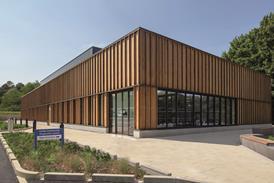


Sponsored by George Barnsdale, this module explores how material choice, operational performance, durability, maintenance, repair and end-of-life considerations can influence the whole-life carbon impact of window specification
Deadline for completion Monday 7 December 2026
Reducing the carbon impact of the built environment requires consideration of more than the emissions associated with constructing a building. The materials used to make a product, how it is manufactured and transported, how it affects a building in use, how long it remains serviceable and what happens when it reaches the end of its life can all influence its environmental impact. This is the basis of whole-life carbon assessment.
For windows, these considerations are particularly interconnected. Material choice affects the embodied carbon associated with the frame, while the thermal characteristics of the complete window influence energy use during the building’s operation. Durability determines how frequently components may require maintenance or replacement, while repairability can affect whether an entire window needs to be discarded when only part of it has deteriorated.
Timber introduces another consideration. As a renewable biological material, responsibly sourced timber can store biogenic carbon during its service life. However, this does not automatically make every timber window a lower carbon option. Forestry, manufacturing, coatings, glazing, transport, maintenance, replacement and end-of-life scenarios all need to be considered.
A meaningful assessment therefore needs to look beyond the initial material choice and consider the window as a complete system over its intended life.
Learning objectives
- Knowledge of the distinction between embodied, operational and whole-life carbon.
- Understanding of the factors that can influence the whole-life carbon impact of window specification.
- Awareness of the relationship between material selection, thermal performance, durability and service life.
- Understanding of the role of maintenance, repair, refurbishment and component replacement in extending service life.
Understanding whole-life carbon
Whole-life carbon describes the greenhouse gas emissions associated with a built asset across its lifecycle. It brings together two broad categories: embodied carbon and operational carbon.
Embodied carbon refers to emissions associated with materials and construction processes. Depending on the scope of an assessment, this can include raw-material extraction, manufacturing, transport, construction, maintenance, repair, replacement and end-of-life processes.
Operational carbon relates to emissions arising from energy consumed while a building is in use. For windows, this is relevant because their thermal performance, airtightness and influence on solar gains can affect the amount of energy required to maintain comfortable internal conditions.
Whole-life carbon considers both.
This distinction is important because decisions intended to reduce one source of emissions can affect another. Adding material to improve thermal performance, for example, may increase embodied impacts at the product stage while reducing operational energy demand over the building’s life.
Similarly, replacing an existing window with a thermally improved alternative creates new embodied impacts. Whether that intervention produces a lower whole-life carbon outcome depends on factors including the performance improvement achieved, the remaining service life of the existing window, the expected life of the replacement and the building’s energy supply.
Whole-life assessment is therefore concerned with understanding these relationships rather than considering a single carbon figure in isolation.
The importance of the assessment period
Time is central to whole-life carbon assessment. A product expected to remain in service for several decades should not necessarily be compared directly with one expected to require more frequent replacement, without accounting for those different service lives.
If a window is replaced during the assessment period, the impacts associated with producing, transporting and installing the replacement may need to be included. Maintenance and refurbishment can also introduce materials and processes over time. This means that the lowest initial embodied-carbon figure does not necessarily represent the lowest whole-life impact.
The assumptions behind an assessment are therefore important. These include the reference study period, expected service lives, maintenance intervals, replacement scenarios and end-of-life assumptions.
Environmental product declarations (EPDs) can provide standardised environmental information for construction products and may form part of this assessment. However, an EPD reports environmental impacts according to a defined methodology. Its existence does not in itself demonstrate that a product has a lower environmental impact than an alternative.
How window specification affects carbon performance
A window is an assembly of different materials and components rather than a single material. A typical window may include a frame, glazing, spacers, seals, coatings, ironmongery and other components, each with its own manufacturing processes, expected service life and maintenance requirements.
Its whole-life impact therefore depends on more than whether the primary frame material is timber, aluminium, steel, polyvinyl chloride (PVC) or another material.
Three areas are particularly important: material and manufacturing impacts, operational performance and service life.
Material selection and manufacturing
Embodied impacts begin before a window arrives on site.
Raw-material extraction or cultivation, processing, manufacturing and transport can all contribute to greenhouse gas emissions. The significance of each stage will vary according to the materials and manufacturing processes involved.
When comparing window materials, specifiers should consider the environmental impacts of the complete assembly rather than the frame material alone. This includes the glazing, seals, coatings and hardware, as well as the processes involved in manufacturing and transporting the finished window.
The particular characteristics of timber, including responsible sourcing and biogenic carbon storage, are explored later in this module.
Operational performance
Windows form part of the thermal envelope and can influence heating and cooling demand throughout a building’s life.
U-values describe the rate of heat transfer through a building element. For windows, a lower U-value represents lower heat transfer under the specified test or calculation conditions.
It is important to distinguish between the thermal performance of the glazing and that of the complete window. The overall window U-value is affected by the glazing, frame, spacer, proportions and configuration. A centre-pane glazing value should therefore not be treated as though it represents the performance of the complete installed window.
The same whole-system principle applies to other aspects of performance. Acoustic performance, for example, can be affected by the glazing, frame and air leakage, while the interface between the window and surrounding construction can also influence the outcome. This illustrates a wider specification principle: individual component values do not necessarily describe how the finished assembly will perform.
Operational energy performance also involves more than preventing heat loss. Glazing allows solar radiation into a building. This can provide useful heat gains during some periods but may contribute to overheating during others. Orientation, glazing area, shading and the use of solar-control measures therefore need to be considered alongside thermal transmittance.
Measures intended to reduce solar gain can also affect visible light transmission and appearance, creating another set of design trade-offs. The appropriate balance depends on the building and the individual elevation. A heavily glazed south-facing elevation may require different consideration from a shaded north-facing elevation, for example.
Whole-life specification therefore involves considering how the window contributes to the performance of the building rather than pursuing the lowest possible U-value in isolation.
Building regulations and operational performance
In England, requirements relating to the conservation of fuel and power are currently set through Part L of the Building Regulations and its associated Approved Documents.
Window specification can also interact with other regulatory requirements. These can include ventilation under Part F, overheating under Part O, protection from falling, collision and impact under Part K, and security in dwellings under Part Q, depending on the project and application.
This reinforces the need to consider windows as part of the building rather than as isolated products. Improving one characteristic cannot be allowed to create unacceptable consequences elsewhere.
For example, increasing airtightness as part of an energy-efficiency strategy needs to be considered alongside adequate ventilation. Similarly, glazing intended to maximise solar gains needs to be assessed against overheating risk.
The regulatory landscape is also changing. The Future Homes and Buildings Standards were published in 2026, introducing updated requirements for new homes and new non-domestic buildings in England, with the associated changes due to come into force in 2027 subject to the applicable transitional provisions. For existing buildings, different requirements may apply depending on the nature of the work. Specifiers should therefore check the regulations, Approved Documents and calculation methodologies applying to the particular project rather than relying on historic or anticipated requirements.
Service life: looking beyond the frame
Service life can have a substantial influence on whole-life carbon. If a window reaches the end of its useful life and is replaced, the replacement introduces new material production, transport, installation and waste impacts. A longer-lasting window may therefore avoid some of these impacts, provided its initial impacts and maintenance requirements are considered as part of the assessment.
Durability should not, however, be reduced to a headline lifespan. It depends on material properties, design, manufacturing quality, exposure, installation, maintenance and use. It is also important to distinguish between the service life of the frame and the service lives of the other components that make up the window.
This is particularly relevant to glazing.
The durability of insulating glass units
An insulating glass unit (IGU) consists of two or more panes separated by one or more sealed cavities. Its long-term performance depends partly on maintaining the integrity of this sealed system.
BS EN 1279 is the product standard covering insulating glass units. Among other requirements, the standard addresses moisture penetration and gas leakage. These characteristics matter because moisture entering a sealed unit can lead to condensation or misting within the cavity, while the loss of insulating gas can affect thermal performance.
The durability of the glazing unit is not simply determined by the glass itself. Edge-seal design, manufacturing quality, glazing methods and installation can all affect performance. Potential causes of glazing failure can include damage during installation, stresses caused by the way the glass is supported within the frame, manufacturing defects, wind-induced deflection and thermal stresses.
This further reinforces why whole-life assessment needs to consider the complete assembly. A timber frame may remain serviceable while an IGU, seal, coating or item of ironmongery requires attention. If individual components can be repaired or replaced while the frame remains in service, the resulting lifecycle impacts will be different from a scenario in which the complete window has to be replaced.
Designing and specifying for longevity therefore involves considering not only how long the primary material might last but also how the various components interact and whether they can be maintained or replaced independently.
Timber and whole-life carbon
Timber has several characteristics that make it relevant to whole-life carbon assessment, but these need to be considered in context.
Renewable material
Unlike mineral or fossil-derived materials, timber can be replenished through forest growth. Its environmental characteristics therefore depend partly on how forests are managed and timber is sourced.
Responsible sourcing and chain-of-custody information can help specifiers establish where timber has come from and how it has moved through the supply chain. Forest management practices, timber species, processing methods and transport distances can all influence the environmental profile of the finished product.
The fact that timber is renewable should not, however, be used as a substitute for product-specific environmental information. Manufacturing processes, coatings, glazing, hardware, transport and maintenance all contribute to the environmental impact of a timber window.
Biogenic carbon
During growth, trees absorb carbon dioxide from the atmosphere through photosynthesis. Carbon derived from this process can remain stored in harvested timber while it remains in use.
For long-lived construction products, this can mean carbon remains stored for a substantial period.
However, biogenic carbon accounting is more complicated than subtracting the carbon stored in timber from the emissions associated with manufacturing a window.
What happens at the end of the product’s life matters. Reuse, recycling, combustion and decomposition have different implications, and assessment methodologies establish rules governing how biogenic carbon is reported.
Claims about carbon storage should therefore be based on an appropriate lifecycle assessment methodology and should not be interpreted as evidence that the complete window has no carbon impact.
Thermal characteristics
Wood has relatively low thermal conductivity compared with many metals, which can help timber frames achieve suitable thermal performance. But frame material is only one part of the equation.
Frame geometry, glazing specification, seals, spacers, opening configuration and installation all contribute to the thermal performance of the finished window. The relevant question for the specifier is therefore how the complete window performs in the intended application.
This is particularly important when comparing products. Material-level characteristics should not be used as a proxy for whole-window performance.
Durability, maintenance and repairability
A material that contains relatively low embodied carbon but requires frequent replacement may perform differently over a whole-life assessment from one that remains serviceable for much longer. Durability is therefore closely connected to carbon.
For timber windows, moisture management is particularly important. Good design seeks to limit prolonged moisture exposure and ensure that any moisture can drain away and the timber can dry effectively.
Details such as drainage, glazing design, joints, protective coatings and the interface with the surrounding construction can all influence durability.
Maintenance also forms part of the lifecycle. Timber windows will generally require inspection and maintenance of finishes and components during their service life. The frequency will depend on factors including the coating system, exposure, orientation, detailing and local environmental conditions.
The design and configuration of a window can also influence how easily maintenance can be carried out. Features such as easy-clean hinges on casement windows, pivoting mechanisms and tilting sliding sashes can improve access to external surfaces, particularly where external access is difficult. Considering these features at the specification stage can help facilitate routine maintenance throughout the window’s service life.
Maintenance should not simply be regarded as a disadvantage. Planned maintenance can extend service life and delay replacement. From a whole-life perspective, the relevant question is whether the resources and emissions associated with maintenance are justified by the additional service life achieved.
Claims about a particular lifespan should be treated cautiously. A projected service life is not a guarantee of performance in every application. Evidence should be considered alongside assumptions about exposure, maintenance, design and installation.
Repair, refurbishment or replacement?
One potential advantage of timber construction is its capacity for localised repair.
Sections affected by decay or damage can sometimes be removed and repaired without replacing the complete window. Glazing, seals, ironmongery and finishes can also potentially be maintained or renewed independently.
This introduces an important principle for whole-life specification: the end of one component’s service life does not necessarily need to mean the end of the complete assembly’s service life.
Extending service life also does not mean choosing simply between leaving a window untouched and replacing it completely. Depending on condition and significance, intervention can range from routine maintenance and localised repair through more substantial refurbishment to complete replacement.
An existing frame might remain serviceable while glazing, seals or ironmongery require attention. For example, a failed insulating glass unit could be replaced without removing the surrounding frame, avoiding the material and manufacturing impacts associated with complete window replacement. In another situation, a damaged or deteriorated sash could potentially be replaced while retaining the existing outer frame, provided it remains structurally sound and suitable for continued use.
However, the feasibility of these interventions depends on the compatibility of new components with the existing assembly. For example, upgrading glazing may introduce additional thickness and weight, requiring an assessment of whether the existing frame, glazing rebates and ironmongery can accommodate the replacement while maintaining the required thermal, structural and weather performance.
This creates a hierarchy of questions for the specifier: Can the existing window continue to perform with appropriate maintenance? Can deteriorated components be repaired? Can individual components be replaced while retaining the remainder of the assembly? Will the existing construction accommodate the proposed upgrades without compromising performance or durability? If those options are unsuitable, is complete replacement justified?
The lowest-intervention option will not automatically provide the lowest whole-life carbon outcome. A repair strategy that requires frequent further intervention or leaves a building with substantially poorer operational performance should be assessed against the available alternatives. Equally, replacing an otherwise serviceable window solely to achieve a relatively small improvement in thermal performance introduces the embodied impacts associated with manufacturing and installing the replacement.
Where replacement is justified, specifiers should also consider the potential longevity benefits of modern window designs, including improvements in thermal performance, durability and opportunities for future maintenance and repair. Selecting windows that exceed current minimum regulatory requirements may help accommodate future expectations for energy efficiency, potentially reducing the need for further upgrades or premature replacement. However, these benefits should be assessed against any additional embodied impacts and the wider requirements of the building.
The appropriate decision therefore depends on the condition of the existing window, the performance required, the expected service life of the intervention and its anticipated whole-life environmental impact.
Existing and historic buildings
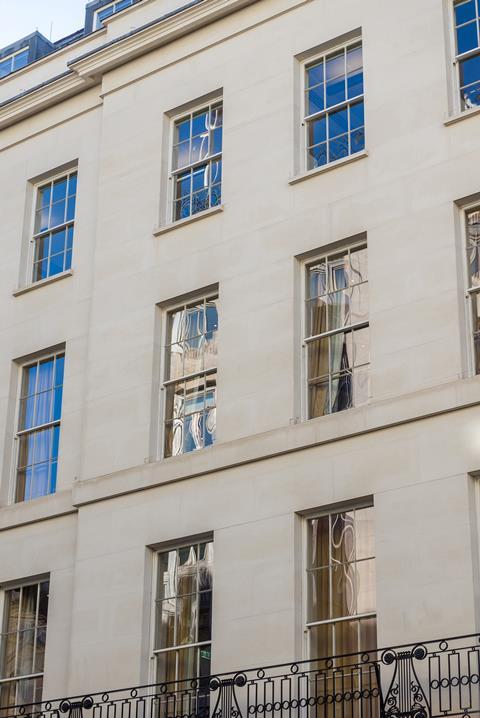
These considerations become particularly important in existing and historic buildings.
Traditional windows may contribute to the architectural or historic significance of a building. Retaining original fabric can therefore have heritage benefits alongside avoiding the immediate impacts associated with manufacturing a complete replacement.
Repair may involve addressing deteriorated joints, coatings, glazing or other local defects. Draught-proofing, secondary glazing or changes to the glazing may also be considered where appropriate.
More extensive refurbishment might retain the existing frame while replacing or upgrading other elements. The appropriate intervention will depend on the building, the condition and significance of the existing windows and planning or listed-building requirements.
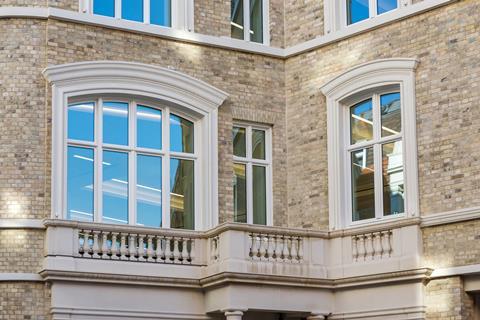
Where existing windows are beyond practical repair or replacement is otherwise justified, specialist manufacturers may be able to reproduce traditional profiles, glazing arrangements and architectural detailing to achieve a close visual match with the originals. Working with specialists experienced in heritage window design can help establish whether like-for-like replacement is feasible, while considering opportunities to improve thermal performance, durability and long-term maintainability. However, matching the appearance of an existing window does not necessarily mean that its replacement will be acceptable in heritage terms.
For listed buildings in particular, changes that affect the building’s special architectural or historic interest may require listed building consent. Early engagement with the relevant conservation and planning authorities can therefore be important.
Whole-life carbon is one factor in this decision rather than the only one. Heritage significance, appearance, technical performance, moisture behaviour, ventilation and occupant comfort may all need to be balanced.
End of life and circularity
Eventually, even a durable and repairable window will reach the point at which continued use is no longer practical.
Whole-life assessment therefore also considers what happens at the end of the product’s service life.
The waste hierarchy prioritises prevention, followed by preparing for reuse, recycling, other recovery and, finally, disposal. For windows, the ability to separate components can affect which routes are practical.
Timber may potentially be reused, repurposed, recycled or used for energy recovery depending on its condition, treatment and available infrastructure. Other components such as glass and metals may have separate recovery routes.
However, a material should not simply be described as recyclable because recycling is technically possible. The relevant collection, separation and processing routes need to exist and the conditions required for recycling should be understood.
Design for disassembly can support circular approaches by making components easier to remove without destroying either the component or surrounding materials.
Repairability operates on the same principle earlier in the lifecycle. If glazing, ironmongery or damaged timber can be removed and replaced without discarding the rest of the window, more of the existing material can remain in productive use.
Circularity is therefore not simply an end-of-life question. It begins with decisions made during design and specification.
Applying whole-life carbon principles in practice
There is no single specification that will provide the lowest whole-life carbon outcome for every building.
Instead, specifiers need to understand the particular project and the consequences of different choices.
A practical assessment can begin with a series of questions:
- What already exists? On refurbishment projects, assess the condition and significance of existing windows before assuming replacement is necessary.
- What performance is actually required? Establish the thermal, acoustic, weather, security, safety, ventilation and overheating requirements for the project.
- Does the evidence apply to the window as a whole? Check whether quoted performance relates to an individual component or the complete window.
- How will orientation affect performance? Consider solar exposure, glazing area and shading as well as heat loss.
- What is the expected service life? Look beyond headline durability claims.
- What maintenance will be required? Establish what needs to be inspected, recoated, adjusted or replaced during the assessment period.
- Can individual components be repaired or replaced? Consider what happens if an insulating glass unit fails, a seal deteriorates or a section of frame becomes damaged.
- What environmental information is available? Where environmental product declarations or lifecycle assessment information can be obtained, examine their scope and assumptions.
- What happens at end of life? Consider whether components can realistically be separated, reused, recycled or recovered and whether appropriate routes exist.
These questions move specification away from selecting a material on the basis of a single environmental characteristic and towards understanding how the complete window is expected to perform throughout its life.
Final thoughts
Whole-life carbon changes the question asked during specification. Rather than asking simply which window material has the lowest initial embodied carbon, the specifier needs to consider what is being manufactured, how the window affects the building in operation, how long its components are expected to last, what maintenance and repair will be required, and what happens when those components eventually reach the end of their useful lives.
Timber can form part of this approach. It is renewable when appropriately sourced, stores biogenic carbon during its service life and can offer opportunities for repair and component replacement.
However, those characteristics do not automatically make every timber window a lower carbon solution.
The environmental outcome depends on the complete specification, including glazing and other components, manufacturing, transport, operational performance, durability, maintenance and end-of-life treatment.
Ultimately, whole-life carbon assessment is about avoiding decisions based on a single number or characteristic. For windows, that means moving beyond the embodied carbon of the frame and considering the complete assembly as part of the building.
Please fill out the form below to complete the module and receive your certificate.