

















All Executive tools articles – Page 4
-
 Features
What the government’s commercial non-domestic EPC B pledge means for real estate
Ministers want all commercial non-domestic buildings to meet EPC B by 2030. But what work might be required and how much could it cost?
-
 Features
UK cities: regional roundup
Despite the challenges, regional cities are seeing an exciting range of new development, across infrastructure, commercial and residential
-
 Features
Market forecast: Weathering the storm
The UK is now clearly heading into recession but strong momentum in construction output should help to insulate our sector, despite only slightly slowing cost pressures
-
 Features
Sustainability: Estate decarbonisation
In decarbonising their portfolios, estate owners must strike a careful balance between making sound investments and driving efficiencies
-
 Features
Infrastructure update: Can investment in energy security be compatible with net zero?
The war in Ukraine has highlighted the importance of energy security. But how does investment in greater resilience align with progress towards net zero?
-
 Features
Market forecast: Upward but uneven
As building costs soar, yearly tender price increases are close to double figures – but that should slow next year. And while construction output is still rising overall, there is greater fragmentation
-
 Features
Cost model: Build-to-rent
Build-to-rent offers a solution to low housing supply and stable returns for investors and developers – if they can meet the demands of a quickly evolving tenant base
-
 Features
Cost model: Building brownfield
Regenerating previously used land offers multiple environmental, social and cost advantages but there are many factors to consider
-
 Features
Cost model: Labs in the sky
Record levels of investment into the life science sector and an increasingly limited supply of space have encouraged laboratory buildings to enter the high-rise realm
-
 Features
Procurement update: applying the enterprise model to infrastructure
To deliver the UK’s ambitious and complex infrastructure investment programme, the way forward lies in integrated teams and enterprise-based delivery
-
 Features
Cost model: School buildings
Amid rising prices, schools developers must strike a balance between meeting cost expectations and providing fit-for-purpose, sustainable buildings for the next generation of learners
-
 Features
Cost comparison: Upgrade or renew?
To meet net zero targets, owners must bring buildings up to scratch. Whether to refurb or demolish and rebuild is the question
-
 Features
Market forecast: Into the headwinds
Output has recovered almost to pre-pandemic levels, but optimism is falling in the face of inflation, recruitment challenges and red tape
-
 Features
Infrastructure update: Energy transition
The 2020s will be the decade when the foundations of the UK’s energy transition to net zero are established. What is involved in this transition, and how are things progressing?
-
 Features
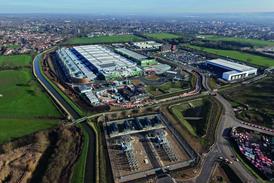
Cost model: Distribution warehouses
The combined impact of inflation plus materials and labour shortages is stretching developers of logistics centres – yet demand for this building type remains high
-
 Features
Cost model: Cancer care centres
The challenge is to deliver cancer centres that provide highly effective, technologically advanced care and support as well as research and education
-
 Features
Productivity: Perspectives on digitalisation with Alinea, AHMM and Lendlease
To identify the opportunities and obstacles in the digitalisation process, Alinea asked a range of specialists for their perspectives
-
 Features
International cost comparison 2022
The latest trends in international construction costs as markets around the globe adjust to post-covid recovery, the Ukraine war and other factors
-
 Features
Market forecast: The costs of uncertainty
Output is levelling off as the Ukraine war and Chinese covid lockdowns hit confidence. Meanwhile, the same factors are adding inflationary pressures
-
 Features
Cost model: Impact of building regulation changes
Changes this June to the Building Regulations Parts L and F will raise standards on decarbonisation and ventilation. What are the cost implications?