










Tim Dwyer reports on the highs and lows of ASHRAE’s summer conference, where it seems that the organisation finally grabbed the sustainability bull by the horns
ASHRAE (the American Society of Heating, Refrigerating and Air-Conditioning Engineers) held its summer meeting in Quebec City, Canada. This was much more than just a geographic shift from the US, the underlying culture adding a rather more ‘dress down’ attitude.
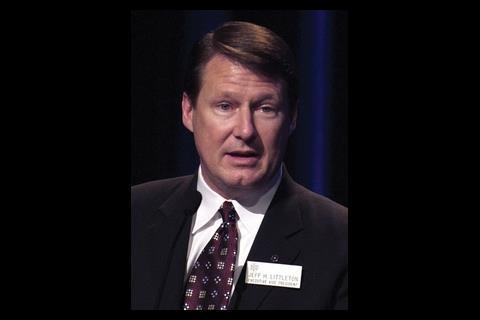
The presidential address, by outgoing president Lee Burgett and the report of CEO, Jeff Littleton, at the opening plenary session provided an increasingly upbeat message of a real shift in policy following the confirmation that the board of directors had approved the ‘ASHRAE Sustainability Roadmap’. Littleton reported a society income for the year of £10m, with nearly £3m being held in reserves for research activities – putting ASHRAE in a strong position to follow through an aggressive new strategic plan (see box, below).
A strong minority of members (many outside the US) have been extolling the need for sustainability to pervade ASHRAE’s activities for many years. From the statements of both Burgett and Littleton, this seems to have finally hit home. Sceptics might note that the first paragraph of the Roadmap’s ‘Why is Sustainability Important?’ document highlights that ‘the worldwide market for environmental goods and services is estimated to be $600bn annually’. But in the real commercial ASHRAE world, the dollar rules and without the financial incentive, the rest of the roadmap’s worthy objectives will simply remain as fine words on (yet another) sustainability policy document. And, to reinforce the point, Littleton confirmed that ASHRAE would be ‘walking the talk’ by renewing its HQ building to exemplify the commitment to its sustainability objectives.
There was a hint of ‘must try harder’, with Burgett admitting that the progress in strengthening the demands of the flagship ASHRAE energy standard has been very slow. (Standard 90.1 is a prescriptive standard used by many US states in a similar way to the UK performance requirements of Part L). However as he reiterated the ASHRAE Strategic Plan it was clear that there was no complacency and that the vision for ASHRAE was a worldwide one (James Bond aficionados in the audience were looking for a white cat purring contentedly in Burgett’s arms by this time!).
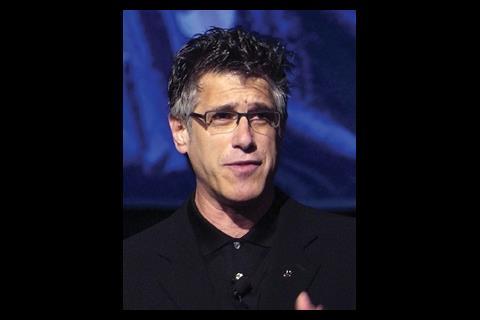
Having endured the presentation of 69 undoubtedly well deserved awards, there followed an uneasy shift in ASHRAE tradition as the keynote speaker was summoned on stage with an introduction about going ‘off road’. There was a tangible ripple of excitement (or maybe it was nervous uncertainty) from the mature audience as a man in black mounted the stage with the self assured saunter more commonly associated with a stand up comic.
Stan Slap (the man in black) launched into a slick routine that nourished the universal fear of every tier of management: “do they talk about me behind my back?”. In short – yes they do. His lively 75-minute presentation focused on how to lead an organisation through successful implementation of a business strategy. The message was that to carry through a strategic change there needed to be real interest from the whole organisation – not simply a matter of a launch party and t-shirts proclaiming the management strategic mantra – a proper understanding of ‘what’s in it for me’ across all tiers of the organisation. Was this a message for ASHRAE members, that to successfully alter their working practices to operate in a ‘sustainable’ manner requires wholesale evaluation of what benefits will accrue not only to them but to their staff, clients, family and the global community? Or indeed a message to ASHRAE itself?
Although Slap’s tales of techniques and concepts provided a decent spectacle, the battered audience was apparently only brought back to full attention by Slap’s concluding insider stories of Bill Gates’ mansion, where he attended a dinner party for top CEOs.
Over the next four days, a myriad technical sessions and committee meetings took place and while the programme had a conscious thread of ‘sustainability’, there were plenty of opportunities to see the roots of ASHRAE.
The presentation on Heating System Loads by Christopher Wilkins, a practicising engineer of Hallam Associates provided an encouraging practical application relating the expectation of PMV and PPD (the standard indicators of comfort success) to installations of different heating systems in an office. This was not an academic exercise but an example of actual good practice. He started on the standard premise that at different heating load intensities there was a range of possible system solutions. However, it was a simple spreadsheet analysis to compare the resulting mean radiant and air temperatures that enabled him to quickly select a system that not only met the heating demand but also gave a suitable solution when including considerations of clothing and activity.
It was a joy to see the presentation by John Cermak of ACME Engineering and Manufacturing that formed part of the seminar on fundamentals of fan systems. It was an opportunity to hear a voice of many years practical experience freely pass on his knowledge in a way that even the freshest of engineers would be able to absorb. He covered the mundane area of fan bearings but with such passion and belief that he captivated the capacity audience and undoubtedly influenced a subsequent generation of HVAC&R designers to think more carefully about the proper installation of the heart of every ventilation system.
There were a number of UK members participating in the meeting including an excellent presentation from Charlotte Turner – PhD student at the University of East Anglia. The paper investigated the energy performance of the University’s ZICER building which employs hollow core slabs. The system itself was not of particular novel interest but it was clear that there were significant performance gains and resulting energy savings resulting directly from the close monitoring of the building and the consequent alterations to its operation.
Another young UK engineer, Nigel Banks of Faber Maunsell, provided a detailed examination of just how ASHRAE could improve its HQ. Using a number of scenarios, Banks showed that there was a potential to save $1m in energy costs over 20 years with a sensible combination of relaxation of set points and some low-tech system improvements. The presentation exemplified the need for designers to evaluate the whole building as a complete system.
Incoming president Terry Townsend reinforced the ‘going green’ message at his president’s lunch. There was a tone of chastisement as he reiterated outgoing president Burgett’s concerns that the ASHRAE energy standards did not cut the mustard. He announced a startling 30% reduction in the energy use allowed by Standard 90.1 by the year 2010. To ensure that ASHRAE members would be ready for this revolution in design requirements he promised a series of advanced energy design guides to be ready for 2008.
A presidential year is all too short – let’s hope that Townsend listened carefully to Stan Slap’s routine!
ASHRAE strategic plan
- Lead the advancement of sustainable building design and operations
- Be a world-class provider of education and certification programmes
- Position itself as a premier provider of HVAC&R expertise
- Be a global leader to HVAC&R community.
Source
Building Sustainable Design
Postscript
Tim Dwyer is a principal lecturer at London South Bank University and chairman of CIBSE ASHRAE group
The refereed (pre-published papers) are available on CD from ASHRAE, while most presentations, together with speakers’ commentary are available on DVD. See www.ashrae.org for more information.

No comments yet