













Restoration of 18th century church signed off despite concerns over plans to remove historic fabric
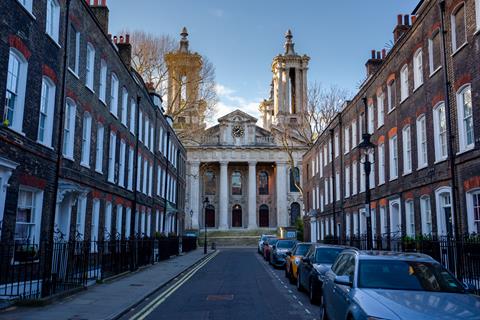
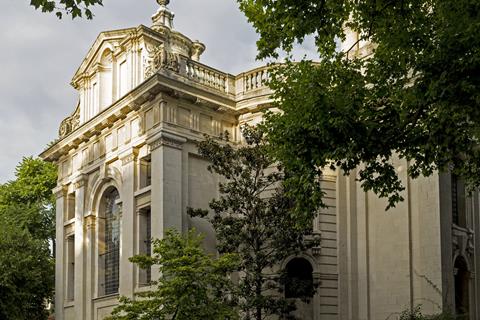
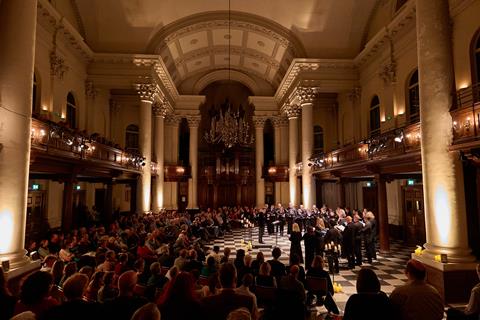
Burrell Foley Fischer’s plans to refurbish and restore Thomas Archer’s grade I-listed Smith Square Hall in Westminster have been granted planning approval.
Westminster council approved the scheme for building operator Sinfonia Smith Square using delegated powers last week, despite concerns over proposals to remove historic staircases in the 18th century former church.
Built in 1728 and originally called the Church of St John the Evangelist, the building is regarded as one of the most significant works of English Baroque architecture.
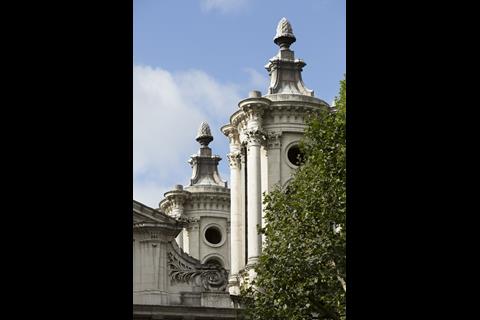
It is known for its picturesque setting in the middle of Westminster’s residential Smith Square and its unusual design featuring four corner towers, said to be inspired by a footstool which had been kicked upside down by Queen Anne during a conversation with Archer, one of the leading Baroque architects of the early 18th century.
It has suffered extensive damage and alteration during the course of its history, including after a major fire in 1742, a lightning strike in 1773 and an incendiary bomb in 1941 which gutted much of its interior.
The church was left in a ruined state for two decades after the Second World War, eventually being converted into a concert hall in the late 1960s.
However, it was placed on Historic England’s Heritage at Risk Register in 2024 due to concerns over deteriorating stonework and ageing services which the heritage advisor said needed urgent attention.
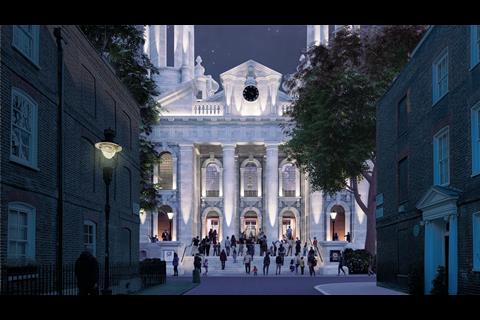
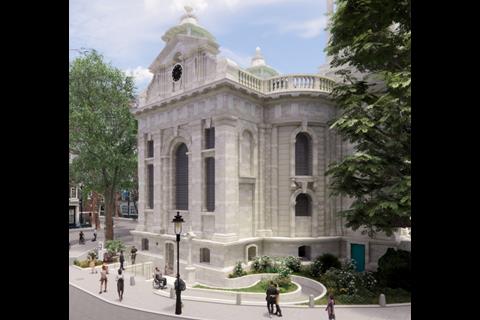
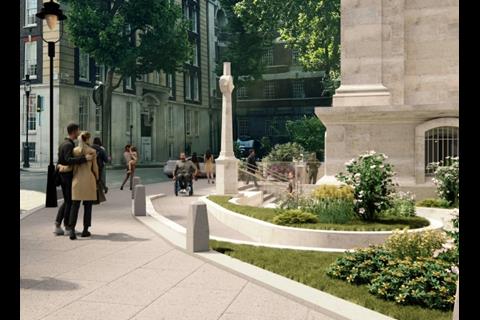
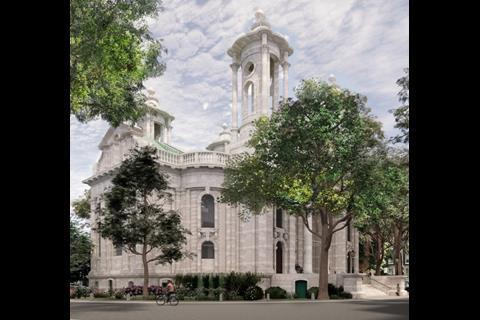
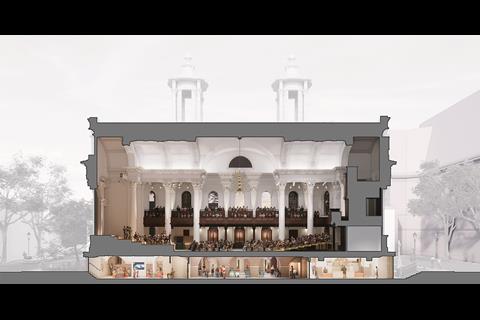
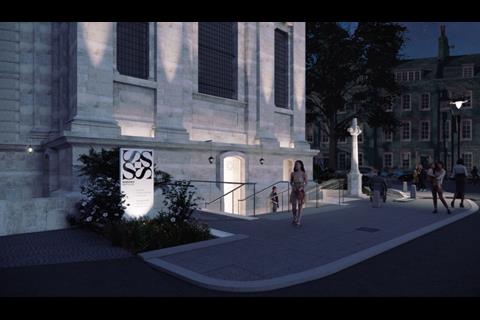
Burrell Foley Fischer’s plans for the site were submitted to Westminster council in July last year with other firms on the team including theatre and acoustic consultant Charcoalblue, project manager ORM Developments, QS Burke Hunter Adams and structural engineer The Morton Partnership.
As well as restoring building fabric, the scheme is aiming to upgrade the building’s main performance hall to double the number of attendees to 100,000 a year, provide a new learning studio for children, better facilities for performers and overhaul a cafe in the crypt.
It is also aiming to improve circulation, which has resulted in a controversial proposal to remove an original oval-shaped staircase in one of the building’s corner towers and replace it with a lift, requiring partial removal of the crypt ceiling.
Another corner tower staircase will be dismantled and reconfigured with an extension down to the crypt which would be built partially with reused treads from the staircase removed to make way for the lift.
Historic England raised concerns about the proposed alterations in August last year, warning that the alteration of original fabric would cause less than substantial harm to the significance of the building and calling for alternative options to be explored.
However the body, the key statutory consultee on the application, accepted Burrell Foley Fischer’s in February this year after saying it had been assured by the architect that all other options for the scheme would have caused additional harm.
While the heritage advisor said it “continues to regret” the harm which would be caused to the building, it described the proposals overall as “positive” and seeking to ensure the long-term conservation of the site.
The refurbishment project, called Doors Open, is being supported by the National Lottery Heritage Fund and is set to start construction next year with the concert hall reopening in early 2029.
Sinfonia Smith Square and Burrell Foley Fischer have been contacted for comment.





No comments yet