


















Renewed interest in PPP for government-funded projects highlights the critical role that private capital plays in the creation and operation of the UK’s infrastructure. Steve James and Simon Rawlinson of Arcadis consider how private capital influences the delivery of programmes
01 / Introduction
The UK has a long and proud history of innovation aimed at attracting private investment into infrastructure: 665 private finance initiative (PFI) schemes with an asset value of over £50bn are in operation, and since privatisation in 1989 the water sector alone has attracted over £200bn in investment at current prices. The contract for difference (CfD) mechanism for offshore wind has attracted a further £90bn.
With an expanding portfolio in energy, the UK has a pipeline of discrete, single-asset programmes, including onshore and offshore wind, battery storage and strategic water assets like reservoirs. These all benefit from different forms of revenue guarantee essential to attract low-cost, patient capital.
They represent a quite different prospect from PPP schemes with complex service requirements, or the corporate investment opportunities offered by regulated water and power network utilities. In essence, the UK’s offer to investors is a combination of a clear requirement, a credible opportunity to secure the investment return, and protection from some less manageable risks such as demand volumes. In return and due to competitive procurement, the expectation is that finance costs and lifetime running costs will be as low as possible.
Despite the UK’s evident success in attracting capital investment, there are still challenges. The prohibition placed on government-sponsored PPP projects in England in 2018 has restricted investment options, and the recent Cunliffe review has highlighted weaknesses in the water sector’s regulation that has contributed to long-term under‑investment in the asset base.
Furthermore, with global competition for private investment, the UK depends on continuing innovation in project origination, regulation and business models. In the water sector, for example, the Cunliffe review proposes a root and branch reform that aims to increase the stability of regulation, reduce politicisation of the sector and encourage investment in the health of the asset base, while also increasing the accountability of the utilities. In parallel and at the heart of government, HM Treasury, the National Wealth Fund (NWF) and NISTA, the National Infrastructure Strategic Transformation Authority, are developing the UK’s pipeline of investable projects alongside the business models, contracts and financial instruments that will secure new sources of finance. Furthermore, reforms to the planning system including changes to the judicial review system are reducing this longstanding source of developer risk.
Despite these efforts, the UK’s ability to attract private investment is not guaranteed. In 2023 the UK failed to attract a single bid for offshore wind licences, because CfD contract terms were not aligned to market conditions. Subsequent auctions have attracted investment for over 13GW of capacity, based on higher strike prices guaranteed for longer periods. The experience highlights that although contract periods might last for 25 years or more, investor requirements are highly responsive to short-term changes in market sentiment.
Ultimately, the aim of the procurement of private finance is to secure the lowest possible cost of capital, as that will deliver the lowest lifetime project cost. To meet this objective, there needs to be a pipeline of investable projects where the transfer of risk, including that associated with the construction of greenfield assets, is given a commercially realistic allocation. Attracting collaborative project teams that are properly incentivised to provide assured delivery is a key aspect of that private investment equation.
Growing demand for energy shift has created a wide range of markets for grid and network services. Indeed, Centrica’s CEO, Chris O’Shea, recently claimed that system charges including network services will account for over 60% of total electricity costs by 2030. A diverse revenue stack has given investors plenty of opportunity, with 60GW of short-duration storage at present competing for 35GW of connection capacity.
As the whole energy system becomes more digitally enabled, commercial and domestic consumers can also participate in a market known as customer-led flexibility (CLF). New low-power market integrators are creating “virtual power plants” enabling photovoltaic (PV) systems, batteries, and even electric vehicles (EVs) to play a significant role in delivering the flexible grid.
This article examines the UK’s flexibility strategy and how this interacts with other network service requirements. We examine the technologies and how business models are evolving to attract new sources of investment into flexibility services.
02 / Options available for private infrastructure investment
The UK has a diverse range of platforms to attract private project investment. The models are adapted to the service output required, the nature of the asset base and the risk profile of the investment. While the regulated asset base (RAB) and CfD models are well established, other mechanisms including direct procurement for customers (DPC) are at an earlier stage of development.
Regulated asset base
Historically, regulated utilities have used an RAB model to deploy sources of corporate finance including equity and debt to invest and operate a mixed asset base of new and legacy infrastructure. Regulated utilities are typically natural monopolies, and the RAB model was developed as a substitute for direct competition, focused on incentivising and rewarding efficient operation. Historically, five-year regulatory reviews have set the return on investment, cost allowances for the efficient delivery of new capital investments and a set of KPIs that reward outperformance. Capital delivery risk is mostly held by the utility, although there is some adjustment for inflated input costs.
As requirements for investment have increased, the application of the RAB model has evolved rapidly:
- Use with a wider range of asset types such as carbon capture use and storage
- Adaptation for rapid investment programmes associated with the net zero transition including the Accelerated Strategic Transmission Investment (ASTI) programme, involving 26 projects worth £20bn
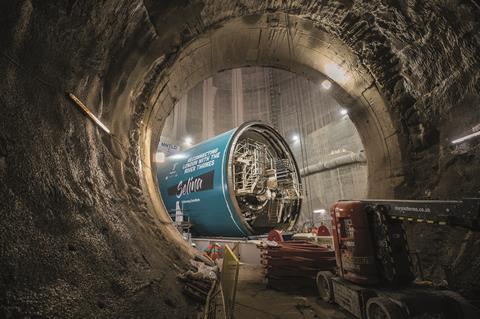
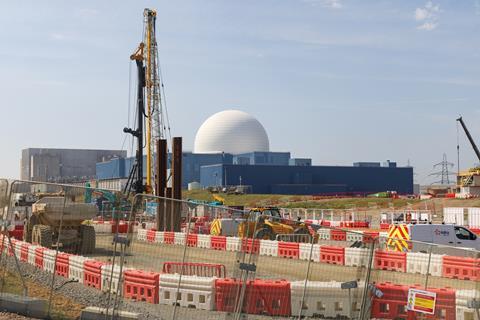
- Use on single projects like Sizewell C and Tideway, so investors can receive a financial return during construction, reducing the overall cost of finance.
Most other models involve competition at the project level to secure innovation and low-cost finance. Investor interest is facilitated through long-term certainty on returns and a credible risk allocation that is set for decades rather than for a five-year control period.
Contract for difference
Introduced in 2014, CfD guarantees an inflation-adjusted strike price for renewable energy to the developer regardless of the going market rate at the time of generation. The investor takes development and availability risk but is paid for all energy generated over a fixed period. CfD arrangements now cover all renewable assets ranging from wind and solar PV to hydrogen and the repowering of old windfarms. CfDs are awarded in competition. In the most recent offshore wind round, prices are guaranteed for 20 years. CfD has triggered innovation and growth in capacity in renewables markets but has also left developers exposed to development risk in the past, such as increased material costs. Current CfD strike prices reflect a more cautious approach to risk as well as more expensive finance costs.
Direct procurement for customers
The DPC model was developed for the UK water industry’s programme of strategic resource options (SRO), large water infrastructure projects including reservoirs and water transfer assets. SRO programmes are long-term single developments that may interface with multiple water companies, making them good candidates for competitively procured, standalone operation. DPC investors are responsible for design, construction, finance and operation and hold availability risk. Their return is a long-term, inflation-linked availability charge, paid for through user charges by the water companies which retain the regulatory licence. The attraction of the DPC to investors is the relative simplicity of the asset compared with the complexity of a water company and a well-defined performance requirement.
Specified infrastructure project regulation
SIPR is another water sector scheme. Like DPC, projects are competitively procured. However, schemes are directly regulated as separate entities. This creates an opportunity to develop more complex risk-sharing mechanisms such as the construction risk backstop provided for Tideway during construction by the UK government. SIPR is only used on the most complex and risky programmes, and Tideway is a good example.
Offshore transmission owner
OFTO was originally introduced into offshore wind because ownership and operations of offshore transmission systems have to be separated from the generating assets. Historically, a windfarm developer built the entire project and then sold the transmission system via a competitive process to an OFTO bidder. This enabled access to low-cost finance, because the asset was operational and the risk profile was confined to availability. Now, more complex transmission networks serving multiple developers are under development, which favours a neutral developer/operator similar to the DPC model, which in turn requires an earlier appointment for development, delivery and operation.
Concession
Pure concessions are rare in the UK. They typically involve the design, construction, finance and operation of an asset in return for a use-based income. On the M6 toll the investor holds demand, pricing and availability risk, while demand risk for the recently opened Silvertown Tunnel is held by the Greater London Authority rather than the operator.
Mutual investment model
MIM is a variant of PPP used in Wales. Key features include a “golden share” in the special purpose behicle (SPV) held by the public sector sponsor and an equity share, promoting transparency and public value. Other features that distinguish MIM from its roots in PFI include a net zero performance requirement that builds in expectations around change. Furthermore, soft FM requirements are excluded from the scope, enabling periodic market testing of this aspect of service delivery.
Public private partnership
NISTA is developing a PPP variant for new investment programmes including neighbourhood health centres. It is likely to feature many characteristics of the MIM model and will be applied to batches of 5-10 new-build schemes based on standardised design solutions.
NISTA’s work on PPP highlights the work being undertaken at the centre to simplify and increase the attraction of UK opportunities through the development of standard contracts and the promotion of the UK’s investable programme pipeline. Paradoxically, despite the UK’s huge requirement for infrastructure investment, progress on new investment models has been slow. However, both the Haweswater Aqueduct Resilience Programme (HARP) and Sizewell C have both recently reached financial close, confirming the investability of their DPC and RAB funding models.
>> Click here for more infrastructure market reports
03 / Getting the right balance – critical success factors for a bankable opportunity
An attractive investment project has many dimensions that evolve over the lifetime of the investment. The capital asset must be deliverable, reliable in operation and with a consistent and dependable cash flow. The regulatory model that underpins the investment needs to be credible and reliable. And provision needs to be in place to allow all parties to exit successfully, based on a carefully planned termination process aligned to the characteristics of the asset.
Many stakeholders participate in the process. Regulated water utilities, for example, will continue to hold the licence and be responsible for service outcomes associated with the operation of DPC assets owned by third parties.
There are three key roles at the financial close stage that work closely to achieve the right balance of assurance around value and performance, return and risk to secure a successful deal:
- Sponsor – defining the requirement and the scope and developing the financial model to minimise the cost of capital.
- Investor – opportunity selection, solution development and risk management to optimise construction and operation.
- Delivery team – capability, solution development, certainty of outcome and guarantees.
The parties to these roles have different priorities that need to be addressed across the deal map. A better alignment of their requirements will deliver a more bankable, lower-cost investment.
Key opportunities to enhance bankability include:
Deal volume and standardisation
A pipeline of familiar, well understood project investments with standardised commercial features will attract a deeper market of potential investors. First there needs to be enough volume of work to attract and sustain competition between consortiums. The extended use of familiar investment models adopted across multiple asset types such as CfD also increases the depth of the market, by providing more market data on investment performance and returns.
Capability and experience
Sponsors will rely on their familiarity with the asset, process and commercial arrangements to develop bankable schemes that attract a lower cost of capital. NISTA is playing a key role in providing this expertise within the UK public sector. In developing competitive responses, investor-led consortiums also benefit from a range of experience including performance data and access to a known supply chain that is familiar with the commercial model, risk mechanisms and incentives.
Clarity and confidence in the source of revenue
Investors require access to a stable revenue stream with clarity over the source of funding. Contracts need to be long enough to deliver the return with a well-defined, low-risk exit route, such as the end of payment guarantees under CfD. Recent round-seven offshore wind CfDs offered a 20-year term rather than the 15 years offered in previous competitions.
Performance measures used to determine the return need to be well-defined and proportionate, particularly with respect to KPIs that determine incentives and penalties. A common principle is to reduce exposure to risks outside the parties’ control. Availability penalties, for example, might come with a short, defined grace period that enables the investor/operator to fix problems without incurring penalties.
Risk-sharing mechanisms that balance the needs of all parties
Greenfield infrastructure investment has additional development risk. The objective of the risk share is to allocate these appropriately at the lowest cost and to maintain performance incentives. All parties will have a role, partly by accepting risk and partly by taking steps to mitigate the risk of other parties. For example, the sponsor will likely hold lifetime inflation risk though the payment mechanism and can also reduce the investor’s risk profile by developing schemes through planning or through the provision of credit risk guarantees.
Tideway, London’s sewage upgrade scheme, was positioned in the market as a fully procured scheme with some additional construction risks underwritten by central government. This risk allocation reflected the complexity of construction and the novel SIPR investment model.
Investors will transfer construction risk to the delivery team, requiring completion of a mature design and delivery model before financial close.
Transparency enabled by the contract
Comprehensive data is essential for performance and delivery assurance, performance guarantees and for the effective operation of the assets and associated KPIs. As part of a wider requirements for transparency, investors have very demanding contractual rights with respect to information, assignment and so on.
Minimal, managed change
Scope change has created problems in previous generations of PFI because of complexities associated with balance sheet accounting and the involvement of investors and other third parties. Investors increasingly seek deals with clear output requirements that have limited potential for change. Where provisions for change are required, they should ideally allow for proportionate consents, minimising transaction costs by determining in advance, for example, which parties need to be involved in the change process.
04 / Conclusion
Private investment is driving the UK’s largest infrastructure investment programmes in water and energy networks. Low cost of operation is crucial, given that these services are funded by user charges rather than by taxes. The design of investment programmes plays a key role in enabling low lifetime cost through the attraction of patient, income-seeking capital in competition. The UK’s pipeline of increasingly well-defined, discrete deals demonstrates the discipline needed to effectively deploy private capital.
Acknowledgments
The authors would like to thank Antony Faughnan, Alan Gravatt, Alberto Palma and Mathijs Van Den Burgh for their input into this sector review.







No comments yet