
















Shortage of utilities, skills and building materials cited by peers as major ‘limiting factors’ for progression of new towns programme
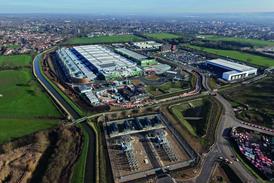
The House of Lords built environment select committee has urged the government to address water scarcity in the UK, which has left the new towns programme “competing” with other developments such as data centres.
In the final report of its inquiry into the programme, the committee said providing utilities for a proposed seven new towns delivering up to 191,000 homes “unfortunately (and deeply regrettably) presents a challenge for the government because of decades of poor planning and a lack of effective preparation for the future”.
Stuart Colville, deputy chief executive of trade association WaterUK, told the committee that “in some parts of the country, headroom - spare water – is down to 2%”.

He added: “Clearly, if any shock comes along – if you have a new town or whatever it is - there is far too much fragility within the system.”
The UK has not built a new reservoir for more than 30 years, which the group pointed to as evidence of a failure to collaborate by successive administrations, water companies and regulators.
It urged providers and the government to work together to enable a “resilient and abundant” supply of water for the long-term.
The committee’s chair Benjamin Gascoigne (pictured) told Building: “Reservoirs can’t be built overnight, and I accept that. But utility providers need to be brought into the conversation sooner. This isn’t just about water; it’s about all the utility firms. They need to be part of the discussions from the beginning.”
One of the solutions proposed in the report is optimising greywater recycling by designing new towns with rainwater harvesting systems as standard rather than expensively retrofitting them.
“It’s also about bringing more people into discussions of greywater and other ways to use the supply we already have. In Yorkshire, there was recently a drought declaration. I don’t want to cause unnecessary alarm, but it struck me that this happened after the peak of summer, not during it.
“This is a very relevant issue. We know from personal experience that some parts of the country are very wet quite a lot of the time. We should be looking at better ways to plan and use our resources,” said Gascoigne.
The built environment committee’s three-part inquiry concluded by identifying five major “limiting factors” seen to be slowing or preventing the completion of the new towns programme.
These included the UK’s depressed production of building materials, dwindling utilities, the construction skills shortage “permacrisis”, slow adoption of enabling technologies and a lack of clarity and financial commitment from the government.
The committee called on Whitehall to set out the next steps to kickstart the programme, including delivery mechanisms, funding and powers, such as setting up regional development corporations.
Gascoigne said this “would demonstrate its ambition to the country and make clear to the sector, local authorities, communities and politicians that this is going to happen”.
“There will always be political challenges. Look at reservoirs: that discussion has gone on for decades. The same is true of major infrastructure projects. There will always be people with concerns, even about small schemes. That’s a healthy part of democracy. But those who want a project to succeed need to own it, lead it and explain why it will improve an area - including the jobs it will create,” he added.
Earlier this year, the Ministry of Housing, Communities and Local Government announced the names of seven new towns it intends to press ahead with, paring the programme back from the 12 suggested last year by the New Towns Taskforce. However, the final selection has not yet been formally declared.




No comments yet