


















British Gypsum has unveiled a new comprehensive, evidence-based best practice guide dedicated to the junctions between fire-rated partitions and other building elements.
Closing a critical gap in fire safety
Junctions – where walls meet ceilings, floors, structural steel, or external façades – are fundamental to a building’s fire compartmentation strategy.
While UK building standards require rigorous fire testing for individual elements, there has never been a legal requirement to test how those elements interface and interact, mainly as there is no set standard to test to.
This standards gap has left architects, specifiers, and installers working with inconsistent guidance and unverified solutions, leading to significant variability in real-world installations.
A groundbreaking, tested solution
British Gypsum’s new guide directly addresses this challenge.
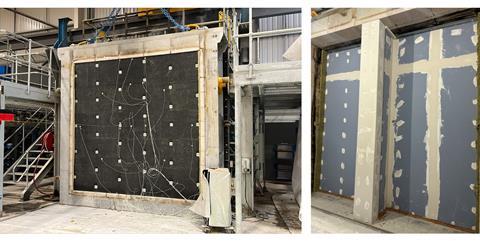
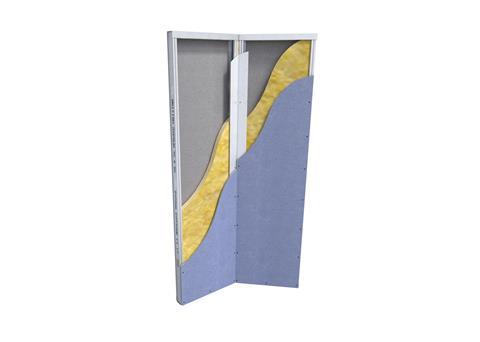
Drawing on a year-long R&D programme and full-scale fire testing of GypWall systems, the guide presents validated solutions for key junction types – including internal corners, T-junctions, partition-to-column interfaces, offset beams, and ceiling junctions.
These tests go beyond conventional flat wall assessments, reflecting the complex geometries and interactions found on construction sites.
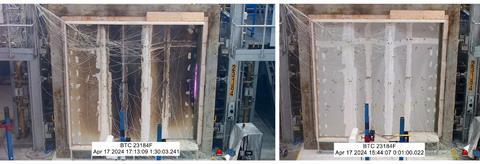
The result is a set of validated, proven solutions that provide confidence in junction performance and help ensure compartmentation is maintained when it matters most.
Industry collaboration and technical leadership
Developed in collaboration with architects, specifiers and contractors, and supported by the technical and innovation teams at British Gypsum, this initiative is one of the first dedicated programmes to specifically fire-test and validate the performance of critical junction details.
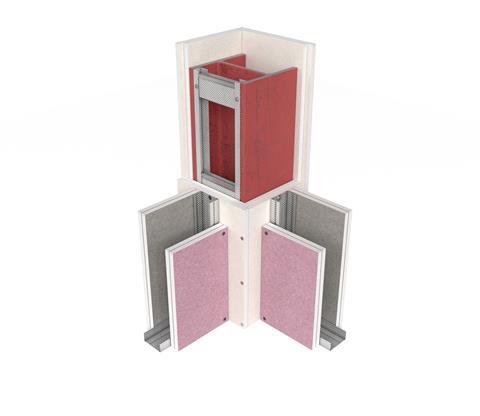
The guide is grounded in real-world construction challenges and customer insight, ensuring its relevance and practical value on-site.
“The industry has long needed junction solutions that are not only clearly detailed but also backed by rigorous testing – reducing on-site uncertainty and streamlining both specification and sign-off.
This guide meets that need by providing robust, evidence-based support for construction details, offering both assurance and practical guidance for on-site implementation.” said James McLavy, Head of Technical Customer Solutions at British Gypsum.
Raising the bar for safer construction
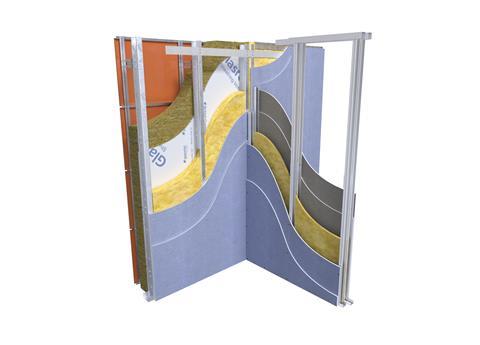
On-site, the lack of standardisation in junction detailing can lead to inconsistent installation quality, compromised system designs, and increased risk of costly remedial work or failed inspections.
The new guide not only provides detailed installation advice but also aligns with BS EN 1364 and other relevant test standards, giving specifiers and installers confidence that solutions meet the highest safety benchmarks.
“As the regulatory landscape evolves with initiatives like the Building Safety Act, so does the need for proven, evidence-based system solutions,” added McLavy.
“We’re committed to raising the industry standard, supporting safer builds, and giving our customers confidence at vulnerable points of a fire-rated system.”
A new reference for the industry
This guidance is intended to raise industry standards, support safer construction, and provide assurance at vulnerable points of fire-rated systems.
Applicable to a wide range of commercial, residential, and public buildings, it is expected to become a key reference for professionals across the UK construction industry.
The Best Practice Guidance for Fire-Rated Junctions is available to download now via https://www.british-gypsum.com/fire-rated-junctions
For further information, contact the British Gypsum Technical Support Team at 0115 945 6123.






No comments yet