
The resulting massive rise in both telecommunications and data communications traffic has been paralleled by significant investment in the expansion of communications systems, equipment and infrastructure. At the same time, an increasing number of established commercial and industrial organisations are looking to outsource many of their non-core activities, including the day-to-day routine operation of the computer-based IT functions.
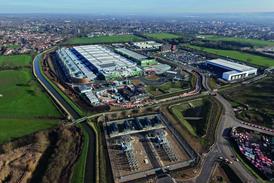
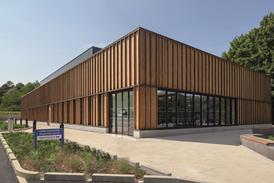
One of the most recent and fastest-expanding developments in this sector has been the spiralling growth in the number of special purpose installations known as colocation centres, or Internet hotels. These new installations are specifically designed to enable individual companies and commercial organisations to relocate their computer hardware outside their own premises and outsource completely both its operation and maintenance to an independent operator.
The new colocation centres provide dedicated facilities for a combination of telecommunications and computer systems, including switching centres, routers, cross-connects and large numbers of web servers for individual organisations and even the Internet service providers themselves.
The combination of high volume electronics equipment coupled with the need for very high power air conditioning plant can result in total load demands from these installations in the multi-megawatt range, even leading in some cases to the need to build captive cogeneration plant. In addition to the enormous requirement for power cabling, mains distribution and wiring systems, latest-technology telecommunications cabling, using both copper-conductor and fibre optic types, form the essential infrastructure on which the entire network is based.
The performance of networks handling high volumes of data can be downgraded by accidental damage or incorrect installation of the cabling. The value of high volume data communications traffic on these high-tech cables means that accidental downtime simply cannot be tolerated. It is therefore absolutely essential to install, contain and protect the vulnerable copper and fibre optic cabling in the most efficient manner possible.
Mita is one company specialising in cable management solutions for this growing sector. Typical cable containment systems for individual fibre optic pig-tails include purpose-designed products such as Mita's WB Optical Fibre Ducting, produced in zero-halogen, fire-resistant NORYL material. "These ensure network integrity and satisfy the requirements for minimum bend radii, provide distribution flexibility and protect the cabling from external damage," explains Mita's Neil Battery, divisional manager of wired systems.
As well as providing maximum protection for the cables, the ducting has been designed to enable the contractor to complete an installation with minimum delay and maximum flexibility. "Individual components and fittings clip together and are supported by external steel brackets and threaded rods which bolt to conventional equipment-room bracing. The containment system also allows cables to be taken off the main carrier at any point, using break-out kits," says Battery. These also enable existing operational systems to be extended or upgraded, reducing installation time and costs, without any interruption to the data network. "To reduce the possibility of physical damage to advanced-technology fibre optic cabling from snagging or kinking during installation, Mita's new system has no internal mountings or fixings, providing a completely smooth, screw-less interior," adds Battery.
Typically, wire cable trays are installed under the floor. Changes in levels and directions are accommodated by forming the cable tray itself into the fitting required, using a pair of bolt croppers and a few nuts, bolts and plates. The market is currently exploding.
"More than 1 million metres of wire cable tray from Mita's Cablofil range has been supplied in the last 12 months in the UK alone," says Battery. Although this system is often used for the effective management of power cabling for industrial applications, it is also used as a standard containment system for Cat 5, Cat 5e and Cat 6 cables in structured cabling applications. This means a reduction in the need for detailed site inspection, and major savings in time and costs.
Purpose-designed containment systems of this type are essential to provide optimum security and protection for advanced technology structured cabling carrying high-volume, ultra-high value data. Modified, extended and upgraded quickly and simply, they provide a cost-effective, flexible and future-proof solution, offering major new opportunities for installers in this sector.
Source
Electrical and Mechanical Contractor