
















The construction industry should get behind carbon capture, usage and storage (CCUS) as pressure mounts to reindustrialise and ramp up delivery while cutting emissions at the same time, says the Mineral Products Association’s Martin Casey

The government has set out its seventh carbon budget, which includes the legally binding target of reducing emissions by 87% between 2038 and 2042. The construction industry will be put to the test if it is to hit that mark.
From the infrastructure pipeline to the new towns programme, if we are going to get things built within carbon limits, then construction firms are going to need access to a reliable, continuous supply of decarbonised materials. That includes cement, which is a main ingredient in concrete, the most used construction material in the world.
The UK cement and concrete sectors have come a long way – reducing emissions by 63% since 1990 through measures such as fuel switching and partially replacing clinker with lower carbon cementitious material. But cement’s production is energy intensive and, crucially, releases carbon dioxide through an unavoidable chemical reaction, which adds to the sector’s contribution to the carbon budget.
For cement to decarbonise, carbon capture is a necessity
If we want to achieve net zero while building at scale, then the climate change committee has been clear: for cement to decarbonise, carbon capture is a necessity.
Unlocking the headroom to deliver at scale
Analysis from the Mineral Products Association (MPA) shows that cement carbon capture has the potential to cut the sector’s emissions by 75% by 2035, in turn slashing construction emissions by up to 3.8 million tonnes of CO₂ a year. These savings could create the headroom to deliver the homes, transport networks and clean energy infrastructure we need within the UK’s legally binding carbon budget.
More specifically, cement CCUS (carbon capture, utilisation and storage) could save over 5.5 million tonnes of CO₂ across 1.5 million new homes, and the emissions attached to a single hyperscale data centre could drop by up to 19,400 tonnes. It would also allow the country to roll out renewable energy infrastructure with less of a carbon impact – the savings on 50 floating offshore wind foundations could amount to 58,200 tonnes.
Sourcing British cement is a great way to demonstrate social value through the supply chain
To stay within its carbon limits, construction will need to rely on lower-carbon cement produced with CCUS. But our domestic industry is under pressure – facing competitiveness challenges including high energy prices, uneven carbon taxation and rising corporation tax and business rates – which adds to our dependence on imports.
That can create challenges when it comes to decarbonisation. Sourcing cement from countries where environmental regulations may be weaker has the potential to increase the embodied carbon of British builds and encourages the offshoring of our emissions, rather than the reduction of them.
Prioritising British cement avoids these problems. We have the sovereign capacity to meet demand with raw materials here at home, so we should take advantage of that fact. For contractors, sourcing British cement is also a great way to demonstrate social value through the supply chain, as it helps to keep well-paid, highly skilled jobs on our shores.
Keeping projects on track
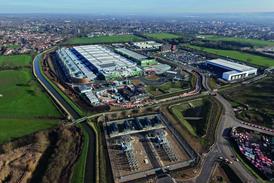
The benefits of carbon capture itself go beyond emissions, protecting and creating jobs. Around 60 new positions are needed to run a CCUS-enabled plant, adding to the 200 already onsite.
The Padeswood capture plant in north Wales, for example, which is already under construction and will feed into HyNet, a leading industrial decarbonisation project, is due to create around 50 new full-time roles and up to 500 more during building. The proposed Peak Cluster, the biggest cement CCUS initiative in the world in terms of emissions saved, will generate and safeguard more than 13,000 roles.
Together, they have the potential to reduce average cement emissions per tonne by three-quarters – though this is reliant on the government continuing to get behind them. It has been good to see government backing for the Peak Cluster pipeline study, but we need support for front-end engineering design (FEED) studies to keep the scheme moving forward and to turn it into a buildable proposition that is ready for investment. We urgently need to see a plan from government for dispersed sites too.
If the UK is serious about meeting both its building ambitions and its climate action goals, we must address carbon as a limiting factor. CCUS helps to do that, while securing the future of a foundational, 200-year old British industry.
A decarbonised cement sector can enable Britain to rebuild without breaching its commitments to a sustainable future.
Martin Casey is senior director, cement and lime at the Mineral Products Association







No comments yet