














At a time of uncertainty, local authorities will look to firms to help create stability through shared capability and stronger expertise, writes Caroline Compton-James
Andy Burnham’s arrival in Downing Street marks the latest in a series of significant political shifts for local government. With a pledge to deliver ‘good growth in every postcode’ by devolving power and responsibility to local leaders, Burnham’s agenda reflects the belief that places succeed when councils are empowered to make decisions about their regions’ future. Coming just weeks after local elections saw almost 40 local authorities switch political control and over 2,000 council seats change hands, councils are now navigating multiple waves of change at both national and local levels.
Inevitably, as new local administrations settle in and a new direction for national government takes shape, priorities come under review. Sometimes, these result in high-profile changes of direction, such as Enfield Council’s withdrawal from the government’s New Towns programme. But more often, the risk is that schemes that are still in their early stages can lose pace or stall. It is essential this does not derail momentum in the delivery of long-term plans and much-needed infrastructure.
What councils are telling us
Even before the change in national leadership, 2026 was already shaping up to be a year of considerable change for local government, with elections across the country and continuing progress towards Local Government Reorganisation and devolution. Against this backdrop, SCAPE partnered with the Local Government Information Unit (LGIU) to carry out research to better understand how councils can sustain delivery even if the landscape around them shifts. The results form the basis of our insight report Delivering Through Change.
We gathered the views and experiences of 70 senior officers – senior directors and heads of services – across 63 councils in England, deliberately focusing not on the politicians, but on those directly responsible for delivery, for keeping programmes on track. This can be a formidable task for teams that have to manage local and national pressures while responding to circumstances beyond their control. Yet, as our research shows, the pressure on delivery is not new. Even before the election, more than 40% of officers did not believe their organisation would be able to meet infrastructure goals or maintain progress over the next two years. An overwhelming 94% of those surveyed also identified greater funding certainty or longer, multi-year settlements as the support they needed most. These are clear signals of what councils are looking for from central government to shape their ability to plan and deliver infrastructure.
Large-scale projects most strongly championed by central government are often the hardest to sustain at a local level.
At the same time, the research points to a clear role for partners in helping councils respond to this uncertainty. How, then, can the construction industry work with local authorities to help them continue delivering?
Understanding the delivery challenge
The answer starts with understanding where the pressures on councils come from, and how they affect delivery. From our research, we see that schemes are most vulnerable in their early stages, where inflation and market volatility directly affect scoping, business cases, commercial expertise and procurement. Plans are increasingly being disrupted by shifting political and financial conditions, making them harder to see through.
The challenge is that large-scale projects most strongly championed by central government – often those with the greatest long-term value for communities, from regeneration to housing and transport – are often the hardest to sustain at a local level. These are typically long-term developments that require major investment and depend on both reliable funding and specialist expertise.
Where partners can help
But councils are far from being on the back foot. They are clear about what they need: structures that ensure resilience, particularly in the early stages of a project. More than half the officers we spoke to identified long-term frameworks as the most valuable form of support. Frameworks are the preferred route into procurement for these reasons: they provide consistency and continuity, reduce risk early on and maintain momentum even against a backdrop of organisational change.
Just as importantly, frameworks give councils access to expertise at the right point. This matters at a time when many are grappling with skills gaps, especially in commercial and specialist areas, which can slow progress; around 40% of officers report skills shortages as an issue. Andy Burnham has proposed using procurement as a lever for delivery and for supporting local jobs, apprenticeships and skills development: in this context, frameworks can help teams better manage risks, avoiding greater challenges later.
What this means for the industry
Taken together, these findings highlight where partners to local authorities can make the most significant impact. As national government looks to devolve more responsibility to places and local leaders are expected to play a greater role in driving growth, councils will need stability where it can still be created: through shared capability and stronger expertise. By understanding the pressures councils are under and acting as reliable partners, the industry can do more than support delivery; it can help to ensure that progress continues through periods of political and organisational change.
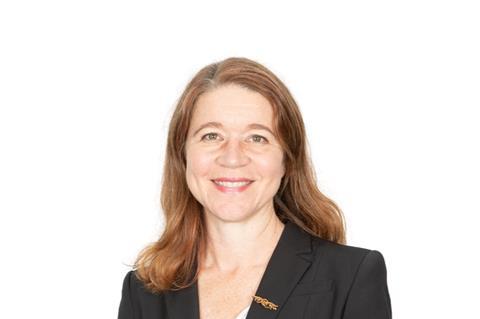
Caroline Compton-James is deputy chief executive at SCAPE




No comments yet