














![TARMAC-FC[37811]](https://d3sux4fmh2nu8u.cloudfront.net/Pictures/280xAny/5/8/0/2029580_tarmacfc37811_791879.jpg)
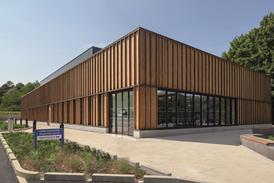
Sponsored by Tarmac, this module looks at the many innovations being used to decarbonise concrete – from supplementary cementitious materials to AI automation of production – and explains how early engagement with manufacturers can identify the decarbonised product that will deliver the right performance for each job
Concrete has been quietly evolving. There is now a range of lower-carbon options, innovative techniques and new ways of working that are delivering carbon savings alongside performance. This module explains how the industry has taken up the challenge of decarbonisation – and how designers and specifiers can find the best of these new options for their projects.
Learning objectives
- Understand the challenges and opportunities in the decarbonisation of concrete.
- Learn about lower carbon concrete options.
- Recognise technical innovations and new working practices that are improving practice in the concrete sector.
- Understand the advantages of early engagement with concrete suppliers.
Decarbonising concrete – the challenge
There is a reason the quest to decarbonise concrete is an urgent one. For conventional ready-mix concrete, the embodied carbon is typically in the range of 200–350kg CO₂e per m³ of concrete, depending on the mix and strength class. Cement production currently accounts for roughly 7% to 8% of global CO₂ emissions.
The high carbon footprint of traditional concrete is largely down to one key ingredient: clinker. Clinker is the reactive hydraulic component of traditional Portland cement, which hardens by reacting with water and gives the concrete its strength. It is made by heating a mixture of limestone (calcium carbonate, CaCO₃) and clay/shale (silica, alumina, iron oxides) to around 1,450°C in a kiln. At that temperature, the materials partially melt and chemically react to form hard, grey nodules primarily composed of calcium silicate minerals, notably tricalcium silicate (C₃S) and dicalcium silicate (C₂S). These nodules are clinker.
The nodules are cooled and then ground with gypsum to make Portland cement. When the cement is subsequently mixed with water, the silicates from the clinker hydrate to form calcium silicate hydrate, a binding gel that provides the majority of concrete’s compressive strength. The proportion and reactivity of the silicates determine the cement’s early and long-term strength development.
Cements are classified under European standard EN 197-1 by their composition. CEM I is pure Portland cement, containing at least 95% clinker. CEM II to CEM VI cover progressively lower-clinker blends, with the proportion and type of supplementary material varying by sub-class. The higher the CEM number (broadly), the lower the clinker content and, all else equal, the lower the embodied carbon.
Why does cement production produce CO2?
The production of clinker generates CO2 in two ways:
- Process (chemical) emissions – when limestone is heated in a kiln it decomposes, releasing CO₂ in a process called calcination. This is unavoidable if using limestone. Roughly 60% of cement’s CO₂ emissions come from this calcination – it is inherent to the chemistry. So even if the kiln were powered by renewable electricity, there would still be large CO₂ emissions from the chemical reaction itself.
- Energy emissions – clinker production also requires kiln temperatures of approximately 1,450°C. Traditionally kilns have been powered by fossil fuels, and this accounts for the other 40% of cement’s emissions.
Decarbonising cement production
Cement manufacturers such as Tarmac are working on a range of different methods to tackle the challenge of decarbonising cement.
Clinker factor reduction
Reducing the clinker factor – the proportion of clinker in cement – is one of the most effective ways to cut CO₂ emissions. Even small reductions in the clinker factor directly cut both calcination and thermal energy emissions.
One example of clinker factor reduction is Portland limestone cement (PLC). PLC is produced by inter-grinding clinker with a higher proportion of finely ground limestone than is used in CEM I. The added limestone replaces a portion of the clinker but doesn’t itself go through the calcination process in the kiln, thus lowering the cement’s embodied carbon. Typically, PLC reduces CO₂ per tonne of cement by around 10% to 15% compared with CEM I, with comparable performance for most applications.
Minimal plant modifications are required to make PLC, and it is now widely normalised in UK supply chains. For example, Tarmac has moved two of its three UK cement plants over to produce PLC as the primary product.
Fuel switching
Another route to decarbonisation is to power kilns with lower carbon and waste-derived fuels, such as biogenic fuels from biomass sources and agricultural residues, refuse-derived fuels, and industrial wastes.
This is not a straightforward swap, because many of these alternative fuels contain chlorine – which, when it enters the kiln system, volatilises and re-condenses, creating something called a chlorine circulation loop. This can cause various problems including blockages in the preheater and damage to the refractory (the heat-resistant lining inside the kiln that allows it to operate at 1,450°C without the steel shell overheating) – and ultimately it can result in unstable plant operation and quality issues in the clinker.
To deal with this, what is known as a chlorine bypass system can be used to enable higher usage of alternative fuels without damaging kiln stability or product quality. This diverts a controlled portion of the hot, chlorine-laden gas out of the kiln system, cools it rapidly so the chlorine condenses onto dust particles, and removes that dust from the process. By taking the chlorine out of the recirculation cycle in this way, the bypass allows higher substitution rates of alternative fuels without compromising kiln stability or clinker quality.
Tarmac’s Tunstead cement plant operates a chlorine bypass system to extract chlorine-rich dust from its cement manufacturing process. Commissioned in 2022, this technology allows the facility in Derbyshire to safely use up to 70% waste-derived fuels instead of fossil fuels, while protecting air quality.
Energy-efficiency improvements
Most cement plants have already improved their energy efficiency substantially, but incremental gains remain important and can make a big impact in a decarbonisation context because of the sector’s scale. Key approaches include:
- Dry-process kilns – raw materials are processed as dry powder rather than a wet slurry, avoiding the energy needed to evaporate water. Modern UK plants are essentially all dry process.
- Multi-stage preheaters – a separate combustion chamber sits between the preheater tower and the kiln itself. The limestone in the raw meal is largely calcined here before entering the kiln, allowing the kiln to be smaller and more efficient, and to use more alternative fuels.
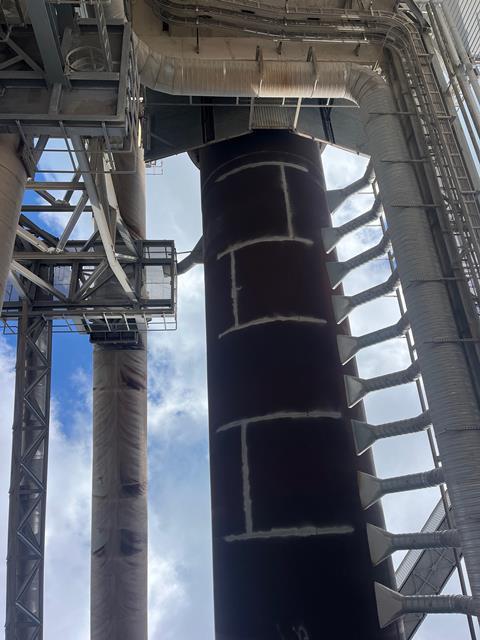
- Precalciners – before entering the kiln, the raw meal descends through a tower of typically four to six cyclones. Hot exhaust gases from the kiln rise through these cyclones in counter-flow, heating the meal so it arrives at the kiln already warm. Each extra stage captures more heat that would otherwise be lost.
- High-efficiency motors
- Variable-speed drives – electronic controls that match motor speed to demand rather than running constantly at full speed, meaning big energy savings on fans, pumps and conveyors.
- Advanced process control – computer-based control systems that continuously optimise plant operation in real time, often using model-predictive or AI techniques (see below).
- Waste heat recovery for electricity generation – the kiln exhaust gases still contain useful heat after the preheaters; waste heat recovery systems use that residual heat to generate electricity for the plant.
- Advances in grinding technology – grinding clinker into cement is one of the most energy-intensive steps in production. Modern vertical roller mills (replacing older ball mills) and chemical grinding aids significantly reduce the energy needed per tonne.
Carbon capture at cement plants
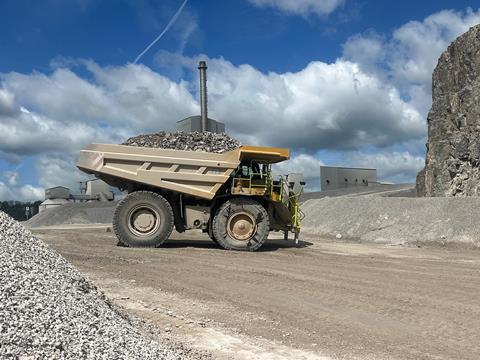
Another decarbonisation route being explored is carbon capture at cement plants. Such systems aim to remove CO₂ from the flue gases during clinker production. Several capture technologies are under development:
- Post‑combustion capture – currently the most advanced and widely studied approach. Here CO₂ is separated from flue gases after combustion, using chemical solvents that selectively absorb CO2. It is then purified, compressed and transported for storage or use. Post-combustion systems have the potential to capture around 90% of CO₂ from treated flue‑gas streams.
- Oxy‑fuel combustion – in this approach, fuel is burned in an oxygen‑rich atmosphere rather than air, producing a flue gas with a very high CO₂ concentration. This simplifies CO₂ separation, though the technology requires substantial modification of kilns and additional supporting infrastructure.
- Calcium looping – this method uses calcium-based sorbents (typically calcium oxide derived from limestone) that absorb CO₂ to form calcium carbonate, then release it in a concentrated stream when heated, regenerating the sorbent in a cyclic process. It has particular synergies with cement manufacturing, because the underlying chemistry mirrors that of clinker production.
Spent sorbent from the capture cycle of carbon looping can potentially be incorporated as a raw material into the cement production, allowing carbon capture to be integrated with the existing manufacturing process rather than bolted on as an entirely separate system. Captured CO₂ from post‑combustion and oxy‑fuel systems, on the other hand, can be transported via pipelines and stored in suitable geological formations.
Supplementary cementitious materials
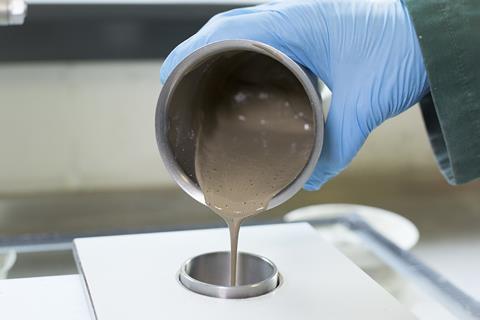
Supplementary cementitious materials (SCMs) are ingredients used to replace some of the clinker in concrete that have a smaller global warming potential but still help the concrete harden and gain strength. These are available in two forms:
- As part of a manufactured cement that arrives at site already blended. For example, CEM II Portland cement has a proportion of SCM blended in, and CEM III cement has an even larger portion of clinker replaced with an SCM.
- As an addition at the concrete plant. Instead of buying a pre-blended cement, the concrete producer can use Portland cement or Portland limestone cement and add SCM’s separately during batching.
Both approaches achieve the same technical outcome.
Some supplementary cementitious materials have been in wide use for a while, but others are still at an experimental stage.
Ground granulated blast-furnace slag (GGBS)
One of the longest-established SCMs is ground granulated blast-furnace slag (GGBS). Slag is the molten layer that forms on top of the iron in a blast furnace, made up of the impurities in the iron ore combined with the limestone flux added during smelting. It is quenched rapidly with water (granulated) to produce a glassy material, which is then ground to a fine powder.
GGBS is what is known as latently hydraulic: it has the chemical potential to react with water and form binding compounds, but only when activated. In concrete, it is activated by the calcium hydroxide released as Portland cement hydrates, going on to form additional calcium silicate hydrate (CSH), the same binding gel that gives Portland cement its strength.
The extra CSH fills pore spaces within the hardened cement paste, making it denser and reducing the size and connectivity of its pore network. Lower permeability translates directly into better durability: a denser paste is more resistant to water ingress and to chloride, sulfate and carbonation attack, all of which can degrade steel reinforcement and the concrete itself over time.
Because GGBS is a by-product of iron manufacture, it carries very low embodied carbon (essentially just the energy needed to granulate and grind it). Replacing a portion of the Portland clinker with GGBS therefore significantly lowers the embodied carbon of the binder while typically improving long-term durability. At the typical UK replacement levels of between 50% and 70%, this can deliver around a 40% to 50% reduction in the cement’s embodied CO₂; at the highest CEM III/B levels (up to 80% GGBS), reductions of between 60% and 70% are achievable.
Under EN 197‑1, blast‑furnace slag cement (CEM III) may contain up to 95% GGBS, with clinker contents as low as 5%. In UK structural concrete, however, more typical replacement levels are in the range of 50% to 70%, with higher proportions used where programme constraints, curing regimes and early‑age performance requirements allow.
Historically, GGBS has been the most impactful decarbonisation lever available to the UK concrete industry. CEM III performs well in a wide range of applications: its lower heat of hydration makes it particularly suitable for large pours such as raft foundations and thick sections, while the denser microstructure it develops offers enhanced resistance to chloride ingress and sulfate attack.
At higher GGBS replacement levels, concrete gains strength more slowly at early ages compared with CEM I‑based mixes. Ongoing advances in admixture and additive technology are addressing this limitation by accelerating early hydration and improving formwork striking times, helping contractors maintain construction programmes while maximising GGBS use and minimising clinker content.
Pulverised fuel ash
Siliceous or pulverised fuel ash (PFA) is a fine particulate residue produced when pulverised coal is burned in power station boilers. Ash particles are captured from flue gases by electrostatic precipitators or bag filters before the gases are released.
Like GGBS, PFA has typically been used to replace a portion of Portland cement, reducing the clinker content of the mix and lowering embodied carbon. Again, the addition of PFA reduces the heat of hydration, as well as improving the concrete’s workability. It can improve strength and durability too.
Replacing cement with fly ash can reduce concrete emissions by 10% to 30%, depending on replacement levels and mix. However, the supply of PFA is decreasing as coal-fired power stations close, mirroring the supply pressure GGBS is under from the decline of UK iron production.
As supplies of both these traditional SCMs become more limited, research has accelerated into the next generation of performance materials that can deliver similar benefits without these supply constraints.
Calcined clay
Calcined clay is a relatively new SCM, but it is the subject of much research. It holds potential for concrete decarbonisation because it is also one of the most globally available minerals. The process involves heating kaolinite-rich clay to around 600°C to 800°C and using the resulting calcined clay as an SCM along with limestone and reduced clinker. The heating removes chemically bound water from the clay minerals and transforms them into a highly reactive pozzolanic material (one that reacts chemically with cement to improve strength and durability). Calcined clay offers the potential for 30% to 40% CO2 reduction versus traditional CEM I.
Calcined clay concrete is slightly more reddish in tone, with good later-age strength and reduced permeability. It is already covered in UK concrete standards, and its use is forecast to grow over the coming years.
Alkali-activated cementitious materials (AACMs)
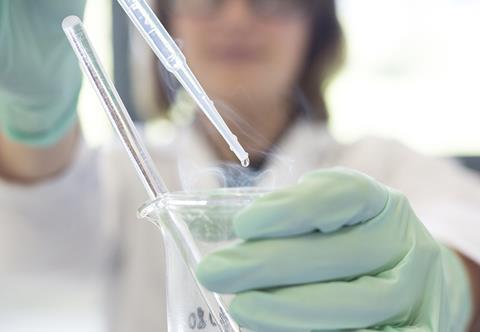
Alkali-activated cementitious materials (AACMs) are binders produced by activating aluminosilicate materials – other industrial by-products as well as natural minerals – with alkaline solutions. The resulting material forms a hardening binder similar to cement, but with much lower carbon emissions. These materials are sometimes described as geopolymer concretes, although technically not all AACMs are geopolymers.
AACMs use a different chemistry from Portland cement. Instead of clinker reacting with water, an aluminosilicate raw material is mixed with a strongly alkaline solution (the activator, typically sodium silicate or sodium hydroxide). The alkali dissolves and rearranges the silica and alumina in the raw material into a hardened binder. Because no clinker is required, the clinker production step – with its associated CO₂ from the calcination – is bypassed entirely.
AACMs that are being trialled or already in use include:
- Red mud (bauxite residue) waste from alumina refining
- Various mining waste
- Waste glass powder
- Biomass ash from biomass energy plants
- Construction and demolition waste fines – experimental use of recycled concrete fines
- Naturally occurring aluminosilicate materials, such as volcanic ash.
Depending on the formulation, AACMs can reduce carbon emissions by between 40% and 80% compared with traditional Portland cement concretes.
AACMs are still relatively niche in the UK construction market, but research and pilot projects are increasing. Despite their promise, AACMs face barriers such as a lack of standardised design codes, limited long-term performance data, unfamiliarity among designers and contractors, and supply chain constraints for activator chemicals. As a result, AACMs are currently used mainly in specialist applications rather than mainstream construction.
Biochar
Another emerging innovation is the use of biochar as a concrete additive. Biochar is a carbon-rich material produced by heating biomass – such as agricultural waste or wood residues – in a low-oxygen process called pyrolysis. The resulting material contains stable carbon that can remain locked away for centuries.
Biochar’s main benefit is carbon sequestration: because the carbon in biochar originates from biomass, incorporating it into concrete can effectively store atmospheric carbon in the built environment. This means biochar concrete has the potential to be carbon negative.
Like AACMs, biochar concrete is still at an early stage of development. More testing and standardisation will be needed before widespread commercial adoption.
These emerging materials are not intended to replace Portland cement completely. Instead, the industry is moving toward a hybrid approach, combining lower carbon cements, SCMs, alternative binders and new functional additives.
Plant automation
As well as seeing the benefit of new ingredients, the concrete sector is also taking advantage of new and improved working practices.
For example, concrete production has traditionally relied on manual control of batching plants, but, increasingly, UK producers such as Tarmac are moving towards fully automated batching systems, with digital control of the entire production process from aggregate loading to cement dosing and admixture addition. This delivers many benefits in terms of both efficiency and decarbonisation.
Modern automated plants can:
- Precisely weigh aggregates, cement and water
- Automatically measure and account for moisture levels in aggregates
- Dose admixtures and fibres accurately
- Monitor production in real time
- Optimise plant throughput.
This automation also delivers several sustainability benefits:
- Reduced waste – precise batching means fewer rejected loads and less over-ordering of materials.
- Lower cement use – better mix control means producers can safely reduce cement content without compromising performance.
- Improved energy efficiency – automation optimises plant operation and reduces idle time for mixers and conveyors.
- Safer working environments – automation reduces manual handling and exposure to dust and moving plant.
Digital technology
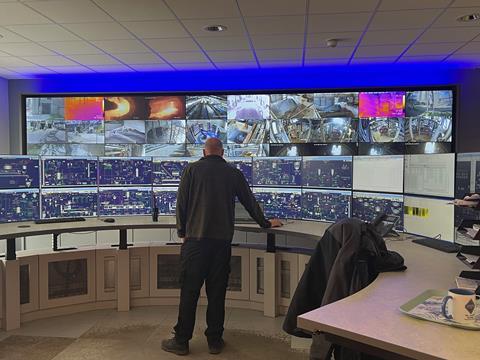
Alongside plant automation, the industry is increasingly adopting digital platforms and data systems to manage the supply chain. These tools connect batching plants, delivery fleets and construction sites through cloud-based software, allowing companies to track orders, monitor sustainability metrics and co-ordinate deliveries in real time.
Examples include:
- Digital batching systems – cloud-based batching software enables operators to monitor multiple plants remotely and analyse production data to improve efficiency.
- Digital ordering platforms – contractors can order ready-mixed concrete, track deliveries and receive sustainability data through online systems.
- Internet of things (IoT) sensors – sensors embedded in equipment or even in concrete itself can monitor temperature, curing progress, moisture levels, structural performance and more, giving real-time insight into how concrete behaves. This can help contractors avoid defects and optimise construction schedules. Sensors embedded in concrete can, for example, let contractors know exactly when it is safe to remove shuttering and pour the next stage.
- Digital twins and modelling – linking plant data, mix designs and site conditions allows producers to simulate outcomes before a pour takes place.
AI and performance optimisation
Concrete suppliers such as Tarmac are also supporting lower carbon concrete through the application of digital technologies and AI-driven optimisation to mix design and material selection. By analysing project requirements, historical performance data and material efficiency, these tools enable more precise calibration of concrete mixes, reducing unnecessary cement content while maintaining structural integrity and durability. This helps to eliminate over-specification, one of the most significant contributors to avoidable embodied carbon, while enabling project teams to make data-led decisions that balance performance with sustainability.
These digital capabilities also enhance early-stage decision-making through real-time analytics and predictive modelling. By simulating different design scenarios and comparing carbon impacts, project teams can identify optimal solutions before construction begins. Embedding this level of intelligence into the design process ensures that carbon reduction is considered from the outset, helping to drive consistent, scalable improvements while maintaining performance outcomes across a wide range of projects.
Overall, digitalisation is transforming concrete production into a data-driven manufacturing process, where decisions are based on real-time performance information rather than operator judgment alone.
Carbon mineralisation
Another emerging innovation involves using captured CO₂ directly within concrete. This approach is known as carbon mineralisation or carbon-cured concrete and typically involves injecting captured CO₂ into fresh concrete or introducing it during the early curing stage.
The CO₂ reacts with calcium compounds in the cement paste to form stable calcium carbonate minerals, permanently locking the carbon into the concrete. This process can enhance early‑age strength development and, in some cases, enable reductions in cement content.
Carbon curing technologies are particularly well suited to precast concrete manufacturing, where CO₂ can be introduced into controlled curing chambers. Under these conditions, carbon mineralisation occurs during early hydration, accelerating strength gain and storing carbon within the concrete matrix.
Recycled materials
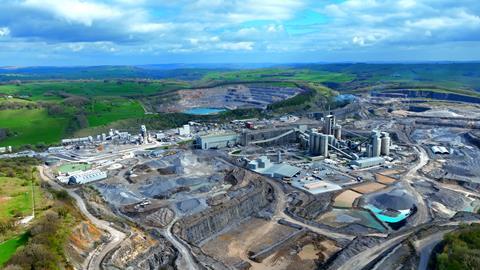
Increasing the use of recycled materials is another important route to improving the sustainability of concrete. The most established example is recycled concrete aggregate (RCA). Concrete from demolished structures is crushed and processed to produce aggregate that partially replaces natural stone in new mixes, reducing demand for virgin materials, lowering transport emissions and diverting waste from landfill.
RCA is most commonly used in road sub‑bases, foundations, pavements and non‑structural concrete, but it can also be used in structural concrete under controlled conditions. Its use is permitted under BS EN 206 and BS 8500, with limits on replacement levels depending on application and exposure class. The UK already has one of the highest construction material recycling rates in Europe, and ongoing research is focused on improving RCA quality for wider structural use.
A newer and potentially transformative development is the recycling of cement paste from demolished concrete. During crushing, hardened cement paste is normally treated as waste, but research has shown it can be separated, processed and reactivated as a cementitious material. Techniques typically involve mechanical separation followed by thermal or mechanical treatment, allowing partial replacement of new clinker. Although still at an early stage, this approach could be a significant step toward a circular cement industry, where waste from demolished structures becomes the raw material for new ones.
Other recycled materials used in concrete include:
- Recycled glass, which can exhibit pozzolanic behaviour when finely ground
- Steel by-products, beyond blast‑furnace slag, used as aggregates
- Waste ceramics, used as aggregates or, in some cases, cement replacements.
While recycled materials offer clear sustainability benefits, wider adoption is limited by challenges such as variable material quality, durability performance and standards constraints. As a result, they are currently used mainly in lower‑risk applications, although research continues in order to be able to expand their use in structural concrete.
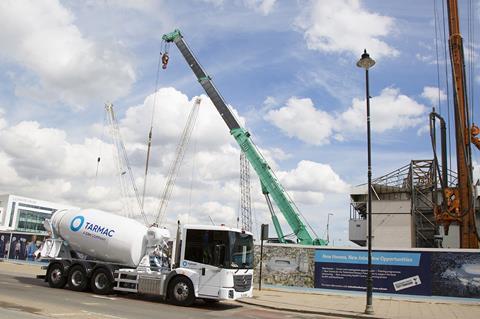
EV ready-mix delivery – end-to-end lower carbon concrete supply
EV ready-mix delivery service represents another step forward in reducing emissions across the concrete supply chain. Tarmac introduced the first electric ready-mix delivery in 2022, and by transitioning delivery vehicles to electric power, the carbon impact associated with transporting concrete to site is substantially reduced, particularly in urban and high-frequency delivery environments. This complements lower-carbon mix design by ensuring that emissions are addressed not only in the material itself, but also in how it is delivered, supporting a more holistic approach to sustainability.
In addition, EV delivery integrates with wider goals around air quality, noise reduction and responsible construction practices. When combined with optimised logistics and efficient scheduling, it can enable the reliable, low-impact delivery of high-performance concrete, aligning with both environmental targets and operational demands. This end-to-end approach ensures carbon savings achieved at the design and manufacturing stages are preserved through to installation, reinforcing the importance of wholelife thinking in concrete decarbonisation.
Current standards
The UK concrete industry operates within a robust and well‑established framework of standards that ensures safety, durability and consistency across the built environment. Key standards include BS EN 206 and BS 8500 for concrete specification and production, BS EN 197 for cement types, Eurocode 2 for structural design, and the Building Regulations and Construction Products Regulation for regulatory compliance. This framework has been fundamental to maintaining confidence in concrete as a construction material.
However, these standards were largely developed around traditional Portland cement‑based systems and established supply chains. As a result, many emerging innovations – such as lower-clinker cements, alternative binders, AI‑optimised mix designs and novel chemical additives – are developing faster than the standards that govern their use. While standards bodies and industry organisations are actively working to update guidance, regulatory change inevitably lags behind technological progress.
Looking to the future
The challenge for the sector is therefore clear: to preserve the rigorous safety, performance and durability requirements that underpin existing standards while enabling the adoption of genuinely lower carbon and more advanced concrete solutions. Recognising this, UK industry bodies – including the Mineral Products Association – are playing a leading role in modernising guidance through initiatives such as the UK Concrete and Cement Roadmap to Beyond Net Zero. This identifies lower‑clinker cements, alternative binders, digital optimisation of mix design and carbon capture as critical tools in delivering deep emissions reductions.
At the same time, organisations such as the Institution of Civil Engineers and the British Standards Institution are increasingly exploring a shift towards performance‑based specification. Under this approach, concretes are assessed against measurable performance criteria – such as strength, durability and resistance to carbonation – rather than being constrained by prescriptive material compositions. This evolution has the potential to unlock wider use of innovative, lower‑carbon materials – provided they can demonstrate equivalent or improved performance.
Supporting this transition, collaborative research programmes involving industry, academia and government are generating the long‑term durability data required to underpin changes to standards. Together, these efforts reflect a sector undergoing a dual process of innovation and standardisation – where new materials are trialled and validated, and proven solutions are then progressively embedded into formal guidance – ensuring that concrete continues to meet structural demands while significantly reducing its environmental impact.

How to benefit from all these innovations
Early engagement with your concrete supplier is critical to unlocking the full value of today’s decarbonisation innovations. With a rapidly expanding range of lower carbon cements, optimised mix designs and new technologies now available, defaulting to familiar specifications can limit performance and carbon savings unnecessarily.
By engaging suppliers at the earliest project stages, clients and designers gain access to specialist materials expertise, plant‑specific capabilities and the latest product developments, enabling solutions to be tailored to structural, durability and programme requirements from the outset.
This collaborative approach not only reduces embodied carbon more effectively, but lowers technical risk, avoids late design changes and delivers better overall project outcomes.
Please fill out the form below to complete the module and receive your certificate