













The new MP for Makerfield still has a way to go if he wants to take Keir Starmer’s job. But with his ascent to Number 10 looking more likely by the day, Daniel Gayne breaks down what his policy agenda might look like for housing, infrastructure and skills
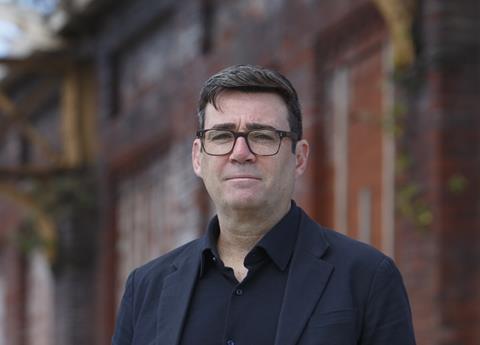
Andy Burnham is an MP. From 2001 until 2017, the years the ex-mayor of Greater Manchester was last in Westminster, this would simply have been a banal statement of fact. But this morning it has much greater significance.
After a resounding victory in the Makerfield by-election, everyone is now expecting Burnham - through one means or another - to challenge Keir Starmer for his job as prime minister. Most expect he would win such a battle.
What would that mean for the built environment?
Building has this morning tried to piece that together by looking at three things: the policies Burnham has advocated in the past; the programme he has implemented as mayor of Greater Manchester; and the statements he has made on the campaign trail in Makerfield.
A huge focus on building social rented - not just affordable - housing
One of Burnham’s biggest talking points concerns building more social housing - and by that he seems to mean actual social rent, not just ‘affordable’ housing.
At the launch of his by-election campaign in Makerfield earlier this year, Burnham asked, rhetorically, “what fixes the housing crisis?” before answering: “I would say it’s council homes.”
It’s a topic that he has made central to his political persona over recent years. He has long advocated an end to the Right to Buy, and when he last ran for the Greater Manchester mayoralty, he promised to build 10,000 council houses by 2028 (in 2024/25, 611 new social rent homes were completed across the 10 boroughs).
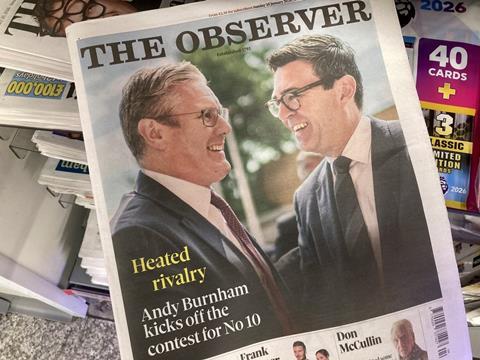
It was also a major talking point when he began to make his pitch for the Labour leadership. In September 2025, Burnham told the Telegraph that he wanted to see £40bn of borrowing to build council houses, along with a charge on expensive London homes.
In his by-election launch speech, Burnham also said he wanted to see “the biggest generation of council housebuilding since the second world war” and homes that were “cheaper to rent and cheaper to run”.
Significantly, it is social rent, rather than affordable homes, that Burnham appears keen on building. In February of this year, speaking at the Resolution Foundation conference, he said he would like to see the government commit to building 500,000 such homes by the end of the decade. For reference, just 64,762 affordable homes were completed in England in 2024-25 - and most of these would likely have been at intermediate rather than social rent.
Burnham has suggested that this huge increase in new social rent homes could be achieved by pivoting the existing £39bn Social and Affordable Homes Programme entirely to the tenure.
According to a report in the Financial Times, Burnham’s camp is considering using the National Wealth Fund to finance this within the bounds of existing borrowing rules, or alternatively using Homes England’s National Housing Bank.
The new Makerfield MP also appears to have other plans for Homes England. Speaking to The Social Housing Podcast last month, he called for less “scheme-by-scheme micromanagement” by the body and more freedom for regional authorities to deliver as they see fit.
Speaking on the same podcast, he urged a “three strikes and you’re out” approach to landlords who repeatedly fail to meet decent homes standards, using compulsory purchase orders to take over properties. This fits with a broader pattern of tough enforcement for housing standards, with the Greater Manchester Combined Authority under Burnham ramping up penalties for rogue landlords and increasing legal assistance for tenants. The GMCA has also introduced the Good Landlord Charter, a voluntary standard for landlord excellence. One could imagine a similar carrot-and-stick package being rolled out nationally.
For all the above focus on social housing, it is worth noting that during his time as Greater Manchester mayor, development in the city has been dominated much more by private building and has continued to be seen as a relatively permissive planning environment.
The return of HS2 - but not as we knew it
In his unofficial role as ‘King of the North’, much of Burnham’s talk on infrastructure has been focused on improvements to that part of the country.
Ahead of Rishi Sunak’s decision to scrap HS2 in 2023, Burnham had argued such a move would “rip the heart” out of plans to upgrade northern rail services and risk creating a “north-south chasm”, leaving the north of England with “Victorian infrastructure, probably for the rest of this century”.
In a recent interview with the i, Burnham said he “would revive HS2” between Birmingham and Manchester if he were to become prime minister, although under an entirely different model. According to the newspaper, Burnham is in favour of a slower, cheaper version of the line, funded partly by local taxpayers. He has pointed to the Elizabeth line, which was roughly 60% funded by local taxes, as a model. “There’s a cleverer way of funding this,” he told the publication. The Elizabeth line was funded by an extra 2p business rates supplement, which raised more than £8bn. Land value capture is another mechanism that could be explored.
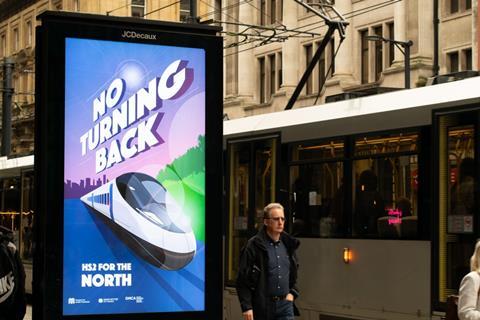
Such a move could also mean the revival of an underground station at Piccadilly, long-advocated by Burnham. While expensive, building a new station underground would make it easier to function as a hub between HS2 and a cross-northern link, as well as avoiding the need to build a six-track viaduct through the centre of Manchester.
A Burnham premiership might also mean quicker progress with the aforementioned cross-northern link, usually referred to as Northern Powerhouse Rail. Along with Liverpool region mayor Steve Rotheram, he has led lobbying efforts for this project, which has had consistent backing from British prime ministers without ever seeming to make much progress.
MBaccs for everyone: Burnham’s blueprint for technical education
Skills is an underconsidered area where Burnham’s potential policies could affect the built environment.
In 2024, a year after first announcing it, Burnham’s GMCA launched the Greater Manchester Baccalaureate - or MBacc. It was a new framework for technical education designed by the authority to provide a clear route into employment for young people and a “genuine and equal” alternative to university.
At age 14, students are guided towards GCSEs that are aligned with seven of the region’s fastest-growing industries, one of which is “construction and the green economy”. These so-called gateways are meant to “give young people a clear line of sight to good jobs and the steps that will take them there”.
It’s not hard to imagine the policy being rolled out nationwide with gateways tailored to each region - perhaps helping the construction industry tackle its own skills crisis.
In his post-victory rally speech, he indicated that this focus on technical skills would continue if he got the keys to Number 10. “No more an education system dominated by the university route, but an education system that offers a path for everybody, academic and technical, in equal balance,” he said. “That’s what we need if we are to change this. I guarantee a work placement for every 16 to 18 year old who wants one.”
Expect the unexpected?
Of course, none of the above is guaranteed - even if Burnham does make it to Number 10.
For one thing, Burnham is a notoriously changeable politician - a sign of weakness or pragmatism, depending on who you ask.
There is apparently a joke in Westminster in which a Blairite, a Brownite, a Milibandite and a Corbynite walk into a bar. The barman looks up and says: “Hello Andy, what’ll it be?” During his recent campaign, Burnham liked to bring up this gag to journalists to argue that the joke was really on the people telling on it because it showed how factional their thinking was.
That may be. But the true test of Burnham’s convictions will be when he comes into contact with the many constraints by which a British prime minister in 2026 is bound. Fiscal rules that he appears to have begrudgingly endorsed; a lack of mandate to break manifesto pledges on tax; a parliamentary party largely selected to his predecessor’s ideological tastes; bond market jitters.
That’s even before we get on to the perennial spoiler in politics: events, dear boy.
All that is to say that Burnham’s ambitious plans to build hundreds of thousands of council homes and several major rail projects might end up being tempered.






1 Readers' comment