














Firms which thought they could protect their businesses from safety liabilities need to think again, Dave Rogers writes. But one lawyer has a solution to the issue for builders potentially crippled by the cost of historic repairs
“The question for government is, do you want to wreck the industry or protect it? There is no perfect solution and it needs an honest, open conversation between parties.”
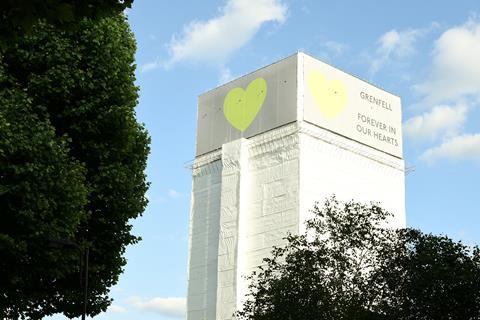
That is the view of one industry veteran who thinks that well-meaning legislation introduced in the wake of the Grenfell fire, which killed 72 people in 2017, will mean that more firms meet the same fate as Ardmore.
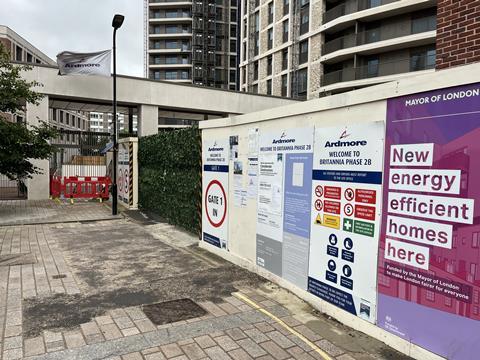
To recap, in the middle of last month the London contractor said that its construction group – which includes Ardmore Construction Group, Ardmore Major Projects, Regeneration, Fit-out, Hotels & Commercial and Landmark – had gone into administration.
Ardmore explained that the move “followed the profound impact of the recent building liability order (BLO) judgment relating to the Admiralty Quarter project, which completed in 2009.
“The judgment has affected client confidence, payment terms and certified values across a number of live projects, materially affecting the construction group’s ability to continue trading in the normal way.”
The Crest Nicholson building liability order judgment
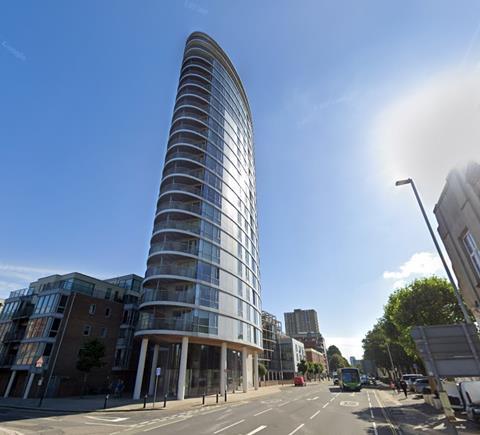
In May, a High Court judge ordered several Ardmore firms to pay Crest Nicholson nearly £15m in a case relating to cladding at 19 residential buildings at the Admiralty Quarter scheme in Portsmouth.
The firms argued that they could not afford to pay and would be at risk of insolvency if they did.
The High Court ruled that BLOs introduced under the Building Safety Act 2022 could be used to extend liability for building defects beyond the original contractor to parent companies and associated businesses within the same corporate group (see ‘What are building liability orders?’, below).
As a consequence of all this, 275 Ardmore staff have lost their jobs after BTG, formerly Begbies Traynor, confirmed that it had been appointed administrator for Ardmore Construction Group.
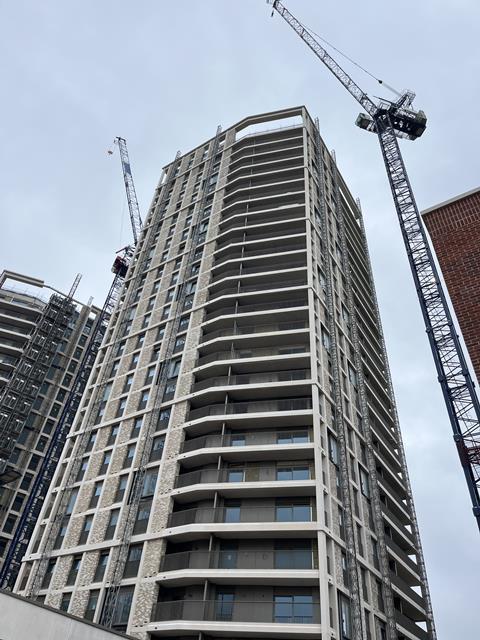
And several jobs, including the firm’s Britannia residential scheme in Shoreditch for Hackney council and which had been due to finish this year, have been delayed while replacement contractors are brought in. Several remediation schemes have also stalled, a further blow to long-suffering homeowners.
Some think that what has happened at Ardmore will happen to others. “It’s a real issue,” said one contractor. “Only now is this problem coming to light because of what has happened at Ardmore.”
Another added: “As a contractor you have to give clients confidence. You can’t start talking doom and gloom [about liabilities] because no one will employ you.”
The scale of unknown liabilities facing other firms
Francis Ho, a partner at law firm Charles Russell Speechlys, says the issue is becoming a crisis not just for contractors but for developers and homeowners as well. “The fall of Ardmore highlights a real dilemma at the heart of building safety,” he warns.
“Where the liabilities of one group company have the potential to bring down all the others, claimants have an unenviable choice. They can pursue claims aggressively, through BLOs for instance, and risk pushing the whole group into insolvency. Or they can accept a lesser settlement and at least walk away with something.
“While the industry works through that calculus, homeowners – the innocent parties in all of this – may be living in unsafe buildings, waiting for remedial works.”
Lena Barnes, senior associate at law firm Devonshires, says the significance of Ardmore’s legal loss against Crest Nicholson cannot be underestimated. The Crest Nicholson case demonstrated that group-wide exposure for building safety claims is entirely possible under building liability orders,” she adds.
Specific company structures or restructuring exercises, which were intended to provide a safety net to contractor parent companies, will be scrutinised and may provide no legal sanctuary
Lena Barnes, Devonshires
“Specific company structures or restructuring exercises, which were intended to provide a safety net to contractor parent companies, will be scrutinised and may provide no legal sanctuary if the court considers it is just and equitable to do so – even where that entity has been put into administration.
“Other contractors that have been involved in numerous, historic projects with known, or yet to be discovered, building safety issues, will be in the same boat. Parent companies, sister companies, subsidiaries, SPVs, beneficiaries of trusts… all can be pursued in the interests of building safety.”
The new legislation is working both for and against contractors. Last month, residential specialist Mulalley was awarded a £1.8m settlement in a ruling by a High Court judge who decided that the German parent of a UK cladding firm which was put into administration last year should have to pay some of the contractor’s costs caused by it having to replace a defective cladding system supplied by its subsidiary.
The judgment against Sto SE & Co. KGaA by Mr Justice Pepperall was immediately hailed as a landmark by Charles Russell Speechlys, which represented Mulalley in the case.
Rebecca Morjaria, the firm’s senior associate, said: “The decision sends a clear message to product manufacturers and their parent companies: the Building Safety Act has real reach, and structuring around a subsidiary will not insulate a group from liability where a defective product has been placed on the market.”
But there are worries that all this legal action will mean an increasing number of cash-strapped companies will be forced into administration. “Where is this money going to come from?” one boss wonders.
“You only need to find some big cladding defects and that claim could send you under. This is not a great place for developers, either. Planning delays, the Building Safety Regulator and this legislation make this sort of work a hugely unattractive market. Who will do this work in the future?”
The problem for contractors is that they really do not know how much they will be liable for in the future – and that makes planning ahead hard.
In a note accompanying its latest results, Laing O’Rourke, the UK’s biggest private contractor which is carrying a defects provision of £171m, said: “The BSA has extended the limitation period to bring a claim under the Defective Premises Act from six years to 15 years prospectively and 30 years retrospectively. The extension to limitation periods may result in additional liabilities for the group in the future, in excess of the costs recognised to date, the extent of which cannot be assessed by Laing O’Rourke as we do not have access to the information that would allow a detailed assessment of each potential obligation.”
It added: “Developers may seek to recover costs from main contractors (eg Laing O’Rourke) but, until those claims are raised, it is not possible to determine the full extent of the liability and/or work required on our behalf.
“Provisions of this nature are inherently uncertain as the estimated costs are based on a number of key estimates and assumptions, which include, but are not limited to, the extent of defects that may exist, the cost of rectifying these defects, and the consideration of what was considered to comply with building safety regulations at the time these buildings were constructed. These estimates are also inherently uncertain due to the highly complex and bespoke nature of each building.”

So, no contractor really knows how much this is all going to cost them – and when it will all end.
Ho at Charles Russell Speechlys has a suggestion for how to help firms in this situation: “What if the government could offer a bold alternative? What if it introduced a scheme to lend culpable contractors funds for the remedial works but required them to repay those over time, together with commercial interest and loan security?
What if the government could offer a bold alternative? What if it introduced a scheme to lend culpable contractors funds for the remedial works but required them to repay those over time
Francis Ho, Charles Russell Speechlys
“That could get works finished more quickly, get residents safe but still hold liable contractors to account. The question would be whether there is any political will to consider it – this would require taxpayers’ money, after all.”
Devonshires’ associate Barnes adds that the Crest Nicholson ruling means operating will get harder for contractors in the future. “The construction industry already has the highest level of insolvency. The Crest Nicholson case has shown the likelihood and relative ease with which a BLO can be established, and that the court’s discretion on what is ‘just and equitable’ is wide.
“Together with insurers carving out fire safety and cladding exclusions from cover, reducing fire-related limits and claims under the BSA extending further back than the run-off of many policies, the risk of direct exposure to building safety costs across wider group arrangements is substantial.”
Earlier this year, it emerged that Ardmore Construction Ltd (ACL), an Ardmore sister business which went into administration at the end of last summer, was spending “huge sums of money” on lawyers dealing with remedial claims, with administrator BTG revealing that it paid out nearly £700,000 last February alone on legal bills.
Ardmore’s appeal and what might happen next
Last month, Ardmore said that its Ardmore Group business “has not entered into administration but has applied to enter into a moratorium process, which will allow it to continue trading while its position is reviewed”.
It said Ardmore Group had applied for a company moratorium – designed to give it temporary protection from creditor action while rescue options are explored. Last week this was extended into August.
Ardmore said: “This [moratorium] step is intended to allow Ardmore to continue preparing its appeal against the [Crest Nicholson] BLO judgment.”
It added that “Ardmore was granted permission to appeal to the Court of Appeal […] Ardmore believes the appeal raises issues of wider public importance for the construction industry, including the circumstances in which a Building Liability Order may be made and the extent to which liabilities may be imposed on group companies in respect of historic projects”.
Devonshires’ Barnes says there is a lot riding on the appeal. “If, on the conclusion of the moratorium, it is decided that Ardmore Group Limited should enter into administration, those seeking recovery will undoubtedly look to other potential targets with whom they may have the benefit of an insurance policy or bond, a contractual relationship or one where a duty of care can be established.”
In other words, no one is safe from the spotlight. And what is clear is that, for the industry, this issue will run and run for quite some time.
What are building liability orders?
A building liability order (BLO) is a court order introduced under the Building Safety Act 2022 to help claimants recover losses arising from serious building safety defects. It allows the High Court, where it considers it “just and equitable”, to extend the liability of one company to another company with which it is associated.
In practice, this can mean a parent company, sister company or other connected corporate body being made jointly and severally liable for the same building safety claim.
The orders are aimed at situations where a developer, contractor or special purpose vehicle has limited assets, has been wound up, or cannot meet the cost of remediation. Before the act, leaseholders and building owners could find that the company responsible for defective work no longer had the means to pay, even though it formed part of a wider group. A BLO is designed to stop corporate structures being used to avoid responsibility.
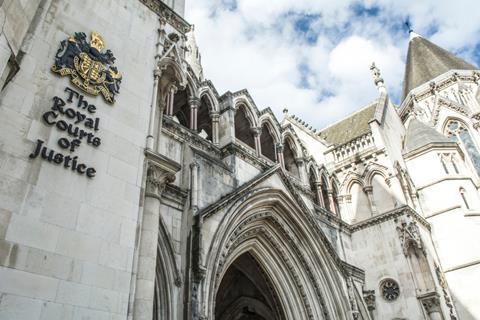
An associated company may be liable even if it did not carry out the defective work itself, provided the statutory relationship and the fairness test are satisfied.
For claimants, the orders widen the pool of potential defendants and improve the prospects of recovering remediation costs. For developers and construction groups, they increase the risk that liabilities will reach beyond the project company.







1 Readers' comment