



















The prime minister has made council housebuilding a defining pledge of his government, But with Housing Revenue Accounts under severe strain and councils starting from low levels of delivery, Carl Brown speaks to council housing directors and leaders at the ADoH and LGA about what it will actually take to make it happen

Andy Burnham in his very first speech as prime minister in July stood on the steps of Downing Street and proclaimed, “we will build more council homes.”
It is a pledge he repeated several times during his first weeks in the job, prompting debate in housing circles as to whether Burnham means council housing in the literal sense – meaning homes directly delivered by local authorities – or whether he is using it as a catch-all term for social housing, including homes delivered by other organisations such as housing associations.
Any doubt about his meaning has now been banished. In his party conference speech in Liverpool last month, Burnham not only pledged “the biggest council housebuilding programme since the post-war era” but he confirmed he wants to boost council delivery in particular, and for ideological reasons. He said: “I am specific about council homes because we need to restore stronger democratic control over our housing stock.”

In the past Burnham has made comments about putting councillors back on to the boards of stock transfer housing associations – a measure which may risk housing associations’ debt being reclassified as public debt.
And the government has already started taking steps in this direction towards council delivery. As Housing Today reported last month, a portion of the initial wave of funding under the £39bn Social and Affordable Homes Programme (SAHP) has now been held back for potential use by councils instead of housing associations or housebuilders. In London meanwhile, 60% of the first wave of funding under the capital’s SAHP will go to London boroughs. The government is also looking at making councils eligible for the £2.5bn low-cost loan scheme which was originally conceived of as a registered provider-only facility.
Burnham also promised to end right to buy for new builds, and to give councils extra powers to take ownership of empty homes and to force private landlords to improve the worst quality rental homes.
To find out the potential impact of the Burnham administration’s focus on council housing, three housing experts – Hakeem Osinaike and Glyn Halksworth, co-chairs of the Association of Directors of Housing (ADoH), and Carl Cashman, chair of the inclusive growth committee at the Local Government Association – set out the current development backdrop for local authorities and consider how they might capitalise on recent announcements.
Starting from a very low base
In terms of councils building more homes than at any other point since the post-war, a look at official housebuilding statistics shows the scale of the challenge facing the Burnham government.
The high point in council housebuilding was 1953 when nearly 200,000 council homes were completed (198,210). Even in the late 1970s town halls were building more than 110,000 council homes a year.
In comparison, in 2025, councils directly delivered just 1,970 new-build homes. Indeed the figure has hovered around 2,000 council homes a year for the past decade and while this is better than the virtual halt to council housebuilding seen in the 1990s and early 2000s, delivery is a long way behind where it was a few decades ago.
The reasons for the drop off are well-documented. The Right to Buy, and the fact receipts could not in the main be used to replace homes, centralisation of housing finance, stock transfer and the rise of a different delivery model - namely through large housing associations with the ability to borrow privately - have all combined to see councils largely stop developing. This process was only partially reversed by the self-financing reforms seen in 2012.
It’s important to point out the figures cited above only include new-build homes councils have built from scratch. Once you include acquisitions from private developers, including section 106 buys, the number of newly-provided council homes rises to 10,480 in 2024/25. This figure is also sometimes cited, not unreasonably, as a measure of council housing development.
Lack of capacity vs housing associations
Burnham’s decision to hold back development funding for councils has not found favour with some in other parts of the housing sector. Several chief executives of registered providers (RPs) have privately told Housing Today the decision to shift funds from RPs – that have capacity and overbid for the £39bn Social and Affordable Homes Programme – to councils perceived as lacking the ability to develop does not make sense for a government seeking to boost delivery in this parliament.
Housing Today’s Regen Connect advisory panel of construction industry experts have also warned the move could delay investment, with Clarion board member David Lunts saying Burnham’s rhetoric “risks sending a negative message to the rest of the affordable housing world, that does have the capacity and track record of getting this stuff built.”
But is this fair? ADoH’s co-chair Osinaike, who is also strategic director of housing at Southwark Council, questions the assumption that councils do not have capacity.
He says: “We all have capacity, in fact the reality is housing associations are reducing their development capacity. Now, what they’re reducing it to is still able to deliver more homes [than councils], but local authorities are increasing their capacity because they weren’t building for a long time.” Certainly in London there appears to be appetite at least, with figures from London Councils earlier this month suggesting boroughs have identified sites for 50,000 homes.
Osinaike’s bigger point however, which he has also made on social media, is that the debate should not be focused on “housing associations vs councils” but on the need for flexibility and funding to ensure the social housing sector as a whole can build to meet demand.
Osinaike says: “There isn’t the money to back it up: £3.9bn a year over 10 years is not equal to the rhetoric that we’re hearing. You know, £3.9bn a year does not build many council homes,” he says.
The LGA’s Carl Cashman, the leader of the opposition Liberal Democrat group on Liverpool City Council, talks about a “systematic dismantling” of local government over the years, which led to a reduction in expertise and ability to deliver, alongside centralisation of powers.
“If councils are going to be asked to do this by the government, they need to be given the time, the expertise and, most importantly, the funding to do it,” he says. He adds that the argument for pressing ahead with a revival of council delivery is that local authorities are directly accountable to the public at the ballot box. “My scepticism around housing associations now is that they haven’t got that same accountability,” he says.

While we may debate what the optimum amount of new grant funding should be for councils, a much more fundamental challenge is the pressure on local authorities’ Housing Revenue Accounts (HRAs). HRAs are ringfenced statutory accounts that record all income and expenditure related to the management and maintenance of council-owned housing stock and they also fund the development of new council housing.
As the Office for Budget Responsibility noted earlier this year, the financial position of HRAs has deteriorated sharply in recent years. Social housing rent cuts have contributed to repairs and maintenance costs outstripping rental income in recent years. The Office for Budget Responsibility (OBR) said that between 2019 and 2026 repairs and maintenance expenditure rose by 56%, but rental income increased by just 29%.
The OBR said: “Many HRAs are effectively loss‑making and many councils have been required to sell housing stock, borrow, or seek exceptional financial support to remain compliant with the legal requirement not to run a long-run deficit on the HRA.”
Demands on the Housing Revenue Accounts
Halksworth, who is also director of regeneration, housing and regulatory services at Southend-on-Sea City Council, describes the competing demands on the HRA as a “three-way pull”.
First is all the costs associated with being a landlord, with demands relating to building safety, decent homes, repairs and much more besides which have to come out of the HRA.
“We’ve got our current homes to worry about; we tend to have more difficult forms of housing in terms of maintenance and making sure they’re decent than RPs have because of age and type” says Halksworth. “We have considerations like minimum energy efficiency standards which are seismic shifts.”
Many of these local authorities are in a perilous position with their HRAs
Carl Cashman, chair, inclusive growth committee, Local Government Association
Then there is the HRA having to fund the costs of borrowing to invest in stock. Osinaike says this has to be found with no extra income beyond what the council can generate through its rents.
The third area of pressure is the actual funding for development, which can put further pressure on the HRA as rental income is not immediately generated. Osinaike says: “The way local authorities are lent money, they get the money upfront and are already paying interest on loans for properties that aren’t going to be ready and generating income for at least three years.”
Cashman says: “Many of these local authorities are in the perilous position of their HRAs being in a deficit and actually they need to get that right, which requires proper funding from government before they can even think about building any more social or affordable houses.”
A Local Government Association survey of its members earlier this year did however suggest things are improving. It found the percentage of councils saying they need to draw on reserves fell from 72% to 46% year on year, 71% are now confident of balancing their books up from 61% while the percentage saying they felt confident they would be able to maintain and repair existing housing stock rose to 61% this year, compared with 52% the year before.

However, the LGA said “significant challenges remain for HRAs, which will impact housebuilding and cost to tenants.”
Just under half (44%) of councils say that financial pressures on their HRA will impact the amount they can invest in building new homes. The LGA said: “It remains concerning that nearly two-fifths (39%) still don’t feel able to maintain existing housing stock, despite providing good quality housing being a priority for councils.“
Time to revisit HRA and LHA assumptions?
So what could help councils with squeezed HRAs? Osinaike suggests government could provide funding to more easily allow local authorities to comply with requirements around decent homes and energy efficiency. “Then the HRA would be freed up to do other things,” he says.
Sector bodies have also called for government to reopen the 2012 HRA self-financing settlement. Under this deal, councils took on a share of national debt in return for keeping local rental income.
However, as Savills and Shelter in a report earlier this year have noted, a lot has changed since the settlement’s original assumptions about the amount of debt councils can sustainably support.
It said: “The original HRA self-financing settlement has been undermined by successive adverse policy interventions including cuts to rents, rent caps and the introduction of higher safety and quality standards – none of which were provided for within the original settlements.” Higher inflation and increased regulation mean that the assumptions behind the debt levels are out of date.
The HRA level of debt in the settlement was set at £29bn but Savills and CIH said in 2024 the sustainable level of debt within HRAs has since dropped to £11bn. This means that an estimated £17bn in unsustainable debt would need to be transferred from local authorities to central government to enable council housing finances to become sustainable again for the long term.
Leading the charge: Haringey Council
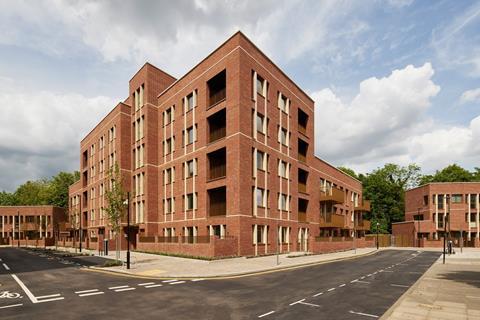
One of the local authorities leading their way in council direct development is Haringey Council. The north London borough has a 10-year housing delivery target of 15,920 homes, of which 3,000 will be delivered directly.
The borough will borrow and use grant funding, but will also cross-subsidise the delivery of homes for social rent by directly developing some homes for sale, investing all profits through its HRA to build homes for social rent. The exact proportion will depend on the levels of grant and economic factors.
As Gavin Smart, chief executive of the Chartered Institute of Housing, has noted the Localism Act establishing the self-financing settlement makes it clear the settlement can be re-opened if factors taken into account in determining debt levels have changed.
Savills and Shelter said a complete write-off of the debt “would release and unlock borrowing capacity and could enable the delivery of over 280,000 additional new social rent homes”.
Another potential way of boosting borrowing would be allowing councils to use some of the £2.5bn in low cost loans announced in the spending review. Originally envisaged as just for RPs, the scheme will see loans with a nominal interest rate of just 0.1% provided to reduce borrowing for development. Amy Rees, chief executive of Homes England, confirmed at the Housing Community Summit in Liverpool last month that these loans could be partially re-targeted at councils, while housing minister Matthew Pennycook also confirmed the government is looking at low-cost borrowing options for councils.
The low-cost loans would be preferable to councils’ borrowing from the Public Works Loan Board, which are pegged to the gilt - the price of government bonds.
While debates rage around the HRA and borrowing, another increasing funding gap for councils can be seen in the form of increasing amounts town halls are having to pay out in housing benefit without re-imbursement from government.
Councils pay money in housing benefit for private tenants and then claim money back from the Department of Work and Pensions. However, they can only claim 90% of local housing allowance rates as they were in 2011. The LGA is calling for these to be uprated to 90% of current rates.
It calculates that since 2017/18, councils across England have spent almost £1.5bn more on temporary accommodation than they have been reimbursed through subsidies. Without intervention, this figure could balloon to nearly £4bin (£3.9bn by 2029/30.
It said: “If the LGA ask of uprating the subsidy rate to 90% of prevailing LHA rates were agreed, the total projected cumulative cost by 2029/30 will be 37% less…that is a saving of £1.5bn to councils, money that could significantly boost homelessness prevention and council housebuilding.”
Alternative models
While council finances are tight and mitigate against direct development, what about attracting private investment through alternative non-HRA vehicles?
Halksworth says at Southend Council they talk often to potential investors but are wary. “We have to measure those opportunities very, very carefully against the risk for the council.”
At-a-glance: Association of Directors of Housing
The Association of Directors of Housing, or ADOH, was founded last year as a membership body for local authority heads of housing and homelessness services.
It now has 105 members and co-chair Osinaike says they could have as many as 130 by the end of the year. Members are collectively responsible for around 900,000 council homes.
Halksworth said: “Being a member is about growing your network, being part of a conversation, contributing to a really increasingly significant voice in the sector.”
“So if we are hitching ourselves to 50, 55, 60-year wraparound lease arrangements it can be problematic, it might look a really good thing for an institutional investor. It might not look quite so good for our future tenants.”
A sizeable number of councils have also looked at setting up housing companies outside of the HRA. The overall aggregated contribution to supply is difficult to ascertain as council housing company delivery numbers, as CIH has pointed out, are not reported separately nor appear consistently as ‘local authority provision’ in national datasets. The lifting of the HRA borrowing cap may have removed some of the impetus for these companies, while a number of high-profile failures may also have deterred some from going down this route.
Osinaike says Southwark is more likely instead to use its land as equity in joint venture deals with private developers.
He says measures to make it easier for councils to acquire land could also help delivery, through for example, reforms to compulsory purchase orders. He also says public bodies should be allowed to take into account the social value of council housing developments when decided who to dispose of land to. Currently, public bodies are required by law to get the best consideration for public land when selling, meaning they can be incentivised to sell to other bidders if the price is better. “They should look at value in a much rounder, fuller way,” says Halksworth.
While the mechanics of directly developing homes are tricky for many local authorities, their role in regeneration and place-making as a convenor of plans is more entrenched.
Halksworth says: ”It’s not always about the council doing it, sometimes the role is for them to convene and co-design that kind of masterplan, that vision of place, if you like.
”They are best placed to understand what homes need to go where […] We know our communities.”
Councils find themselves in the spotlight because of the prime minister’s much publicised desire for more local authority-delivered housing.
But ensuring they can deliver at scale in the face of squeezed budgets and capacity issues will be a challenge. If councils are truly to return to delivery in a big way it would appear much more grant funding is needed, while changes to rules governing HRA debt, LHA subsidy rates and public land disposals would all be helpful too.
What councils need
Housing directors and Carl Cashman of the Local Government Association say six changes would turn Burnham’s pledge into delivery.
1. More grant funding
£3.9bn a year over ten years “does not build many council homes”, according to Association of Directors of Housing co-chair Hakeem Osinaike.
2. Reopen the 2012 Housing Revenue Account debt settlement
Councils took on £29bn of debt in 2012, but the sustainable level is now estimated at £11bn. Transferring the £17bn gap to central government could unlock more than 280,000 additional social rent homes.
3. Access to low-cost loans
Opening the £2.5bn, 0.1% interest loan scheme to councils would cut borrowing costs compared with gilt-linked Public Works Loan Board rates. Homes England and the housing minister are considering it.
4. Uprate housing benefit subsidy
Councils can recover only 90% of 2011 local housing allowance rates. The temporary accommodation shortfall has reached almost £1.5bn since 2017/18 and could rise to £3.9bn by 2029/30. Uprating to 90% of current rates would save councils £1.5bn.
5. Separate funding for standards
Funding decent homes and energy efficiency work outside the Housing Revenue Account would free up rental income for building.
6. Reform land disposal rules
Public bodies should be able to weigh social value, not just best price, when selling land, and compulsory purchase order reform would make sites easier to acquire.







No comments yet