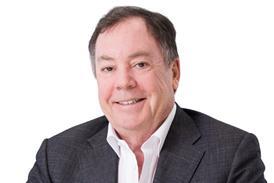
The firm’s director of residential new-build on his mission to decarbonise the UK’s homes, working in Turkey and why he doesn’t like the Burj Khalifa. You will also never guess his favourite food…

Why did you choose construction as a career?
I have worked in utilities for 17 years but, when the opportunity arrived to lead the new-build team at E.ON Next I knew it was a chance to make meaningful change. My biggest driver in this role is to tackle the long-term challenge that climate change presents.
The UK has made great progress on decarbonising electricity production and the next biggest challenge for us is to decarbonise homes and buildings. I want to make that practical and affordable for everyone and all property types, not just the few.
Tthe point at which a building is constructed is clearly the best place to start that process, so leading the new-build team was a natural fit for me.
What are you most proud of in your career to date?
We have been on quite a journey over the last five years. We have built up E.ON Next and shifted our focus to growth areas that are having a really tangible impact on the climate change agenda.
I love building up businesses and helping them to grow. Our recent purchase of Eco2solar, one of the UK’s largest installers of solar for residential new-build, has transformed what we are able to offer and, crucially, what we are able to deliver for developers.
By working hand in hand with Eco2Solar experts and other parts of the E.ON business, we are able to provide an ever-expanding solution set for construction in the residential new-build market to provide homeowners with sustainably lower bills for all property types, built in at the point of construction, and a range of practical solutions to meet the regulatory requirements of developers.
It is great to have a job with a clear purpose and to be working with such an amazing and motivated group of people.
What has been the biggest challenge of your career to date?
I was honoured to be part of the team who built up our operations in Turkey – covering Istanbul, Ankara and Syrian border region of Toroslar – during the Syrian war. We successfully took 9.2 millio customers into the free market.
My job was to build all the processes for the free market, starting with no team at all, in a country where I couldn’t speak the language. It was a tough gig, but we built a great team and I am very proud of what we achieved together, and the subsequent inspiring careers of the people I worked with.
If you could change one thing about the industry, what would it be?
Low bills for everyone. With sector-wide energy debt at an all-time high, we know there are many who are struggling to pay their bills.
There are practical and affordable energy solutions available, and new-builds are the perfect place to start deploying these at scale. My focus is on finding a way to ensure all new homes, regardless of their size, are able to be equipped with measures that make energy more affordable – and more sustainable.
We need to get better at using the solutions that already exist to futureproof our homes.
What is the most helpful advice that you have been given?
Early on in my career a transformation director I worked for told me: “The world is full of ambiguity and the job of a leader is to create a sense of direction and clarity”.
The energy industry and energy solutions can be extremely complicated and confusing, and we need to help our customers navigate our ever-changing environment by providing simple, practical and affordable solutions.

Name your favourite building in the world?
The Suleymaniye Mosque in Istanbul – for its time, the scale of ambition is phenomenal, especially in an earthquake zone and it is a beautiful, calm and restful place with amazing views across what is a loud and chaotic city. I’d thoroughly recommend it for any architecture nerds out there.
Which famous building do you most dislike?
The Burj Khalifa – designing it and building it was clearly a huge achievement but the idea of building something of that scale in the middle of a desert region strikes me as utterly unsustainable.

Which famous building do you wish you had worked on?
Honestly, my world and interest is less on the grand individual projects but more on making homes better for everyone. On that front I have long admired what is being done in Cambridge, starting with the Accordia project that won the Sterling Prize in 2008 and now what they have done with the Marmalade Lane project.
I would love for E.ON to be consistently providing the energy solutions that help these sorts of development create sustainable and affordable homes, and real social impact.
What single piece of advice would you give to someone starting out in your profession?
When at the start of a career, it is important to spend lots of time listening and understanding others. The energy part of construction is complex and the right way forward is not clearly set. But by listening to your customers, homeowners and experts around you, you can find practical solutions that already exist and ways to apply them in a better way.
Who do you most admire in the construction industry?
There are clearly many phenomenally capable people in this industry but, having seen what the Crossrail team did to make that project happen, the engineering teams led by Chris Dulake and Chris Binns have my utmost respect. They needed to dig underneath our power station and heat network – Citigen, in Farringdon – without disturbing it, and the scale of the ask was huge.
The end result has changed the lives of millions of people who live, work and visit London and the surrounding regions. It is a hugely impressive achievement.
What is it like being you (and doing your job)?
No two days are ever the same, which I love. In building up solutions for the residential new-build market we need to bring together capabilities from across our business including grids, heat networks, solar, electric vehicles (EV), energy flexibility and energy supply. That makes for a great tool kit but it’s complex. We also need to look across geographies to find solutions that are being tackled elsewhere in countries like Australia, Sweden, Germany and the Netherlands to learn what has worked, what hasn’t, and what we can reapply in the UK. All-in-all, my job is about bringing together talented and hard-working people to solve problems for developers. It’s a bit of a privilege.
Do you have a life philosophy?
No matter how daunting a challenge, if you take the best, logical next step and keep doing that, the objective is usually more achievable than it looks when you set out. Stick with it and don’t give up.
What do you think your best quality is?
I’d like to think it’s integrity.
What trait do you most dislike in yourself? And in other people?
Despite the rational part of my mind saying it will be OK, I do worry a lot. And in other people I really don’t like bullies or people who try and pass the buck to others.
Name three things that you like
The sea (beside it, on it, in it); being out in the countryside, particularly mountains; and good coffee.
Tell us about a secret skill that we don’t know you have
I’m dyslexic, which might sound like a disadvantage, but I think it’s actually really helped me over the decade or so of being in strategy, to look for patterns and trends in the world around me. Differences can be turned to your advantage when looked at in the right way.
What is your most prized possession?
My coastal rowing boat. It’s a French design. I bought it after lock-down to get away from it all and on a calm day I love being out on the sea, it helps you forget everything else and live in the moment.
Early bird or night owl?
Night owl.
What is your favourite food?
Aubergine.
What would your superpower be?
Foresight – being able to predict the future.


No comments yet