










We all have a part to play in designing and constructing buildings fit for the future. Dr Liz Marlow of Cundall considers how we might become better prepared to do so
There is growing recognition across the UK construction industry that climate change is no longer a distant threat – it is a present-day reality. From extreme weather events to rising temperatures, the built environment is increasingly exposed to risks that challenge the way we design, construct and maintain our buildings.
The question we now face is not whether we need to adapt, but how. And, more importantly, how we do so together as an industry.
When it comes to converting policy into reality, we all have our part to play. Contractors, who turn drawings into reality and balance design intent with practical constraints, are at the heart of this. They are increasingly being asked to deliver buildings that will stand not just for decades, but in conditions we cannot fully predict.
The recognition that climate change is looming means there is a growing conversation on guidance for climate resilience and, in some cases, it creates conflicts or synergies. In April 2025, the UK climate change committee’s (CCC) report to Parliament highlighted that the industry is behind with adapting for future scenarios and the growing realities of floods, heat risk, power outages and storms.
The roadmap’s impact depends on how well we embed it into day-to-day project delivery
At the same time, the UK Green Building Council (UKGBC) published its Climate Resilience Roadmap, a practical, well researched framework developed through industry collaboration that outlines how the built world can adapt to a changing climate.
However, like many forward-thinking policies which have the potential to change the way we design and build for the better, the roadmap’s impact depends on how well we embed it into day-to-day project delivery.
Modelling shows that multi-hazard climate events are becoming more normal and more expensive. This adds to increasing awareness of the need to implement guidance like the UKGBC’s roadmap. But at the moment we are struggling to act on it because codes of practice are outdated, and targets remain voluntary and vulnerable to political or financial shifts.
The challenge with turning the UKGBC’s vision for a climate resilient future into reality is that, as in industry, we are still often designing for the short term. Why? Because while adapting our designs to create a resilient building that will weather climates of the future might be what is right for the long term, it is not in our short-term commercial interest.
If we don’t build for resilience today, we risk locking in vulnerabilities that are costly, or even impossible, to fix later
The roadmap’s recommendations, while they do acknowledge tight budgets, timelines and legacy processes, are not always straight forward. Our struggle to turn policy into practice is not necessarily about a lack of will, but about aligning incentives, updating habits and navigating uncertainty together as an industry.
Right now, thousands of projects are underway with no plan for resilience, creating buildings that will stand for half a century or more. We need to acknowledge that policy and design codes are out of date and slow to evolve – and that we cannot wait for them to catch up. If we don’t build for resilience today, we risk locking in vulnerabilities that are costly, or even impossible, to fix later.
For contractors, the first step is accepting that some design habits are out of date, and that it is paramount to engage with design teams early to explore how resilience can be embedded from the outset.
Collaboration and team building are essential for supporting innovation on site. Working this way also creates space to explore material choices, test emerging construction methods and develop passive design strategies which support resilient, low-carbon design.
The other element – and perhaps one of the hardest – is communicating with clients about the value of resilience in their projects. This means value not just in environmental terms, but in long-term cost and performance as well.
Building climate resilience into our projects, even when there is no policy to support it, is a huge responsibility. It is one that is shared by the whole industry, and we each have our part to play in closing the gap between policy and practice.
At Cundall, we have seen first-hand what can happen when sectors come together to tackle this challenge. The Greater Muscat Structural Plan, for example, brought together government, industry and community stakeholders under a bespoke place-based framework and United Nations sustainable development goals (UNSDGs) to embed resilience into urban planning.
The result was a focused spatial development strategy for Muscat’s 1,360sq km metropolitan region that will ensure the city benefits from an efficient and resilient city-wide utility infrastructure network, with an emphasis on renewable technology and water lifecycle. Our success on this project and the opportunities it has subsequently brought, is a reminder that systematic change is achievable, and that collaboration is key.
The path to climate resilience is not linear, and it won’t look the same on every project. But, by working together, using tools such as the UKGBC roadmap, we can start to shift the dial. Not just because policy says so, but because it is the right thing to do.
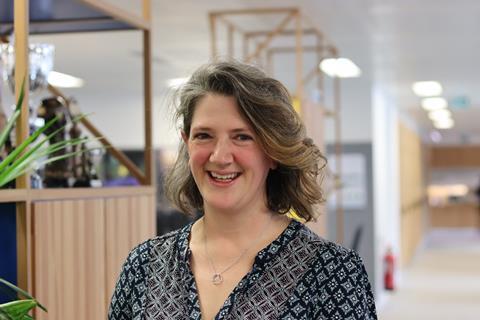
Dr Elisabeth Marlow is a sustainability associate at Cundall. She contributed to the UKGBC’s Climate Resilience Roadmap






No comments yet