







Even in one of the world’s most remote places, the fundamentals of delivering major projects hold true. From understanding cost and risk drivers to building the right team, Greenland has reminded Beth West how often we overlook the basics
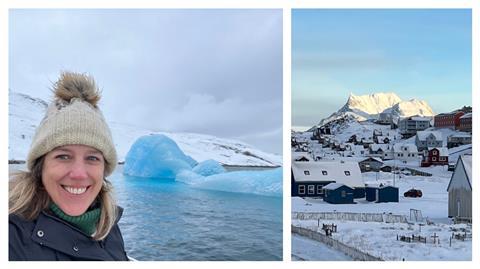
I’ve spent three weeks over the past three months in Greenland (please, no jokes about being an advanced force for the Americans). I’m working with NunaGreen, the rebranded NunaOil which is now focussing on sustainable energy for Greenland, on Greenland’s biggest infrastructure project.
Being all the way out there, with its tiny population of just over 57,000, you could easily think that it’s just so different from a typical project in the UK. Rather, working there has impressed upon me that really, all projects are the same as well as all projects being different (all at the same time). While scope and risks are often unique to each project, what’s the same is that it’s critical to get the basics right, and how often we seem to fail on that in projects in the UK.
For me, these basics always come back to three things: cost drivers, risk drivers and people. These seem so obvious, yet not understanding these and therefore structuring projects without thinking about them can lead to some spectacular failures.
Identifying the cost drivers
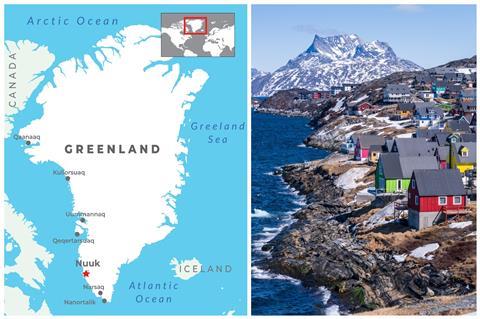
Do you know what is going to drive your project’s costs? For any project in Greenland, it is going to be the remoteness. Greenland has built or expanded a number of its airports recently, but these are located in cities. Transporting people and materials to Greenland can be expensive, but shipping costs are pretty well known and the airports are in cities where there are apartments and hotels and basic infrastructure.
These additional costs obviously need to be factored into the total project cost. Doing anything outside of a city, like building a hydropower plant, vastly increases the cost of the remoteness, as not only do you need to get people and materials to Greenland, you need to get them to a remote location, which won’t currently have a road, and it’s certainly going to be without the infrastructure needed to house and feed people.
This is pretty normal for mining and oil and gas projects which are often far from cities, and workers need to be transported to site and housed there. Never having to deal with this on an infrastructure project made me think about how rarely often we start projects by thinking about what will drive its costs.
For HS2, the speed of the trains had a massive impact on its costs, but it wasn’t a big part of the conversation when I was working on the early stages of the project. Had we focussed on this early, we could have had more informed conversations
For High Speed 2, the speed of the trains had a massive impact on its costs, but it wasn’t a big part of the conversation when I was working on the early stages of the project. Had we focussed on this early, we could have had more informed conversations about the outcomes of the speed decision in order to minimise its costs. For this Greenland project, the remoteness is making me think about construction methodology and what options exist to minimise the overall cost of labour, as the answer isn’t just in finding ‘cheap’ workers.
Deal with the risks upfront
The same holds true for understanding risks. Too often on projects on which I’ve worked, someone decides how they want to deliver a project, sets up the team and the contracts to deliver it that way, and then things about the risks as an afterthought. These risks are put onto a risk register and quantified, in the hope that if the risk materialises, the CFO will come to the rescue with a transfer out of the risk pot.
As with the cost drivers, we need to start with the risks of any particular project and determine how to use the team and contract structure to mitigate the risks, rather than just putting them on the register. We have myriad options for how we deliver projects, so we should be able to adapt our structures to deal with the risks in front of us.
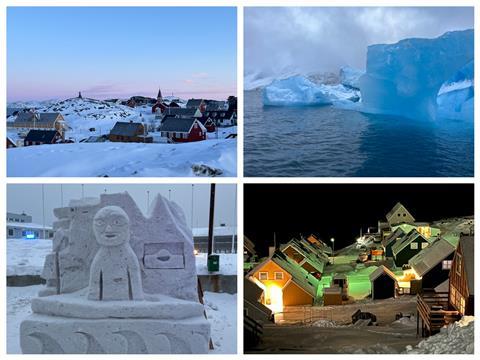
In Greenland, weather is an obvious risk. Whilst the construction industry in Greenland isn’t big enough to deliver a major infrastructure project, it has the capability to deliver enabling works for the project, which are more susceptible to weather. So separating out enabling works and contracting with local contractors who are much more able to deal with Greenlandic weather is a sensible approach to mitigating risks that an international contractor could significant price up because they are less experienced in managing it in this location.
Building the best team
Finally, but most certainly not least, attracting and keeping the right people with the right experience on your project is mission critical. Trying to do this in a remote location – or even just a small country – takes our usual concerns about skills and the workforce to another level of difficulty. Compromises will inevitably need to be made, but a well-planned strategy could achieve the objectives of having the skills needed at the right time. For example, we all talk about the need to attract more people into the industry and build our own talent so that they can develop into leaders of the future.
With the construction pipeline in the UK, people at the start of their careers should be able to forecast a long career in the industry, if not in the same company, at least in the same kinds of jobs. But for smaller countries or remote locations, this pipeline doesn’t necessarily exist, so building capability in the same way as the UK is unlikely, particular with a relatively small population. Add the need for language skills to the equation and it seems an impossible task to ever attract the right people.
However, compromises can come from seconding people into country for two years as part of their own development programme, as well as recognising how to manage language skills across a team. While there will definitely be a need for people with language skills in certain roles – like those that are government or stakeholder facing – not everyone in a team needs to be fluent in a language to be able to work together.
Rather than being frustrated about an inability to find the perfect person to deliver a project, we should be thinking more about finding the perfect team
Secondments and a bunch of English speakers isn’t going to achieve all of the objectives of developing a domestic workforce, but a blended approach with international experts and local teams can help share knowledge both ways, and ultimately get the work done. Whilst these are not our specific issues in the UK, rather than being frustrated about an inability to find the perfect person to deliver a project, we should be thinking more about finding the perfect team that can provide all the skills together to achieve success.
Working in Greenland has not only been fascinating because it is, it’s also reminded me that applying these basic project principles is always needed, irrespective of the specifics of the project.
Beth West is a former commercial director of HS2, head of development at Landsec and chief executive of East West Rail. She is now founder and director of Navigate Advisory and last year was on Building’s Funding the Future advisory panel




No comments yet