













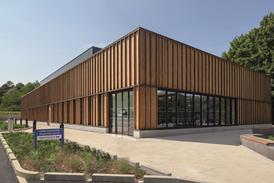

Governments are targeting individual sustainability and decarbonisation goals for schools across England, Wales, Northern Ireland and Scotland. This is driving innovation and diverse approaches to building and retrofitting schools which are fit for the future, as Aecom’s Steven Jenkins and Colin Campbell report
01 / Introduction
The UK’s schools stand at the heart of communities, shaping the future of millions of children. Yet, with over 29,000 schools and 78.7 million m² of state school buildings in England alone, the environmental impact of these institutions is immense.
Schools account for 36% of public sector emissions. Many facilities are outdated, with 70% of the floorspace of English schools built before 1976. Consequently they require significant upgrades to be fit for a low carbon future.
As the UK strives to meet its 2050 net zero carbon goals, the challenge of decarbonising the education estate has become a national priority. The estimated cost of decarbonising the entire UK schools estate is £16.3bn, according to a 2025 report by the Green Finance Institute.
Education policy has been devolved across the four UK nations since 1999. Each UK nation’s approach to meeting its carbon goals in schools is therefore unique.
Although state funding for education is distributed centrally by the UK government as block grants using the Barnett formula, each country determines and manages its own system for investment in, and decarbonisation of, its school building stock.
The devolved nature of building and maintenance investment creates alternative approaches in sustainability strategy and outcomes in different UK countries. However, it also boosts opportunities for fresh perspectives to sustainability and decarbonisation: with learnings and innovation that can be shared across the nations. This article explores how England, Wales, Northern Ireland and Scotland are innovating to create sustainable, future-ready schools.
02 / Design considerations
Reducing energy waste
Schools cater to the diverse needs of learners, teachers and communities every day. From heating and cooling classrooms to powering kitchens, lighting and recreational facilities, schools are inherently energy-intensive spaces.
However, a significant proportion – over 30% – of energy is consumed outside operational hours, including during evenings, weekends and holidays. This inefficiency is often caused by outdated systems, poor energy management, and equipment such as lights and heating being left on unnecessarily. Addressing these inefficiencies is a major opportunity to reduce energy consumption, cut costs and lower carbon emissions while also fostering a culture of sustainability within educational institutions.
Reducing energy waste in schools requires a multifaceted approach that combines technology, infrastructure upgrades and – an often underrated factor –behavioural change. Installing renewable energy systems, such as solar panels or heat pumps, can significantly lower reliance on fossil fuels, while the adoption of smart energy management systems can ensure that heating, cooling and lighting are used only when needed.
Upgrading to energy-efficient LED lighting and implementing passive design strategies such as improved insulation, natural ventilation and shading can further reduce energy consumption. Equally important is encouraging behavioural changes among students, teachers and staff, such as turning off lights, unplugging devices and using energy wisely. We should also go further and try to get these concepts into the classroom.
>>>Also read: Inside Oxford University’s new £200m Life and Mind Building
>>>Also read: Strategies to boost infrastructure resilience in face of climate change
Together, these measures can transform schools into energy-efficient spaces that not only reduce their carbon footprint but also serve as living examples of environmental responsibility for future generations.
The positive cost impact of delivering such energy savings cannot be underestimated. The Department for Education (DfE) estimates £1.7bn of energy expenditure will be required by education buildings in the 2025/26 financial year. While energy use in schools is unavoidable, it can be managed more efficiently to benefit schools and their wider community.
As public hubs within local areas, schools have the unique opportunity to optimise their building assets and make better use of the energy they consume. For instance, surplus energy generated by solar panels and stored in batteries on school premises can be shared with the surrounding community, supporting local energy needs.
Additionally, schools could offer free electric vehicle (EV) charging in their car parks, promoting sustainable transportation and further reducing overall carbon emissions. These initiatives not only enhance energy efficiency but also strengthen the role of schools as community leaders in sustainability.
Research and information published by the Passive House Trust UK and associated industry publications confirm that building to Passivhaus standards can reduce heating energy requirements dramatically, often by up to 90%, which contributes to considerable reductions in fuel bills.
Passivhaus is gaining momentum in the education sector. As of 2024, the trust had identified more than 28 certified Passivhaus schools and educational schemes across the UK, with an additional 43 projects either under construction or in the certification pipeline.
Embracing the outdoors
Across the UK, over half of all outdoor learning happens within school grounds, highlighting the vital role these spaces play in children’s education and wellbeing. Increasingly, the natural landscapes surrounding schools, or the land on which they are built, are being recognised as valuable environments that can enhance learning and support children’s physical and mental health.
This ethos can be applied to both new school developments and refurbishment projects. However, it is essential that the integration of outdoor spaces into sustainability and educational goals is considered from the earliest stages of the design process to maximise impact.
Emerging guidance
Emerging design guidance is paving the way for more sustainable school environments. For instance, Natural England’s Green Infrastructure Planning and Design Guide offers specific recommendations for schools to boost their climate resilience, enhance nature-based learning and promote energy and carbon efficiency.
Key measures include:
- Student gardens that create opportunities for growing food, biology lessons, and sensory experiences
- Rain gardens in car parks and paved areas that absorb surface runoff
- Vegetated school boundaries that help intercept air pollution from nearby roads
- Biodiverse green and biosolar roofs that reduce runoff, cool buildings in summer, and create wildlife habitats
- Tree planting to provide passive cooling for buildings
- Wildlife and wetland areas that connect to the UK’s Nature Recovery Network – a government initiative addressing biodiversity loss, climate resilience and access to nature.
Social value to be co-delivered with sustainability
Social value – defined as the benefits that a project creates for the wider community, the economy and the environment – has become a key performance indicator for school building projects.
UK public sector organisations and their suppliers are legally mandated to consider social value when commissioning services. For instance, UK government procurement guidance states that bids for school contracts must demonstrate social value delivery, with approximately 10% of the bid marks attributed to social impact.
The 10% mandated weighting in procurement only applies to UK central government departments, bodies and agencies, however.
While local authorities are not in scope for this, they almost universally include social value in their procurement criteria, and often weight it at more than 10%. The Northern Ireland Executive has its own 10% requirement.
Wales does not have a social value mandated weighting, but the Welsh government does have its own version of the social value model, called the Wellbeing for Future Generations.
Scotland, likewise, has no mandated weighting, but Scottish public sector contracts ask for work to abide by the government’s Fair Work First principles. Local authorities will often include community benefits as a requirement in their procurement.
While social value is not the same as sustainability, the two are closely linked. Enhancing a school’s engagement with its local community and environment inherently contributes to its overall sustainability. By offering green skills education, for example, schools can simultaneously boost social value and drive long-term decarbonisation.
03 / Nation by nation – the UK’s individual sustainability funding and delivery strategies
England
Decades of inconsistent funding, compounded by the financial pressures of the pandemic, have led to a significant maintenance backlog in England’s school estate. According to the National Audit Office, this backlog is estimated at around £13.8bn.
Fortunately, investment in England’s existing schools is on the rise. The government’s Schools Rebuilding Programme (SRP), launched in 2020, is now well under way, focusing on refurbishments and major rebuilding projects at schools and sixth-form colleges, with priorities set according to building condition.
Currently, there are 518 projects under the SRP. Looking ahead, the government has committed close to £20bn in funding for the period 2025/26 to 2034/35, with plans to select an additional 250 schools within the next two years.
These projects will follow a consistent design framework to ensure cost efficiency, faster delivery, and alignment with sustainability goals. Standardisation involves using pre-approved designs and construction methods that meet the government’s specifications for modern, energy-efficient and low carbon school buildings.
This approach ensures that all new-build or refurbished schools meet the government’s decarbonisation target of a 75% reduction in carbon emissions by 2037. Additional outcomes include enhanced climate resilience, reduced energy use and lower operating costs, ensuring schools are better equipped for the future.
Meanwhile, for new-build and refurbishment-led projects, the Department for Education is this month set to establish a new £15.4bn construction framework called CF25. The existing construction framework, CF21, expired in November 2025. Awards under CF25 are set to be made in either December 2025 or January 2026.
CF25’s remit is to design and build construction works for the national education estate. It will have a six-year term, with an option to extend for an additional two years.
Key features of the framework are expected to include:
- Net zero in operation as a baseline target for all new schools
- Embodied carbon caps written into the specification
- Enhanced employer’s requirements, including tougher benchmarks for acoustics, daylighting, thermal comfort and inclusivity
- Stronger governance of social value, with a 10% weighting in tenders, and contractually binding commitments.
Additionally, each individual school is required to have a government-mandated climate action plan, and a designated sustainability lead by the end of 2025, as part of a broader strategic estate management plan.
This framework not only underpins the drive for sustainable school infrastructure but also encourages industry partners to support schools with the necessary information and tools to meet increasingly ambitious environmental and social targets.
Figure 1: Ten-year maintenance budgets for the schools and colleges estate
| (£bn) | 2025/26 | 2026/27 | 2027/28 | 2028/29 | 2029/30 | 2030/31 | 2031/32 | 2032/33 | 2033/34 | 2034/35 |
|---|---|---|---|---|---|---|---|---|---|---|
| Annual budget | 2.4 | 2.4 | 2.5 | 2.5 | 2.6 | 2.6 | 2.7 | 2.7 | 2.8 | 2.9 |
Source: UK government 10-year infrastructure strategy, June 2025
Scotland
Scotland has made significant strides in modernising its educational infrastructure, establishing itself as a leader in delivering high-quality, sustainable schools. Building on the success of the £1.8bn Scotland’s Schools for the Future Programme, which transformed 117 learning facilities between 2009 and 2021, the Scottish government launched the £2bn Learning Estate Investment Programme (LEIP) in 2019.
The LEIP aims to create state-of-the-art learning environments that support education, community engagement and sustainability. By prioritising energy efficiency and modern design, the programme reflects Scotland’s commitment to providing students with facilities that are fit for the future, while addressing climate resilience and reducing carbon emissions.
The current, £500m third phase of LEIP sees 10 local authorities awarded funding which includes three additional-support-needs (ASN) schools and six projects with ASN capacity.
Scotland has experienced significant positive educational outcomes from its structured approach to planning and delivery. Some 91% of schools in Scotland are now in “good” or “satisfactory” condition, up from 62.7% in 2007.
Beyond bricks and mortar, Scotland’s 2023 10-year Learning for Sustainability plan requires “all buildings, grounds and policies to support learning for sustainability”, extending the ethos of LEIP into day-to-day teaching and campus management.
Environmental charity Keep Scotland Beautiful is partnering with six local authorities to drive down energy use across school estates and to convene a nationwide network focused on UN Sustainable Development Goals. Specialist working groups tackle priorities such as waste reduction, biodiversity, nature-based learning and climate justice, embedding sustainability across curriculums and communities.
How Scotland’s LEIP programme rewards schools decarbonisation
The Scottish Learning Estate Investment Programme (LEIP) programme weaves decarbonisation directly into its schools funding model, and rewards ongoing carbon reductions over the life of a school.
The funding approach offers up to 50% of the capital equivalent funding to local authorities, paid out as outcome-based revenue over 25 years, provided that the school meets agreed carbon-reduction benchmarks.
Phases one and two of LEIP primarily addressed operational energy use. A construction embodied carbon (CEC) target was introduced in LEIP’s third phase.
Some goals are static, while others are dynamic over the 25 years. These goals include:
- Condition – school to be maintained in A or B condition for 25 years
- Operational energy – target less than 67kWh/m2/year
- Digital infrastructure – provide infrastructure to deliver 11GBps
- Economic growth – evidence of job creation during construction
- Embodied carbon – target less than 600kgCO2e/m2 (phase 3 only).
Annual revenue funding rises or falls on a sliding scale according to performance against the operational and embodied carbon targets, creating a strong incentive for continuous improvement.
(Source: Architecture & Design Scotland, Scottish Futures Trust)
Wales
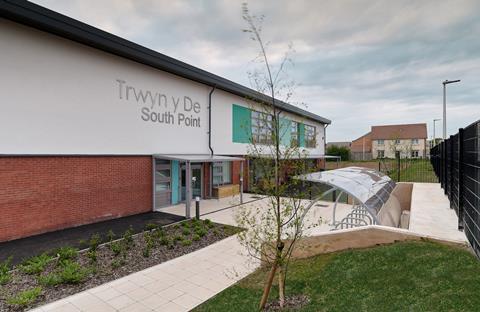
In 2022, Wales rebranded its schools building programme as the Sustainable Communities for Learning (SCfL) programme. The current phase, valued at £2.3bn, uses both public capital and revenue funds to refurbish existing schools and colleges and build new educational facilities.
The programme aims to maximise the use of school buildings for the benefit of the wider community, a concept often referred to as asset sweating. This approach ensures that educational facilities are not only used during school hours but also serve as community hubs. Achieving net zero buildings has become a mandatory funding requirement.
Objectives for Welsh schools’ delivery partners include:
- Building “community-focused schools”: ensuring that buildings are designed and operated in collaboration with teachers, staff, governing bodies, learners, families and local communities, so that facilities remain flexible for extracurricular, adult and community learning outside normal school hours
- Maximising community benefits and social value through the supply chain
- Providing more opportunities for adult learning and skill development within local communities
- Supporting multi-agency partnerships and delivering an integrated approach to support learners and the community, including colocation of services.
Case study: Working with Welsh local authorities to deliver the SCfL programme
In Wales, Aecom has been working in partnership with local authorities to deliver schools under the Sustainable Communities for Learning (SCfL) programme. In alignment with Welsh government and client requirements, it has helped implement net zero carbon targets across projects, as well as conducting comprehensive reviews of lessons learnt, particularly in the adoption and integration of new technologies, ensuring continuous improvement in design and delivery.
Aecom has championed the use of air-source heat pumps, a fabric-first approach, and solar PV systems to enhance energy efficiency and reduce carbon emissions. It has also explored alternative energy solutions, including ground-source heat pumps and wind technologies, to future-proof schools and meet ambitious sustainability goals.
Lessons learnt include:
- Developing robust, detailed net zero carbon requirements prior to development of first-stage tenders and including specific, targeted quality questions within the tenders.
- Challenging the design requirements of incoming mains services: oversized supplies can leave unused capacity and increase the costs of initial supply and standing charges. Aecom worked with clients’ energy teams to monitor usage of previous schemes, finding that even at maximum peak times, in some cases only 50% of the incoming capacity was required. Designs were adjusted as a result.
All new schools are designed and delivered to meet BREEAM Excellent standards, as required by Welsh government funding conditions.
Recent projects have successfully achieved net zero carbon for both scope 1 (direct) and scope 2 (indirect) emissions, setting a benchmark in sustainable school design.
To prioritise long-term social, environmental and economic benefits to schools and the wider community, consultants and contractors are required to deliver on a range of community benefits targets. The targets, established through the procurement process, consistently exceed the minimum standards set by the Welsh government and include: supporting small local businesses, training and upskilling new workforce entrants, school STEM engagements, and wider community in-kind support.
Northern Ireland
Northern Ireland has a unique education system compared with other UK nations, with several state-funded models, including controlled, maintained, integrated and voluntary schools.
A significant portion of the school estate is ageing, with many buildings dating back to the 1950s and requiring urgent upgrades and refurbishment. Currently, 68 schools are awaiting new buildings or campus redevelopments.
Despite these challenges, Northern Ireland consistently performs well in education, often surpassing other UK nations in academic outcomes. For example, the region has one of the highest proportions of students achieving top grades at GCSE and A-levels.
The country’s Department for Education (DENI) operates under the Northern Ireland Energy Strategy, which requires all government departments to reduce energy consumption by 30% by 2030 (from 2016/17 baseline figures). This strategy aligns with broader sustainability goals and encourages schools to adopt energy-efficient practices.
In March 2025, the DENI released a comprehensive roadmap for long-term reform of the education sector. This included new sustainability guidance for schools, aimed at improving energy efficiency and reducing carbon emissions.
Schools in Northern Ireland can also benefit from the government’s Renewable Obligation Scheme, which provides payments for generating solar-derived electricity on site. This initiative offers schools an opportunity to generate income while contributing to renewable energy targets. However, the scheme is set to end in 2027, prompting schools to explore alternative funding sources for renewable energy projects.
04 / The future – changing demographics
Pupil numbers have risen unevenly across the UK over the past 15 years , creating varying pressures on school budgets in each of the four nations.
According to the Institute for Fiscal Studies, in England pupil numbers increased by 13% between 2009 and 2023, while Northern Ireland experienced an 8% rise in pupil numbers between 2011 and 2023. Scotland saw a much smaller increase of just 2% between 2009 and 2023. In Wales pupil numbers remained relatively static over the same period.
These differences in pupil growth have had a notable impact on spending. In Scotland, total education spending grew by 15% between 2009/10 and 2022/23, resulting in a 13% increase in spending per pupil. In contrast, England’s total spending rose by 12%, but this was insufficient to keep pace with the rise in pupil numbers, leading to a 1% decline in spending per pupil. In Wales, a modest 3% rise in total spending was enough to match the nearly static pupil numbers, resulting in a 3% rise in spending per pupil.
However, demographic trends are shifting. UK birth rates are at record lows, and all four nations are projecting a decline in pupil numbers of 6%-8% over the next five years. This raises critical questions about how to manage the school estate effectively. While a smaller student population may make it easier to achieve real-terms increases in spending per pupil, individual schools could face financial challenges if their budgets shrink faster than their operating costs.
Meanwhile, demand for special educational needs (SEN) provision is at an all-time high, meaning mainstream as well as SEN schools will need to adopt flexible, inclusive and sustainable designs.
05 / Conclusion
Integrating sustainability into the design and operation of educational facilities delivers multiple benefits. Beyond contributing significantly to the UK government’s 2050 net zero carbon target, sustainable schools promote better health outcomes for children and equip them with the knowledge and skills needed to build a more sustainable future as adults.
Across the four devolved UK nations, holistic sustainability practices are being embedded both into the refurbishment of existing schools and into the design and construction of new ones. This approach addresses pressing short-term issues, such as reducing energy waste, while also ensuring that the schools estates are resilient to the long-term impacts of climate change. By creating climate-conscious learning environments, schools can play a pivotal role in preparing future generations to tackle environmental challenges.
Achieving these goals requires sustained, large-scale investment from the government that goes beyond short-term election cycles. Clear and ambitious policies, coupled with robust regulations, can also encourage private sector investment and drive innovation in sustainable education infrastructure.
Embedding sustainability, energy efficiency and decarbonisation into both the retrofitting of existing schools and designing new buildings is now essential to delivering safe, future-ready educational spaces. These efforts will ensure the UK’s schools are equipped to meet the needs for decades to come.
06 / About the indicative costs
While every school must be designed within well established guidelines, each will be unique and will consider various options that help to drive best practice, considering the BREEAM, net zero carbon and Passivhaus design agendas.
Different types of school and school functions (infant, primary, secondary, SEN, public schools, science blocks, sports centres and so on) also have their own specific design considerations. Consequently, this makes presenting a “standard” schools cost model difficult due to this variety. Below is a menu of costs for different options and solutions that should be reviewed before developing a more detailed and informed view of project specific costs.
These costs are at Q4 2025 prices and assume a two- to three-storey school of approximately 10,000m² in an outer London location. Main contractor’s costs (preliminaries, overhead and profit, pre-construction services agreement fees, design costs and so on) are excluded. Also excluded are: enabling works, site-specific abnormals (including infrastructure upgrades), VAT (if applicable), professional fees, and design and construction risk contingencies. Procurement routes may also have an impact on actual project costs.
07 / Menu of indicative costs for incorporating sustainability in a school
| Cost/m2 GIFA (£) | Total cost (£) | |
|---|---|---|
| Cement replacement to concrete in substructures | 5.80 | 58,000 |
| Geosynthetic layer | 2.50 | 25,000 |
| Enhanced insulation below ground-floor slab | 7.50 | 75,000 |
| CLT structure in lieu of steel frame and concrete planks etc | 270.00 | 2,700,000 |
| Screed to CLT upper floors to reduce noise transfer incl damp-proof separation membrane, acoustic resilient layer and self-levelling screed | 24.00 | 240,000 |
| Green roof (assumed to be 75% of roof area) | 55.00 | 550,000 |
| Enhanced performance of external walls – larch cladding and enhanced insulation | 40.00 | 400,000 |
| Enhanced thermal performance of windows | 37.50 | 375,000 |
| Enhanced thermal performance of doors | 10.00 | 100,000 |
| Enhanced thermal performance of rooflights | 5.50 | 55,000 |
| Solar shading | 19.50 | 195,000 |
| PV panels | 20.00 | 200,000 |
| All-electric kitchen premium | 5.00 | 50,000 |
| Centralised AHUs and heat exchangers in lieu of localised MVHRs | 12.50 | 125,000 |
| Air-source heat pump in lieu of gas boiler (incl compounds) | 37.50 | 375,000 |
| Enhanced landscaping for attenuation ponds | 7.50 | 75,000 |
| Enhanced EV charging points | 6.50 | 65,000 |





1 Readers' comment