








The fundamental challenges of hospital delivery are remarkably similar across the world. Knowledge gained on two projects in South America can help to shape the next generation of NHS hospital design, writes Jason Pearson

Providing greater access to local, specialised, community-based healthcare sits at the heart of the NHS’s 10-year health plan for England. At the centre of that ambition is the new hospital programme (NHP), a once-in-a-generation opportunity to renew ageing estates, modernise clinical environments and deliver new hospitals that are fit for the future. It is an opportunity the sector has long called for – but it is also one that comes with no shortage of challenges.
As the UK’s population grows and healthcare needs become more complex, modernising hospital estates has become an urgent priority. Meanwhile delivery timescales are compressed, public scrutiny is intense and questions persist about whether large, complex hospital projects can realistically be delivered on time and to budget.
Against that backdrop, it is worth looking beyond the UK for perspective. While political, economic and regulatory contexts may differ, the fundamental challenges of hospital delivery are remarkably similar across the world.
Looking to Peru
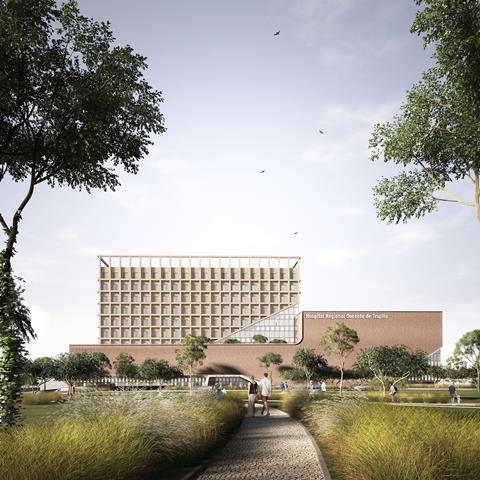
In the arid coastal plains of north-western Peru and stretching towards the Amazonian watershed, two major new hospitals are currently being delivered in the cities of Piura and Trujillo. Together, they form part of a national programme led by Peru’s Ministry of Health to close long-standing gaps in regional healthcare infrastructure and improve access to high-quality care for millions of people.
These are ambitious, transformative projects. But what makes them particularly instructive is not simply their scale or location but the way they are being designed and delivered.
I know this first hand because Aecom is working with the Programa Nacional de Inversiones en Salud, a specialised governmental body within Peru’s Ministry of Health, to oversee the full lifecycle of both hospitals, from concept design and procurement through to implementation and contract management under a design-and-build model. The schemes have been developed by our UK-based, multidisciplinary healthcare team of more than 100 architects and engineers, working closely with Peruvian policymakers and investors.
Along the way, we have assembled a set of principles that could prove critical to hospital delivery worldwide, including here in the UK.
A standardised approach
One of the clearest lessons from Peru is that standardisation works best when it is applied with care. Rather than imposing a rigid, one-size-fits-all model, the hospitals are organised around considered healthcare planning grids that can support a wide range of clinical services.
This provides a repeatable basis for design and construction, ensuring efficiency and maintaining quality across complex programmes delivered by proven digital delivery strategies.
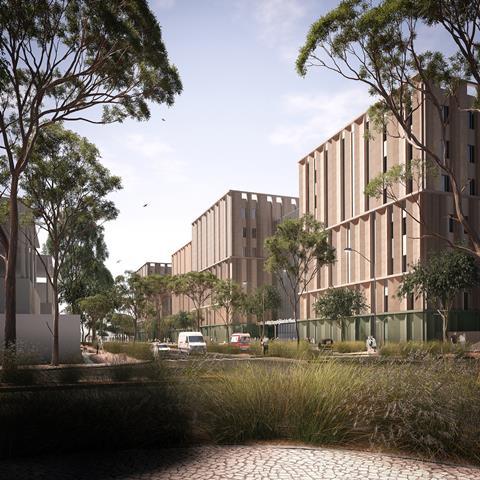
Crucially, this approach also recognises that hospitals cannot be designed for a single moment in time, as healthcare demand shifts with population changes, technology advances and evolving models of care. In Piura and Trujillo, this understanding has shaped decisions from the outset, with layouts, infrastructure and circulation designed to accommodate change.
To enhance staff wellbeing, the hospitals embrace a workforce‑centred design that streamlines patient and clinical flows and supports seamless interdisciplinary working. This creates a more efficient, healthier working environment, a critical factor in attracting and retaining a skilled healthcare workforce.
Standardised clinical layouts are paired with modular construction methods and adaptable spaces that can be reconfigured, expanded or repurposed as needs develop. The result is a dependable structure that provides consistency, while still allowing for local variation and future adjustment.
For England, where standardisation sits at the heart of the NHP, the Peruvian experience offers a clear reminder that it is most effective when it supports flexibility over the long term, particularly for hospitals expected to serve their communities for decades.
Designing with place in mind
In Peru, hospital design is closely tied to its setting. The country’s seismic conditions, varied climate and strong local identity have all shaped buildings that respond directly to their environment rather than relying on generic solutions. Seismic resilience is built into the structure from the start, forming part of the core design instead of being treated as a technical afterthought.
Environmental conditions also influence how these hospitals work on a day-to-day basis. Careful consideration of humidity and daylight helps create spaces that are comfortable for patients and staff, while supporting reliable operation in demanding conditions.
Sustainability is approached with the same focus on context. The use of low-carbon, locally sourced materials, on-site renewable energy and water-efficient systems reflects regional constraints and availability, and these choices also help manage long-term running costs while delivering clear environmental benefits.
As climate pressures intensify, this emphasis on designing with local conditions in mind becomes increasingly relevant. Hospitals need to remain operational when systems are under strain, and the Peruvian projects demonstrate the value of addressing environmental realities early, rather than trying to resolve them later.
These hospitals will significantly improve access to clinical services for rural and underserved communities. They will enhance the patient experience through modern, inclusive and human‑centred design, creating local landmarks that communities can identify with and take pride in
Collaboration and knowledge transfer
Perhaps the most transferable lesson from Peru is the importance of collaboration. Close engagement between government, healthcare providers, designers, contractors and local communities has been supported by digital design tools and integrated project delivery methods. This has helped to align expectations, manage risk and maintain momentum throughout the programme.
By placing a strong emphasis on knowledge transfer from the start, it recognises that successful hospital delivery is not just about buildings, but about building systems, skills and relationships.
What this means for the UK
The Peruvian context is clearly different from that of the NHS, but the underlying challenges – cost pressures, ageing estates, urgent capacity needs – and the demand for sustainable, resilient infrastructure are strikingly similar. What the experience in Peru demonstrates is that, with an integrated approach, it is possible to deliver hospitals that are both buildable and enduring.
With that in mind, as the NHP gathers pace, England and the UK more broadly has an opportunity not just to build more hospitals, but to build better ones, learning from global best practice and applying those lessons at home.
Jason Pearson is director of healthcare and science architecture, UK & Ireland, at Aecom

No comments yet