












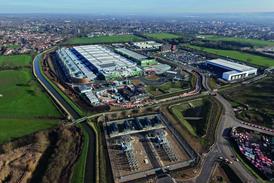
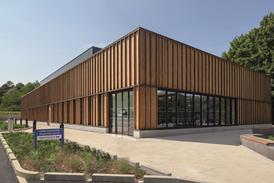

Lee Compton has run M&E contractor Phoenix ME for 20 years, steering it through Wembley’s troubled rebuild, the collapse of ISG and the advance of private equity. Now, with a majority stake sold to US firm HIG and his 65th birthday behind him, he tells Dave Rogers why the time has come to start living a different life
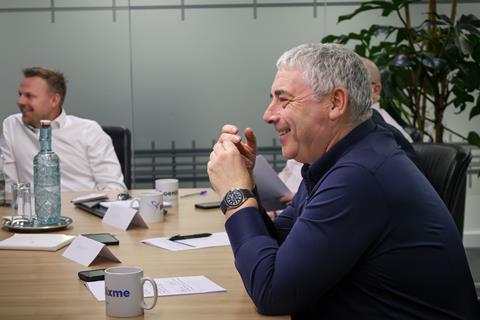
Lee Compton can see an end in sight. Now aged 65, he has been in the industry since he was 16.
“I have survived nearly 50 years,” he observes. “I still love it, but I have got to live my life as well.”
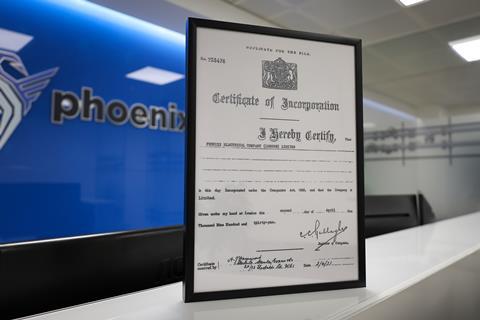
For the past 16 years, Compton has been the sole shareholder of Phoenix ME, one of the country’s biggest M&E contractors which traces its roots back to 1931. That changed over the summer when he signed a deal to hand over a majority stake in the £400m business to HIG, a US private equity firm which manages around $75bn (£56bn) of assets globally.
As his 65th birthday approached – he reached the landmark in June this year, the same month he signed the deal with HIG – Compton says he had been mulling his options as to what to do. “I wanted to make sure Phoenix carried on and continued to grow. I didn’t want to sell a business, jump away and leave it to get on with it.”
He adds: “I’m still very enthusiastic about the business, but I’m of an age where I need to start doing a different life. We have a very good team [at Phoenix], an exceptional board. All are very good and talented. That team will take over from me.”
From apprentice to sole shareholder
Compton has retained a significant minority stake in the firm and, once he does step back, he expects to settle into the role of a non-executive. He will take his time to sell off his remaining share of the business.
“I don’t want to be CEO for too much longer – one to two years maybe. I’m hoping it will be a year. I’ll go non-exec and support the business in any way they want me to with clients and acquisitions. Then I’ll go off and enjoy my racehorses and ride my motorbike.”
Compton was born in Barking and grew up in London. He started out at the engineer Drake & Scull aged 16. “I was there man and boy,” he recalls.
He joined as an apprentice engineer and spent six years there before heading off to London South Bank University to do a degree in environmental engineering.
I don’t want to be CEO for too much longer, one to two years maybe. I’m hoping it will be a year
While he was studying, he also fitted in some work at a consulting engineer called James R Briggs, named after its founder, and then worked at another engineer, H Philip Rockhill, when he graduated.
It was while at the latter that Drake & Scull called him, wondering if he wanted to come back. Initially he said no. “Then they offered me a job I couldn’t refuse.”
It was 1990, he was not yet 30 and had been asked to be the project manager on a £9m scheme to build a new computer centre for the Abbey National building society in Milton Keynes.
“Back then, people in their 40s typically ran jobs like that,” he says. The computer centre was effectively a data centre – a sign of Phoenix’s position today.
He eventually made it onto the board of Drake & Scull and was running half the firm’s jobs as joint managing director of construction. His remit meant he was not too closely involved with Drake & Scull’s job on the Jubilee line extension, which was an industrial relations disaster and one that was blighted by fallouts and walkouts (see below).
Despite the place on the board and trappings of success, Compton came to the conclusion that corporate life was not really what he wanted. “I decided I was better off working for myself,” he says. So he left and set up his own business as a consultant specialising in M&E.
Against the clock: Building the Jubilee line extension
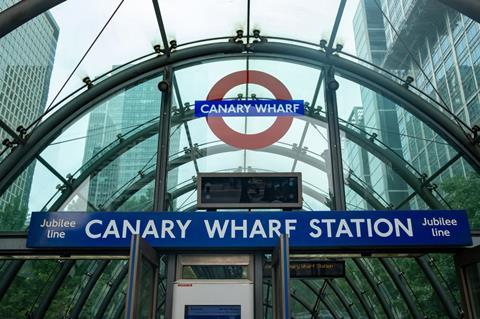
The Jubilee line extension, to connect Green Park with the Docklands in east London, was given a hard deadline of 31 December, 1999 – when the line was supposed to take dignitaries, including the then prime minister Tony Blair, to the opening of the Millennium Dome, now the O2, at North Greenwich.
It did open for its main purpose on Millennium Eve, but only just. It was two years late and around £1bn over budget.
The immovable deadline had put pressure on everyone, as Denis Tunnicliffe, the chief executive of what was then London Transport, remarked in October 1998: “When I die,” he said as the project remained mired in uncertainty, “I might have a few words with the Almighty about the date of the Millennium.”
“The Jubilee line was a monster,” Compton recalls. “£450m, a huge job at the time. It was a tough job. They [Drake & Scull] got their money in the end.”
Wembley stadium: the job that nearly broke Phoenix ME - and then saved it
If Compton managed to avoid the collateral of the Jubilee line extension, he made up for it with his next job and his very first as a fledgling consultant: Wembley stadium.
He was brought in by Multiplex and then asked to join Phoenix, which had been working on the rebuild of the national stadium, “because Wembley was a problem”, he says.
That was in 2006 and he eventually brokered a deal with Multiplex that allowed Phoenix to finish the job off – and stay afloat. Compton says rivals were aware of the trouble Phoenix was in, so much so that others were reluctant to do business with them. “They thought we were going to go bust.”
He adds: “[Phoenix] had a good reputation, but commercially they were struggling. I joined them as a shareholder and felt they could be resurrected. The raw ingredients were there, but some bits were missing. I put the missing bits in – the processes and systems that I had learnt at Drake & Scull.”
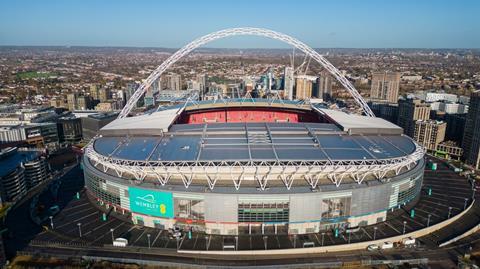
When he arrived, Phoenix – now looking at a turnover in its current financial year, which ends on Wednesday, of £500m and with 700 staff – had a turnover of £50m and around 50 staff. A quarter of its revenue was from Wembley and, when that scheme was completed in 2007, income shrank to £37m.
His initial idea had been to help repair the business with the majority shareholder, Lanston Ltd, close off Wembley once and for all and then sell up. But he had a change of heart.
“I said to the owner, ‘I don’t want to sell. Can I buy you out?’ ” It took around three years to cut the deal before, finally, he owned the company outright in 2010.
“Wembley was a nightmare but, if it wasn’t for Wembley, I wouldn’t be sat where I am today.”
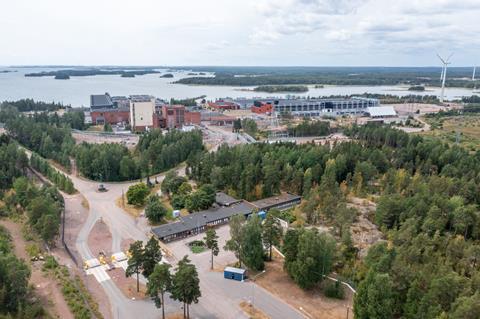
Compton says the key part of Phoenix’s resurgence came after Wembley. In the wake of the financial crash in 2009, the firm decided to go to Finland, where it worked on the Google campus at Hamina. Phoenix was carrying out the electrical package and Compton says: “It meant we didn’t have to worry too much about the low margin work in London.”
Now around £100m of its revenue comes from overseas and it is all from data centres. The firm has been working in Austria, Finland, Norway, the Netherlands and, most recently, Denmark.
How Phoenix ME survived the ISG collapse
The work overseas helped stand the firm in good stead when arguably the biggest crisis of its near 100-year history hit a couple of years ago, with the collapse of ISG. Administrators said Phoenix was owed £20m.
“It was quite a bit,” says Compton, smiling. “It was over £20m. No one wants to go out and lose £20m, that’s not very nice. But we got most of it back.
“Some of it took a little time to collect. One of the jobs we were on took nine months to get going again, but we always knew to a certain extent the jobs would carry on. We weren’t too concerned. And we were always of the opinion that clients would re-engage us because that’s what they told us.
“Some clients could have turned around and said ‘Forget Phoenix, we’ll get someone else to finish the job’ – but they didn’t do that.”
In the weeks after ISG’s fall, Compton says he had to prove to clients and others that the collapse would not take Phoenix down too. “I said to my clients, ‘This is going to hurt us but it won’t kill us and here’s the evidence’.”
He adds: “Wembley was a big event in the company’s history at the time, but we survived that. We didn’t really have any difficulty with the ISG thing because we had run our business properly. We had kept cash in the business. I always think – when I look at other companies that haven’t survived – they’ve taken too much money out.”
Why Phoenix ME chose HIG Capital
Almost a year later, in November 2025, Compton took a call from a private equity firm called HIG Capital. Was he interested in selling, they asked?
He had had approaches over the years before, but had always turned them down. So, what changed?
“My age suggested I needed to look at an exit strategy,” he says. “They wanted to retain me and all of the team. They didn’t want to interfere with the business. They did a lot of due diligence, they did a very thorough job in checking us out and we got exceptional references.
“They never wavered, they didn’t want to change [the terms of] the deal. The deal was the deal, they kept their word.”
As well as HIG, there were several other offers that Compton was looking at. One was from a trade rival while another was from a corporate firm.
His preference, however, was for HIG. “They leave us to get on with it. They want us to achieve the growth they expect.”
He says targets are not written down on a piece of paper. “But, after four or five years, they want to sell us and double their return. They’re pretty straight. They want us to be worth twice what we were worth when they invested.”
He says that, typically, HIG holds on to firms for around five years – sometimes it is 10, sometimes it is as little as two. To grow, he says Phoenix will have to make acquisitions.
“These guys have very deep pockets. [We’ll] make some acquisitions to do more work. It could be someone as big as us.”
[Subcontractors have] got a seat at the table. Back in the day, you used to have to doff your cap and say ‘yes sir, no sir’. It’s not like that anymore
Phoenix is one of several firms in the industry that have seen private equity move in over the past few years, with companies as diverse as Bovis, Foster + Partners and Gardiner & Theobald all in deals that involve private equity buying them up completely or taking majority stakes.
“I guess, in the past, people saw construction as a little bit hit and miss from [private equity firms’] perspective. How do you get a business making more money? You invest money to make money and, in the past, they have been quite cautious [about construction].”
Compton thinks private equity has changed its view because of the sorts of work firms like Phoenix are now doing. “[HIG] want us to work in better margin sectors, data centres is one. Life sciences is still very strong.”
He also says its historic market of London commercial, where it made its name, continues to do well, belying wider worries about a slowdown. “We are tendering like thunder at the moment,” he says.
Phoenix is making net margins of between 6% and 7% and Compton thinks it can go up a bit more. But he admits: “We won’t get to 9%, the market won’t allow us.”
The firm typically has around 30 live projects at any one time, with an average value of £40m to £60m. But it does much bigger jobs as well and is working on a data centre that is being completed in phases and which is worth around £160m in total.
He says his favourite job was the one for Abbey National and picks out the Cardiff Millennium Stadium, too. “It was a disaster for Laing, the job was a mess. The design was wrong and they inherited it. We did a deal where it was cost reimbursable, so it was OK for us.”
In his time, he thinks the relationship between main contractors and firms like Phoenix has changed for the better. “We’re very much part of the team, working alongside contractors. We might be employed by them but we’re respected a lot more than we used to be.
“We’ve got a seat at the table. Back in the day, you used to have to doff your cap and say ‘yes sir, no sir’. It’s not like that anymore.”
From racehorses to mountain passes
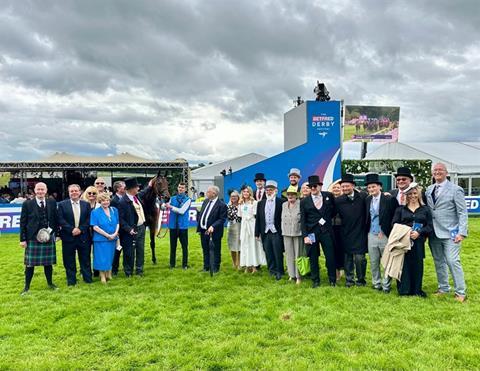
Away from construction, Lee Compton’s two big passions are racehorses and riding his motorbike. He owns or co-owns several racehorses including one called Lazy Griff, which came second in last year’s Derby and third in the Irish Derby. Unfortunately, the horse injured his knee earlier this year and there is some doubt over whether he will run again.
Compton says the race he would love to win above all others is the Prix de l’Arc de Triomphe, held at the Longchamp course in Paris every October. “That’s a proper race.”
He only owns racehorses that run on the flat, rather than over the jumps. “Jump racing is too precarious. I’m not awfully keen to see horses get injured. That’s why I don’t shoot – I’m a bit of a softie, really.”
He plays a bit of golf and tennis but his other passion is touring on his motorbike. He went to Germany this year and plans to go to Ireland next.
He has also been to the Himalayas on his bike, scary mountain passes and all. He rode the highest motorable pass in the Himalayas, the Mig Pass in India, which is just under 6,000m above sea level.
While out there, he found himself on roads that were a car and a half wide and had to squeeze past oncoming trucks and buses. “They don’t stop. You have to get off the road, otherwise they will knock you off the road. The idea is you don’t fall down the mountain.”

When he steps down as CEO, he is looking forward to spending more time at a home he has in Ibiza and where he found himself stuck when ISG collapsed. “It was funny, I couldn’t get back. They went [into administration] on the Thursday and I had lost my passport. I had to get a temporary passport and got back on the following Monday.”
He has two daughters aged 33 and 30 from his first marriage and two stepdaughters from his second, which ended a few years ago. “Work has become my wife,” he smiles.
“Maybe,” he says of stepping down, “I’ll have time to find a partner.”





No comments yet