













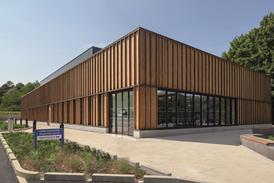

On Earth Day, senior leaders from across the built environment gathered in Dublin to confront a more urgent question than ever before: not whether cities should regenerate, but how the industry can move faster — and together — to deliver it.
With policy tightening, capital reallocating and occupiers demanding higher-performing space, the regenerative cities agenda is rapidly shifting from long-term aspiration to immediate delivery challenge, with the industry forced to align around what works, what scales and what comes next.
Hosted by Corgan in partnership with Climate Group, the inaugural Regenerative Cities Summit took place on Wednesday 22 April at the Exo Building on Dublin’s North Wall Quay. Designed as a catalyst for change, the half-day programme brought together architects, engineers, developers, occupiers, advisors and policymakers around a shared goal — translating ambition into measurable, scalable action.
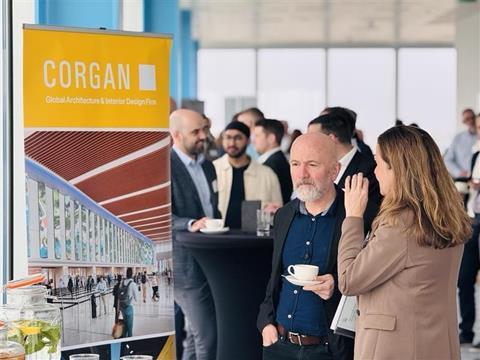
The agenda reflected the growing breadth of the regenerative cities conversation. Decarbonisation, climate adaptation and resilience, health and wellbeing, biodiversity restoration and circular economy principles were all positioned not as standalone priorities, but as interconnected drivers of long-term value.
A shifting landscape — and a narrowing window
Opening the summit, Sam Kimmins, director of energy at Climate Group, set a clear and urgent tone. The regulatory and commercial landscape, he argued, is evolving rapidly — and those who act early will shape what comes next.
With Ireland required to transpose the Energy Performance of Buildings Directive (EPBD) by 29 May 2026, alongside the emergence of Minimum Energy Performance Standards (MEPS) and tightening grid connection rules, the direction of travel is unmistakable. The question is no longer whether change is coming, but how prepared organisations are to respond.
From policy to practice
Three panels carried the discussion forward, each tackling a different dimension of delivery.
The first, moderated by David O’Brien, vice president & architectural projects leader, Corgan explored Ireland’s legislative landscape and the structural barriers facing large-scale development.
Drawing on perspectives from Carina Galavan, property fund and ESG specialist, Aviva, Incendium Consulting’s principal consultant for sustainability Tim Millar and Cairn Homes’ head of sustainable construction Stephen O’Shea, the session highlighted both the complexity of the current system and the opportunity for clearer alignment between policy and delivery.
“For me, the big takeaway from panel three was the importance of being brave, learning together and building close partnerships if we’re serious about moving from ambition to delivery.”
Nicola Cullen, senior manager for energy systems, Climate Group
Panel two, led by Corgan’s Peter Swallow, shifted the focus to implementation — examining proven strategies for reducing energy demand at scale.
The discussion reinforced a consistent message: the technical solutions already exist, but deploying them effectively requires coordination across disciplines and throughout the building lifecycle. The conversation drew on the experise of BDP director Patrick Kavangh, Alan Fogarty, partner, Cundall and Kieran Sexton, technical director for digital solutions EMEA, Johnson Controls.
The commercial case comes into focus
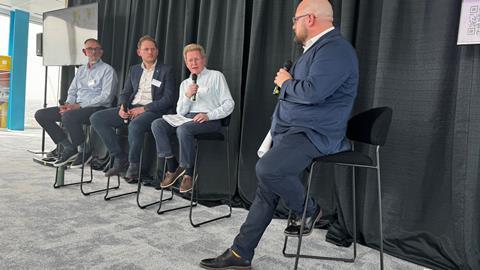
It was the third panel — “Accelerating energy efficiency across existing and new buildings” — that brought the sharpest commercial lens to the conversation.
Moderated by Climate Group’s senior manager for energy systems Nicola Cullen, the session brought together Andrew Smyth, head of sustainability for smart infrastructure at Siemens; Michelle Wang, sustainability manager at Deloitte; and Duncan Price, partner and global sustainability & climate change leader at Buro Happold.
Regenerative Design Architect of the Year

The Regenerative Design Architect of the Year category at the Architect of the Year Awards celebrates practices leading the charge in reducing carbon across the full lifecycle of buildings — from construction to operation and eventual reuse.
Judges will be looking for a clear, evidenced approach to minimising embodied and operational carbon, alongside wider commitments to circular economy principles, wellbeing and design quality. Entries should demonstrate a strong body of work, not just a single project, with measurable impact backed up by performance data where possible.
Submissions must include one built project completed between 1 December 2024 and 1 December 2025, plus at least one additional scheme (built or unbuilt), with a maximum of four projects.
Open to all sectors — and with project size not a factor — the category recognises architects proving that regenerative design is both deliverable and commercially relevant.
Reflecting afterwards, Cullen captured the central theme emerging from the discussion: “For me, the big takeaway from panel three was the importance of being brave, learning together and building close partnerships if we’re serious about moving from ambition to delivery.”
A recurring message was that the business case for energy efficiency is no longer theoretical — it is already being demonstrated in practice.
“What really stood out is that we already have a strong business case for energy efficiency that is backed by action,” she added. “Across the Climate Group’s network, members are doing impressive work that is happening across both new and existing buildings.”

Learning from delivery — new build and retrofit
Two case studies helped ground the conversation in real-world outcomes.
Corgan’s net-positive campus for Wells Fargo — one of the largest of its kind in the United States — illustrated the impact of embedding performance from the earliest stages of design. The project demonstrated how front-loading sustainability decisions can unlock significant operational and environmental gains over time.
“Pursuing energy efficiency doesn’t mean forgoing all other objectives — in fact, when done well in retrofits, it can unlock significant social and cultural value in addition to carbon reduction.”
Michelle Wang, sustainability manager, Deloitte
Alongside this, retrofit emerged as an equally powerful — and often more complex — opportunity. Wang outlined Deloitte’s transformation of its historic headquarters in Rome, emphasising the broader value of sensitive, well-executed upgrades.
“Pursuing energy efficiency doesn’t mean forgoing all other objectives — in fact, when done well in retrofits, it can unlock significant social and cultural value in addition to carbon reduction,” Wang told the panel.
Cullen reinforced the point:
“We also heard powerful examples from existing buildings, like Deloitte’s retrofit of a historic building in Italy where, as occupants, they worked closely with designers and developers to improve performance while protecting the building’s social and cultural value.”
Linking sustainability to financial performance
The financial dimension of the transition was brought into focus through insights from Duncan Price, drawing on recent research by Buro Happold.
“From an advisory and design perspective, Buro Happold’s recent research reinforced something we’re seeing more and more: there’s a clear and compelling link between embedded ESG strategy and stronger financial performance,” Cullen said. “Importantly, legislation and implementation can work hand in hand.”
The implication is clear: sustainability is no longer a compliance exercise or reputational add-on — it is increasingly a core driver of business performance.
“Smart and autonomous buildings are a critical pillar of an integrated energy and city ecosystem — possessing the ability to sense, learn, and react to both internal and external conditions.”
Andrew Smyth, head of sustainability for smart infrastructure, Siemens
Smart buildings as system enablers
Technology and infrastructure formed another critical thread. Smyth highlighted the growing role of intelligent buildings within wider energy systems:
“Smart and autonomous buildings are a critical pillar of an integrated energy and city ecosystem — possessing the ability to sense, learn, and react to both internal and external conditions. They drive more efficient operations, lower costs, and significantly reduce carbon,” he told the room.
“By deploying autonomous and connected buildings at scale, and enabling them as active participants in the energy system fabric, we can unlock vast opportunities: accelerating decarbonisation, increasing grid resilience, enabling demand flexibility, and creating new value streams for building owners, occupants, and cities alike.”
Smyth also emphasised the importance of early engagement with policymakers, arguing that proactive collaboration can turn regulation into a strategic advantage rather than a constraint — particularly in the context of fast-approaching EPBD requirements.
A call to act — now
Cullen’s closing reflection encapsulated the prevailing mood:
“The recurring theme across the panel was that staying ahead of the curve is a genuine business advantage. The organisations that are embedding energy efficiency are shaping the direction of travel and helping system-wide change.”
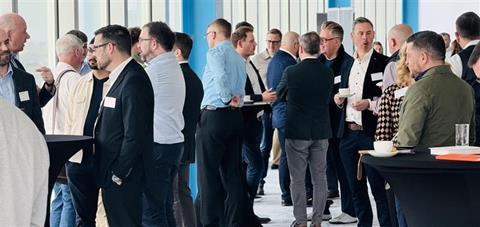
For those in the room — from developers and investors to advisors and occupiers — the message was unmistakably practical. Delivering regenerative cities will depend less on ambition statements and more on coordinated action: investing early, sharing data, retrofitting at scale and engaging with policy before it becomes mandatory.
As Ireland and the wider European market move towards the new EPBD regime, the inaugural Regenerative Cities Summit offered more than just discussion. It provided a clear signal that the commercial logic is already shifting — and that those prepared to act first will help define the future of the built environment.
Assemble Media Group attended the inaugural Regenerative Cities Summit in Dublin as a media partner alongside Climate Group.
Further reading
Corgan: Wells Fargo Drives Innovation with America’s Largest Net-Positive Campus
Deloitte: Rome, inauguration of the new Deloitte headquarters
Buro Happold: ESG for Business Growth: Research Summary







No comments yet