


















Energy efficiency has long been described as the “low-hanging fruit” of climate action. But as hyperscale data centres multiply and cities expand district heat networks to capture waste heat, that framing no longer feels sufficient.
For Climate Group’s senior manager of energy systems, Nicola Cullen, the surge in digital infrastructure and the growing focus on heat recovery underline a more fundamental point: how we use energy is becoming just as important as how we generate it.
“Energy efficiency isn’t just a nice to have,” she says. “It’s the foundation of resilient, affordable and low-carbon growth.”
With global data centre electricity demand forecast to more than double by 2030, and cooling loads soaring in a warming world, Cullen argues that smarter energy use could deliver more than a third of the emissions reductions needed globally to stay on track for net zero by 2050. In an era of volatile energy prices and geopolitical uncertainty, that makes efficiency not only a climate tool, but a security strategy.
From EP100 to the Smart Energy Coalition
Launched nearly a decade ago, EP100 focused on improving corporate energy productivity. Today, that ambition has broadened into the Smart Energy Coalition – a global network of more than 100 businesses committed to doubling energy productivity across their operations and value chains.
The shift reflects a changing landscape. “Data centres are booming. Cooling demand is soaring. Energy security is top of mind for governments and companies alike,” Cullen says. “We needed a refreshed mandate that focuses on where efficiency can have the biggest impact.”
To support that shift, the coalition has published five global policy principles, developed through a member-led working group. The emphasis is on moving from narrative to action: minimum energy performance standards, stronger building codes, better integration of energy management systems, transparent data and embedding financing and circularity into energy policy.
Well-designed policy, Cullen argues, reduces market barriers and aligns business ambition with public goals. “It’s about creating the certainty that unlocks investment at the scale we need.”
Smart Energy Coalition five global policy principles
1. Minimum Energy Performance Standards (MEPS) and Codes: Strengthening standards for appliances, industrial equipment, and buildings to drive market transformation.
2. Energy Management and Data Transparency: Mandating or incentivizing energy data collection and transparency to better manage consumption and identify efficiency opportunities.
3. Circularity and Renovation: Promoting the reuse of materials and improving the energy efficiency of existing infrastructure through deep renovations.
4. Financing: Increasing investment in energy efficiency and supporting innovative financing methods to help reach the $1.5 trillion USD annual need.
5. Collaboration and Leadership: Keeping energy efficiency high on the global agenda within Nationally Determined Contributions (NDCs) and encouraging public-private partnerships
Outperforming the global average
The coalition’s annual reporting offers a glimpse of what coordinated corporate action can deliver. According to the most recent figures, members are improving their energy productivity by around 8% a year – significantly ahead of the global average of roughly 1%.
Collectively, members have saved more than 1,400 terawatt-hours of energy to date – more than the combined annual electricity use of the UK, France and Germany in 2023. Emissions reductions total around 450m tonnes of CO₂e, while reported financial savings stand at $1.7bn.
Cullen is keen to stress the importance of tangible context. “We measure energy, carbon and cost savings. Putting real-world comparisons against those numbers makes the impact relatable.”
But she is also candid about the challenges. Different sectors face different pressures – from hyperscale computing to retail cooling loads. In many organisations, the “low-hanging fruit” has already been picked. The next phase requires collaboration across sectors and regions, and frank discussions about what is and isn’t working.
That cross-sector dialogue, she says, is one of the coalition’s core strengths.
Data centres: strain or solution?
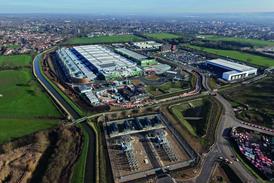
Few sectors illustrate the urgency of smart energy better than data centres. Global electricity demand from data centres is forecast to more than double by 2030, driven by AI and digitalisation.
“The growth is very real,” Cullen acknowledges. “But efficiency can and must be part of the solution.”
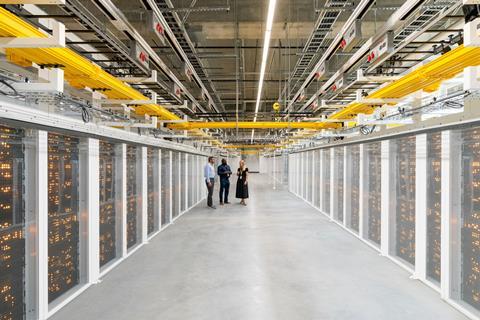
Design choices are central. Liquid cooling systems are already demonstrating significant savings. For example, Danfoss has reported savings of up to 240kWh per server rack through advanced liquid cooling – translating into around 1.9 million kWh annually in a hyperscale environment.
Efficient load management, heat recovery and integration with renewables and battery storage can transform data centres from grid stressors into system supporters.
Crucially, Cullen argues, waste heat from data centres should be viewed as an asset. Channelling that heat into district heating networks can displace gas demand in surrounding communities and improve overall system efficiency.
“We need data centre development to go hand in hand with regional planning,” she says. “Locating facilities near renewables, designing for heat recovery and enabling grid flexibility must be part of the plan.”
Scale, she suggests, can help rather than hinder. Large development pipelines create certainty for technology providers and investors, accelerating innovation in cooling, controls and energy management.
“Efficiency isn’t just about reducing energy use,” Cullen says. “It’s about enabling faster grid connections, reducing local stress and making renewable capacity go further.”
Smarter cooling in a hotter world
Heating and cooling is another critical front. As global temperatures rise, cooling demand is increasing rapidly – often in regions already facing grid constraints.
Here, AI is shifting the paradigm from reactive to predictive building management.
Coalition members are already applying these tools at scale. Johnson Controls has developed AI-enabled HVAC systems delivering energy savings of around 30%. Siemens is running global HVAC optimisation programmes that improve chilled water and air distribution performance by dynamically responding to building demand. Schneider Electric has demonstrated energy and CO₂ reductions of roughly 22% in office buildings through occupancy-based optimisation systems.
In the life sciences sector, AstraZeneca has applied machine learning to HVAC optimisation at one of its sites, reporting annual savings of around 6.9 million kWh. Meanwhile, facilities management specialist Mitie is using 24-hour remote monitoring across its estate to improve plant efficiency and reduce energy waste.
The impact extends beyond individual buildings. Smart, transparent energy management platforms allow organisations to understand not only their own performance, but their interaction with the grid. Combined with passive design strategies and heat recovery feeding into district networks, these measures flatten peak demand and reduce reliance on fossil fuels.
Efficiency as energy security
If climate action once drove the efficiency agenda, energy security is now an equally powerful motivator.
“Every kilowatt-hour you don’t need is one you don’t have to buy,” Cullen says. “Especially at peak times.”
Reducing fossil fuel imports, buffering against price volatility and mitigating supply shocks are all direct outcomes of lower demand. In a period of geopolitical instability, Cullen argues, efficiency is “as much a security strategy as it is a climate strategy”.
Members are responding with peak-load reduction measures, shifting consumption to off-peak hours and integrating storage and backup systems. At product level, high-performance systems further smooth daily demand curves.
The next two years
Looking ahead, Cullen identifies three priorities.
First, turning the AI and data centre boom into an efficiency success story rather than an emissions liability. Second, scaling smarter heating and cooling solutions in a warming world. Third, embedding efficiency at the heart of national energy security strategies.
For industry leaders, her message is direct: “Don’t wait. Efficiency pays for itself – in resilience, competitiveness and lower emissions. The companies that move now will shape the markets of the future.”
For policymakers, the call is equally clear: set robust standards and transparent frameworks that provide long-term certainty. Minimum energy performance standards and stronger building codes are not bureaucratic hurdles, she argues, but enablers of investment and innovation.
In a crowded climate landscape, the coalition does not position itself in competition with other initiatives. Instead, Cullen sees it as connective tissue.
“Energy efficiency underpins everything – renewables deployment, net zero pathways, energy security and sustainable building design. It’s the piece that makes every other part of the transition work better and faster.”
In a world grappling with rising demand from data centres and rising heat from climate change, that pragmatic focus on smarter energy use may prove to be one of the transition’s most powerful levers.







No comments yet