














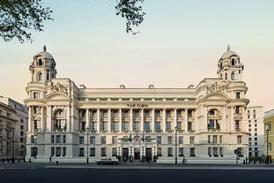
John McAslan asks councillors to think about what a ‘successful outcome’ would be as City readies for long-delayed planning decision
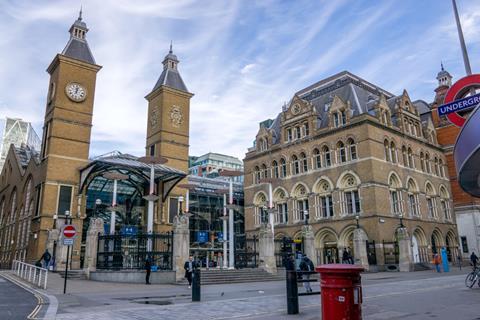
The architect behind a rival plan for the redevelopment of Liverpool Street station has urged councillors to think carefully about the future before making a decision on Network Rail’s £1bn plans for the site ahead of a vote on the scheme today.
John McAslan, who designed the extension of King’s Cross station, said if the Acme-designed proposals for the UK’s busiest station were approved, people in the future would look at the building and ask: “How in the name of God did this ever get built?”
McAslan has drawn up his own proposal for the grade II-listed site as an alternative to Network Rail’s scheme, which is widely expected to be approved by the City of London’s planning committee this afternoon.
Unlike Network Rail’s proposals, which would see a large section of the station’s trainshed demolished to make way for an 18-storey office development, McAslan’s proposal to cantilever office space above the site would leave the trainshed almost entirely untouched.
He told Building that councillors “need to think, if you came back in 20 years and looked at what has been built, is that something you would think is a successful outcome?”
He added: “I can’t believe they will think that because if it’s ever built, it will be hugely disruptive, destructive and ruinous of the station.”
McAslan also said he believed the City of London had “just got in too deep”, adding that he understood the Corporation’s strategy of promoting development in the Square Mile but the council had “made a bad call”.
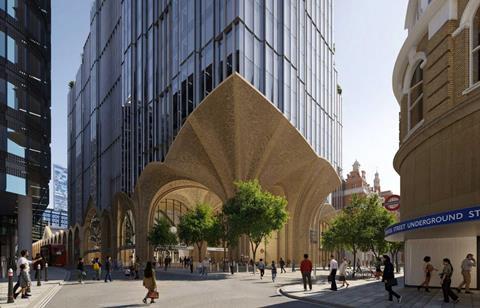
Acme’s proposals have broken records for the level of public reaction received, amassing the highest ever numbers of both objections and letters of support for an application in the City of London ahead of today’s council vote.
Some 3,649 objections have been posted on the application at time of writing against 1,152 comments in support, with the combined number of public comments nearing 5,000.
The number has grown significantly over the past two weeks following a sustained campaign by The Victorian Society and Save Britain’s Heritage to highlight what the two groups argue would be irreversible damage to the station’s historic character if the scheme is built.
But those in favour of the proposals have been given a boost by Historic England, which has declined to level an official objection against the application and described the proposals as a “significant improvement” over a previous version of the scheme designed by Herzog & de Meuron.
A planning decision on the scheme, originally expected late last year, has been repeatedly delayed due to the size and complexity of the application with planning officers finally issuing a recommendation for approval in a 564-page report published last week.
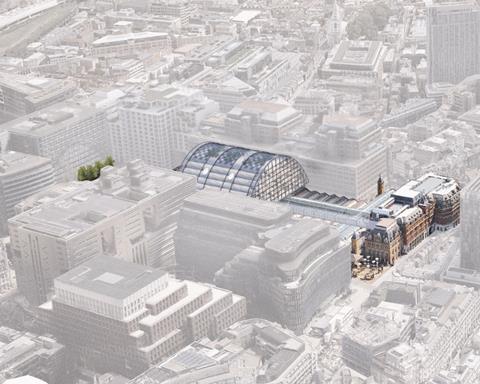
While the report admitted that the proposals would “result in numerous policy conflicts” and “entail the loss of significant historic fabric”, officers argued the proposals complied with the City’s development plan “when read as a whole”.
The report concluded that the proposed upgrades to the station would be “transformational” and give the station “significant staying power in relation to future use forecasts”.
A needs report published by Network Rail found the station’s passenger numbers now surpass those seen at Heathrow Airport, Europe’s busiest airport, and are 2.7 times higher than those in 1997 with footfall forecast to increase by a further 35% by 2041 to some 131 million passengers.
The project team includes Aecom on engineering and transport, Certo as project manager, Newmark, previously known as Gerald Eve, on planning, Gleeds as cost manager, Donald Insall Associates on heritage and townscape, GIA on daylight and sunlight and SLA as landscape architect.
A Network Rail spokesperson said: “Network Rail has carefully considered all options for Liverpool Street station. The current proposals represent the most effective way to upgrade Britain’s busiest station and meet the urgent needs of the millions of passengers who use it every day.
The transport operator added: ”Deliverability and public benefit are at the heart of our approach, and Network Rail is committed to delivering this scheme, having already invested significant time and resources to bring forward a robust, future-ready proposal within a critical window to address growing customer demand.
“The plans will future-proof the station by easing congestion, expanding capacity and delivering a fully inclusive and accessible experience for all. The design delivers step-free access from street to platform across Network Rail and the Transport for London estate, significantly improving the everyday experience for passengers.”
The City of London Corporation has been approached for comment.







No comments yet