



















Powell & Moya’s buildings set to be demolished to make way for three-block office scheme designed by Diller Scofidio + Renfro
















The campaign group which brought a legal challenge against the City of London’s decision to approve Diller Scofidio + Renfro and Sheppard Robson’s plans to redevelop the former Museum of London site have said they will not continue to fight the scheme after their case was dismissed.
Barbican Quarter Action (BQA) said it was “not in a position to take this fight further” following the High Court’s decision to reject a judicial review brought by the group against the consent for the controversial office scheme on the northern edge of the City of London.
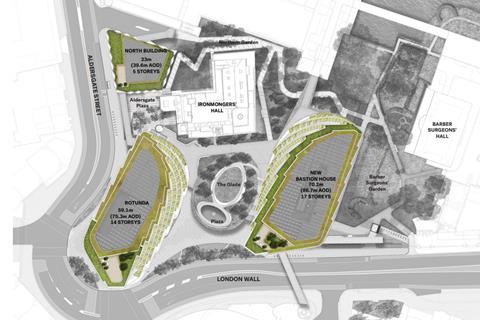
The project is set to replace the former Museum of London building and neighbouring Bastion House with three blocks between five and 17 storeys in height, with the City acting as both developer and planning authority.
The proposed demolition of the site has provoked considerable controversy with nearly 900 objections posted on its application page against just 15 letters of support.
Concerns raised by those opposing the scheme include the embodied carbon impact of redeveloping the site and the heritage impact of losing the existing 1970s buildings, both designed by RIBA Gold Medal-winning practice Powell & Moya, as well as its impact on the neighbouring Barbican Estate.

After briefly being put on hold by former communities secretary Michael Gove, the plans were approved in April 2024 before the High Court allowed judicial review by BQA on the grounds that the City’s decision had been unlawful.
But BQA’s argument that the City had failed to properly consider alternative schemes before approving the scheme was rejected by the court on Friday with Justice Fordham ruling that there had been no “presumption or expectation against demolition” in City planning policy.
BQA also claimed the City had failed to abide by environmental impact regulations and that it had failed to apply policy, both of which were dismissed.
However, Justice Fordham found the council had breached its statutory duty to keep pre-application materials inaccessible to its teams working on the developer side of the project.
Under national planning law, councils acting as both developer and planning authority must ensure functional separation between teams working on either role.
But while the court found four folders of documents had remained accessible to the development team, nobody from that team had accessed the documents, so the decision-making process would “inevitably” have been the same had the breach not occurred.
BQA said in a statement: “We are disappointed by today’s decision and while the outcome is not what we had hoped for, we respect the court’s process and the seriousness with which the case was considered.”
The group added that despite the judgment not going in its favour, it firmly believed that raising issues around transparency and accountability in planning decisions was “both necessary and justified”.
Diller Scofidio + Renfro is lead architect on the project with Sheppard Robson acting as collaborating architect.
The team also includes landscape architect Gross Max, structural engineer Buro Happold, cost consultant Aecom, townscape consultant Tavernor and planning consultant Gerald Eve. Multiplex is providing construction logistics advice.







No comments yet