

















Details of expected construction cost and opening timetable due by summer, government promises
More than £43bn has been spent on building HS2 so far with the government today pledging a fresh attempt to cut the building programme and construction cost.
In its latest six month update on the scheme, the Department for Transport revealed this afternoon that £43.6bn had been spent on the scheme by the end of last month – up from the £37.6bn announced last July.
The bulk of the money, £30.9bn, has been spent on civils work with a further £2.9bn spent on stations work.
The department said the total amount spent on the project so far was, in fact, £46.2bn – once the £2.6bn shelled out for the abandoned phase 2 of the scheme had been included.
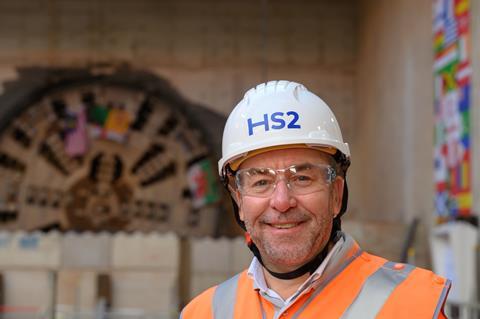
HS2 chief executive Mark Wild, who took over in 2024, has been talking to firms for several months about renegotiating the value of construction contracts on the job in a bid to bring costs down.
Transport secretary Heidi Alexander gave a hint of what is to come when the cost and schedule range is published in the coming months.
In last July’s update she complained about “uncontrolled costs and extremely poor productivity and performance from the supply chain” and in today’s update said: “Our focus remains on finalising the updated cost and schedule estimates and progressing the reset to address the difficult position that we inherited.
“This includes reshaping HS2 Ltd and continuing to engage with suppliers to review contracts, implement the recommendations of James Stewart’s independent review and deliver the railway safely and at the lowest reasonable cost.”
As expected, she said Wild is looking at cutting the top speed of the trains that will run on the route which Alexander said “could save in the low billions”.
At the moment, the trains are designed to run at 360kph (224mph) but Alexander said: “No railway in the UK, or globally, is currently engineered for 360 kph. This means that the project would have to wait for HS2 tracks to be built before testing any trains – an approach which could increase costs and delay the completion of the project. The alternative would have been to send trains abroad to test on an existing track running at that speed.
“Mark Wild’s initial and provisional estimate is that a specification at reduced speeds could save in the low billions and bring the railway into service sooner, by reducing risk in the delivery of the programme and its testing. However, in learning the lessons of the past, I am eager not to make this decision prematurely; I have asked Mark Wild to report back to me before the summer recess, and I will be considering his advice carefully.”
Wild will come back by Parliament’s summer recess, scheduled for the middle of July, with his revised cost estimate and schedule of when the railway will be completed.
Alexander added: “The government will reflect on the early outcomes of this work, alongside progress on engagement with HS2 Ltd’s main suppliers, ahead of publishing the new cost and schedule estimates once they have been fully assured and approved.
“It is clear that this review of specification and the wider reset are not going to undo the failures that have led to this point, but they will set a realistic and controlled path to completing the remaining work.”







No comments yet