Charge on newbuild developments introduced today
Housebuilders are bracing for the impact of another hit to viability following yesterday’s introduction of the Building Safety Levy.
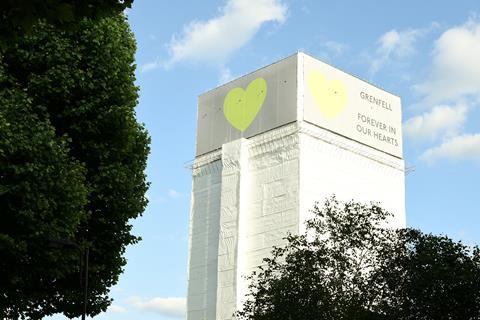
The tax applies to most newbuild residential schemes and has been introduced to ensure the housebuilding industry contributes towards the cost of fixing unsafe buildings.
It is collected through the building control process rather than the planning system, meaning that schemes which have already been granted planning approval may be subject to the levy as they pass through the Building Safety Regulator’s gateway process.

Charges are based on the development’s gross internal floor area and local property values, with councils acting as the main collecting authorities.
The Royal Borough of Kensington and Chelsea has the highest levy rate at £50.17/sq m for residential development on previously developed land, and £100.35/sq m on previously undeveloped land, according to UK government figures.
Westminster follows at £49.01 and £98.01 respectively, while Hammersmith & Fulham has rates of £45.94 and £91.87/sq m. Outside London, Epsom and Ewell have the highest rate at £56.62/sq m for previously undeveloped land, followed by Cambridge at £50.87/sq m.
The new tax adds to a slew of other charges on residential developers which have built up over the last few years and contributed to a collapse in confidence in the sector, with a report by the Home Builders Federation yesterday revealing that the last 12 months has seen the lowest level of planning approvals for more than a decade.
Law firms have today warned of the potential unintended consequences of the tax and the risk of further suppressing new building activity, resulting in a lower than expected yield.
James Morris, construction litigation partner at Mayor Brown, said the “principal concern is whether another cost on residential development comes at the wrong time for an industry already facing significant pressure on multiple fronts”.
He added: “The challenge is whether the Levy will strike the delicate balance between assisting with funding without undermining housing delivery.”
And Forsters commercial real estate partner Andrew McEwan said the “real test” of the levy will be whether it can “raise the revenues intended without further constraining an already limited development pipeline”.
“If projects are delayed or no longer stack up financially, this loss of development pipeline will end up reducing the revenues generated by the Levy as well as hampering crucial housing delivery,” McEwan added.
He also warned of the risk to schemes with planning consent but without Gateway 2 approval which may be progressing on financial assumptions that did not include the Levy and so may now need to revisit viability assessments.
Schemes which were refused Gateway 2 applications before today might also find themselves subject to the new levy upon resubmission, McEwan added.
Meanwhile, the number of buildings being monitored for potential cladding remediation is increasing with the figure jumping by 12.1% since January this year.
A study by Property Inspect found the government was monitoring 4,697 buildings of 11m or taller for unsafe cladding at the end of July, up from 4,191 at the end of January.
However, the number of buildings where remediation is underway has also increased by 3.3% in January while the number of remediation jobs completed rose to 22.2%


No comments yet