















The Engineering Council’s standards review is considering the need for systems thinking while the Engineering Professors Council launches teaching resources to help educators prepare graduates for complex challenges spanning climate resilience, AI deployment and circular economy integration
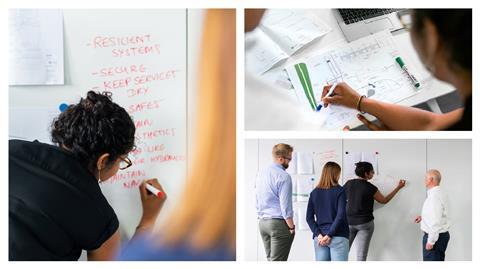
Systems thinking is being built into engineering education to equip the next generation of professionals with the skills they need to tackle increasingly complex and interconnected problems.
In 2025 the Engineering Council, which regulates education, training and professional competence, initiated a periodic review of the suite of standards that will shape future generations of engineers. They consist of the UK Standard for Professional Engineering Competence and Commitment, Accreditation of Higher Education Programmes, the Approval and Accreditation of Qualifications and Apprenticeships, and the Regulations for Registration.
The review kicked off with six workshops at which consultees from industry and academia explored emerging areas of interest:
- Ethical, inclusive and human-centred practice
- Global responsibility and governance
- Sustainable and regenerative futures
- Engineering management and innovation
- Safe, secure, resilient systems
- Systems and critical thinking
The themes reflect increased awareness of the complex and systemic nature of the built environment, and the issues engineers must grapple with.
Drafting and further consultation will be carried out this year, with the revised standards due in 2027.
Engineering graduates are expected to design climate-resilient cities, ethically deploy AI, and weave circular-economy thinking into supply chains
Dr Nikita Hari at University of Oxford’s department of engineering science
In parallel, the Engineering Professors Council (EPC), the representative body for engineering academics in higher education, launched a ‘Complex systems toolkit’ on 9 December. It provides academics with a new body of teaching resources.
“Engineering graduates are expected to design climate-resilient cities, ethically deploy AI, and weave circular-economy thinking into supply chains,” said Dr Nikita Hari, head of teaching and research in the University of Oxford’s department of engineering science, and co-chair of the EPC complex systems working group.
“All this lives squarely in the messy realm of complex systems. Yet most engineering curricula still treat complexity as an afterthought or a niche elective.
“Complexity is often misunderstood, misrepresented, or purely ignored. The ‘Complex systems toolkit’ is our academic response.”
Useful toolkit links
- Check out the Complex systems toolkit
- Read ‘Connect to change’
- Explore the ‘Reimagined degree map’
“Today’s engineering challenges involve an increasing range of technical and non-technical factors that interact in non-linear and unpredictable ways. This requires developing graduates who can collaborate across disciplines, navigate complexity and manage complex systems,” said EPC chief executive Johnny Rich. “Engineers don’t solve technical problems in isolation. Systems thinking is critical in our complex, interconnected world.”
The toolkit was welcomed by Mark Enzer, chair of the Built Environment Connective steering group. “In July we published a paper, ‘Connect to change’ arguing that the built environment is right at the heart of some very big, tangled, global challenges, and that systems thinking is essential to address them. Connect to change set out nine recommendations, one of which is to develop systems thinking competencies and embed them in education. It’s hugely encouraging to see others pushing forward.”
John Kraus, CEO of charity Engineers Without Borders UK, said: “The toolkit is highly complementary to the ‘Reimagined degree map’ that we developed with representatives from academia, industry and the Royal Academy of Engineering and launched in 2024. The map holistically frames engineers’ global responsibility and is aimed at educators who want to update what they teach, to meet modern challenges. The toolkit provides resources and guidance to do so.”
>> Also read: John Kraus on the skills needed for a globally responsible approach to engineering
Dr Hari said resources in the toolkit have been peer-reviewed and are free to access, “to help engineering educators build systems concepts directly into their teaching and prepare future engineers for tomorrow’s challenges”.
Key “systems skillsets” include learning to analyse, model and navigate complexity, to collaborate across disciplines, and to manage complex technical and sociotechnical systems.
The toolkit contains resources that clarify essential terminology, outline key competencies, scaffold learning outcomes, and outline effective teaching strategies.
Rich said “it is not just students who benefit. Learning how to integrate complex systems in engineering also supports educators in their own professional development, since many may themselves never have been taught the necessary knowledge, skills, and mindsets that they are now expected to teach”.
The move to teach systems thinking reflects its increasing importance in government and industry.
Systems thinking was employed by the National Infrastructurue and Service Transformation Authority (NISTA) to develop the 10 year infrastructure strategy, published by last summer, and is being used both to shape regional and sector plans, and to select projects for inclusion in the national infrastructure pipeline.
With NISTA support, the Infrastructure Client Group, representing many of the UK’s biggest asset owners, operators and construction clients, will sponsor a ‘built environment systems review’, starting next spring.
The EPC toolkit will evolve over time, as new resources are added and systems thinking becomes better established across engineering disciplines.
Coming up in Building Systems Thinking…
Over the coming months, the Building Systems Thinking content programme will run analysis, opinion, explainers, case studies, reports and events.
To find out more about editorial opportunities contact andrew@mylius.co and for partnership opportunities contact cameron.marshall@assemblemediagroup.co.uk