



















Recent motorway closures and bridge failures highlight a looming UK infrastructure crisis, prompting calls for urgent action on asset management
When infrastructure stops working, or doesn’t work as intended, we very quickly experience the impacts – and get angry about it.
At best, failing or underperforming infrastructure causes inconvenience. At worst it costs lives.
There has been a marked uptick in “precursor” events in the last few years – defects requiring urgent action to preserve service and safety. This is most obvious across the highways network, with potholed roads and weight-restricted or closed bridges causing daily aggro. But the condition of railway, water, sewer and flood defence systems is increasingly precarious.
As one of first nations to industrialise and develop comprehensive infrastructure systems, the UK is approaching a cliff-edge, warned the National Engineering Policy Centre (NEPC, representing 43 professional institutions convened by the Royal Academy of Engineering) last December.
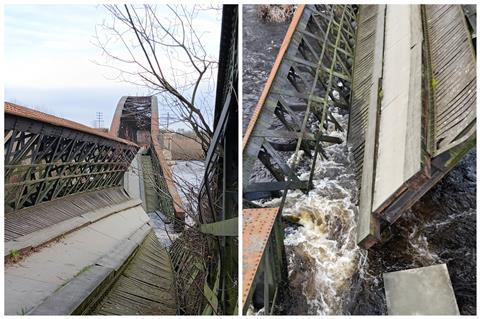
Much of the nation’s infrastructure is at or approaching the end of its design life. Construction adds just 0.5% by value, annually, to the overall inventory; renewal of some systems, such as for water supply, is so slow at current investment rates that it would take a millennium to upgrade them. The NEPC report, Reviving our ageing infrastructure, makes clear that it is impossible for the UK to just build its way towards economic growth and better social outcomes. It’s time to get serious about asset management.
In its report the NEPC highlights factors that compound the problems arising from a lifetime of hard use and neglect.
“Long-lived assets face mounting challenges from a backlog of underinvestment, limited funding for routine maintenance and an age profile that means deterioration will only accelerate. Many are approaching a critical state where they risk compromising the reliability of the services they provide.
“Climate change is expected to place growing pressure on infrastructure systems, with more frequent and severe weather events accelerating deterioration and increasing the risk of unpredictable failures.”
Across almost all infrastructure sectors, the intensity of use and imposed loads far exceed those that designers originally anticipated. Meanwhile, infrastructure systems – now including digital and data sharing systems –have become interwoven and interdependent, with problems in one quickly cascading to others. The result is that “failures have more significant economic, social and environmental consequences.”
The potential for neglected asset management to trigger cascading failures, with far-reaching impacts, was illustrated in March 2025 whenfire broke out at an electricity substation in west London, disrupting power to over 70,000 customers, including Heathrow Airport.
At the same time, public, political and regulatory expectations for infrastructure performance are rising, putting operators under greater scrutiny and increasing media attention on infrastructure management – witness the ongoing outcry over sewage-contaminated rivers.
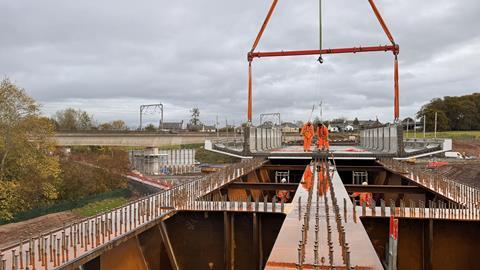
The NEPC notes that “system-level interdependencies can introduce significant complexity into asset management decision-making. Even planned interventions disrupt people’s lives. However, without planned maintenance, renewals and enhancements, far worse disruption is inevitable.
“The nature and timing of optimal interventions and the justification of funding must therefore be viewed from the perspective of the avoided risk of disruption to the overall infrastructure system and the service that it provides.” Stating “the need to act is urgent”, the NEPC sets out seven “enablers of change”.
Seven enablers of change
- Outcomes, regulation and standards This addresses fundamental but seldom-asked questions: what do we want infrastructure to do for us and what does good look like? The report emphasises that “we need a long-term vision for reliable and resilient infrastructure that meets future societal needs, underpinned by regulations and standards”. Desired outcomes should be set over a time horizon of 25 or more years to guide policy and strategic investment decisions. A system is needed for measuring and reporting infrastructure condition and performance over time.
- System coordination
Infrastructure systems must be better coordinated, the report says. The NEPC suggests that the National Infrastructure and Service Transformation Authority should carry out a regional trial, seeking to align governance and regulation, and enable information sharing, between organisations and sectors. System coordination is required between regions as well as within them. - Financing for the long-term
The NEPC calls for a shake-up of funding, financing and accounting models, to achieve proactive maintenance, renewal and enhancement of existing assets – noting that preventative maintenance is five to ten times more cost-effective than repair. The NEPC applauds the government for recognising the need for asset management in its 10 Year Infrastructure Strategy. But the NEPC wants to see practical solutions to close the gulf between investment needed and currently provided in time for the strategy update in June. - Skills and capability
Meeting the asset management challenge requires people with suitable skills, calling for provision of new education and training, and well-delineated career pathways. Asset owners and regulators must forecast future workforce requirements. Many will have to strengthen their board-level engineering expertise to do so. - Data
What do we own, where is it, what’s it made of, what condition is it in, and how is it performing? Accurate data, and the means to gain insight from it, is needed develop effective maintenance, improvement and renewal plans. The report calls on government to develop a secure, industry-standard “infrastructure data framework” to enable asset data to be captured, managed and shared. And it urges organisations across the industry to adopt common, standardised approaches to data-gathering, digital modelling and decision-making, to improve efficiency and accelerate adoption. - Innovation
Maintaining and renewing old assets requires innovation. However, developing and scaling-up new technologies and approaches is hindered by regulatory, procedural, cultural and commercial barriers. Action is required by regulators, standards-setters, asset owners and sector trade bodies to remove them. - Societal awareness
The NEPC recommends creating a new interministerial group to develop a unified national strategy for improving resilience and building a culture of infrastructure stewardship. The strategy should be woven into a public narrative that enables voters to understand the relationship between infrastructure and the social, economic and environmental services it enables, and to discuss risks, impacts, and potential asset management options.
Coming up in Building Systems Thinking…

Over the coming months, the Building Systems Thinking content programme will run analysis, opinion, explainers, case studies, reports and events.
To find out more about editorial opportunities contact andrew@mylius.co and for partnership opportunities contact cameron.marshall@assemblemediagroup.co.uk







No comments yet