



















“Technology alone won’t transform construction,” said Brett King, director of industry transformation for EMEA at Procore, opening Building’s latest roundtable discussion in central London. “It’s people, culture and collaboration that will turn digital potential into real productivity.”
That conviction – that AI is only as powerful as the people and processes behind it – shaped the discussion. Sponsored by Procore, it brought together senior digital and technical leaders from across the UK construction sector to explore how AI and innovation can deliver measurable benefits.
With the industry under pressure to improve productivity, reduce waste and manage risk, the conversation centred on how digital tools and data can be harnessed to solve real challenges – not simply add complexity.
Cutting through the AI hype
Artificial intelligence has become one of the most discussed – and sometimes misunderstood – topics in construction. While headlines promise revolution, the reality on the ground is often more measured.
AI’s potential, participants agreed, is huge – but the hype can overshadow what’s genuinely achievable today. Pedro Varela, UK and Ireland head of AI at Slalom, cautioned that the industry needs to build solid foundations before rushing ahead. “Everyone wants to talk about AI strategy,” he said, “but you can’t have one without a data strategy first.” Poor data, he warned, will undermine even the most sophisticated algorithms.
Others around the table echoed this realism. Tomas Hollingsworth, director of technology at BW, said AI should be viewed as a tool for decision support, not as a replacement for expertise. “We’re not talking about machines taking decisions away from people,” he explained. “It’s about providing better information so they can make the right call faster.”
Around the table
| Mark Buckle | Technical director | Tilbury Douglas |
| Edward Chambers | Co-chair | Lindum Group |
| Dwayne Florant | Senior digital construction manager | Morgan Sindall |
| John Foster | Business improvement director | Bowmer & Kirkland |
| Ivo Garcia | BIM and innovation manager | William Hare |
| Tomas Hollingsworth | Director of technology | BW |
| Brett King | Director, industry transformation, EMEA | Procore |
| Nick Leach | Director of digital construction | Sir Robert McAlpine |
| Adina Poncis | Director of digital delivery | Durkan |
| Grayham Roper | Digitalisation and innovation manager | Briggs & Forrester |
| Adrian Speller | Managing director | Speller Metcalfe |
| Pedro Varela | UK & Ireland head of AI | Slalom |
That sense of pragmatism set the tone for the discussion. AI, participants agreed, needs to be embedded where it genuinely adds value – predicting issues, improving safety, reducing rework – rather than being deployed for its own sake.
King noted that this cultural shift is as important as the technology itself. “If AI and data are going to help rather than hinder, they have to solve real problems that teams face every day,” he said. “That’s how we move from hype to help.”
From innovation to implementation
The conversation soon turned to the broader challenge of embedding digital tools in an industry where innovation often struggles to scale. Mark Buckle, technical director at Tilbury Douglas, observed that many firms have become stuck in pilot mode. “We’ve got hundreds of proof-of-concepts sitting on shelves,” he said. “What we need now is to make sure those ideas don’t stay in the innovation team but become part of how we deliver every project.”

That sentiment was shared by others, who pointed to the need for simplicity and usability. Edward Chambers, co-chair of Lindum Group, said too many digital initiatives falter because they overcomplicate processes. “People on site don’t want another layer of admin,” he said. “They want tools that make their day easier.”
John Foster, business improvement director at Bowmer & Kirkland, agreed that digital transformation depends on taking people with you. “It’s not about throwing away what works,” he said. “It’s about showing teams the tangible benefits – whether that’s saving time, improving coordination or reducing paperwork.”
For Adrian Speller, managing director at Speller Metcalfe, trust is the real measure of success. “We’ve all been burned by systems that promised the earth and delivered very little,” he said. “You’ve got to prove value quickly so teams see that technology helps them do their job better.”
Data: the foundation for AI
Every participant recognised that AI’s effectiveness ultimately depends on data – its quality, structure and accessibility. Nick Leach, director of digital construction at Sir Robert McAlpine, said data remains one of construction’s most underused assets. “Every project generates masses of information,” he said. “The challenge is that it often sits in silos. The next step is connecting those dots so insight can move between design, delivery and operation.”
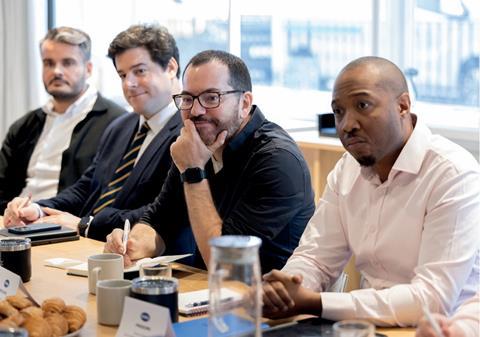
Grayham Roper, digitalisation and innovation manager at Briggs & Forrester, agreed that inconsistency is a major barrier.
“Everyone has their own way of capturing data,” he said. “What we need are shared standards so information can flow between systems without friction.”
The benefits of structured data go well beyond project reporting. Ivo Garcia, BIM and innovation manager at William Hare, explained how machine learning can unlock new efficiencies in manufacturing and logistics.
“Once you have reliable, well-organised data, you can use it to optimise fabrication or spot coordination issues early,” he said.
For Adina Poncis, director of digital delivery at Durkan, transparency is key to unlocking value.
“When site teams can see live data, it changes behaviour,” she said. “It’s not about spreadsheets – it’s about visibility and accountability.”
Practical applications of AI
Several contributors shared early examples of how AI and analytics are beginning to make a difference on real projects. Roper described the growing use of predictive tools to identify potential safety issues. “
We can now analyse data from hundreds of inspections and start to see where problems are likely to occur,” he said. “That’s incredibly powerful for prevention.”
AI is also being used to improve cost and programme certainty. Hollingsworth noted that some firms are already analysing historical project data to forecast risk. “It doesn’t replace human judgement,” he said, “but it gives us another lens through which to make decisions.”

King added that the value of these technologies lies not just in automation, but in consistency. “When everyone works from a single, connected dataset, you get fewer surprises and more confidence,” he said. “That’s where the real productivity gains come from.”
Still, participants acknowledged that AI brings new challenges, from ethics to accountability. “If we don’t understand how the algorithm got to an answer, can we really trust it?” asked Foster. “We need transparency as well as innovation.”
Changing culture on site
If data and AI promise to reshape construction, cultural change will determine whether that promise is realised. Participants discussed the practical barriers to adoption, particularly at the interface between office and site.
Speller warned that digital strategies often collapse at the point of delivery. “If we’re serious about transformation, we have to make sure our foremen and subcontractors can actually use the tools,” he said. “Otherwise, we’re just moving paperwork around electronically.”

Dwayne Florant, senior digital construction manager at Morgan Sindall, said engagement is the key.
“If you involve the site teams early – in testing and choosing the tools – they take ownership,” he explained. “That’s when you start to see real behavioural change.”
Training and peer support are essential. Roper noted that “when people see colleagues using tablets or apps successfully, confidence spreads quickly.” Poncis summed it up succinctly: “Digital transformation isn’t a software problem; it’s a people problem.”
Managing risk and building confidence
As digital systems mature, managing risk – technical, ethical and cyber – becomes a pressing concern. Hollingsworth said every company now has a duty to protect information. “We’re all becoming data custodians,” he said. “That brings responsibilities we can’t ignore.”
Varela added that governance and transparency will be crucial as AI becomes more widespread. “We need frameworks to ensure AI is used safely and responsibly,” he said. “It’s not just about compliance – it’s about trust.”
For Buckle, openness is the best risk mitigation. “The more we talk about lessons learnt, both good and bad, the faster we’ll mature as an industry,” he said.
King noted that confidence will grow as experience builds. “Every project that uses digital tools successfully adds to the collective proof,” he said. “That’s what helps the next client or contractor take the leap.”
The productivity prize
Ultimately, every aspect of the conversation came back to the same goal: productivity. Foster pointed out that technology only matters if it improves delivery. “If it doesn’t save time or money, it’s just innovation theatre,” he said.
Garcia provided evidence that when done well, digital transformation delivers tangible results. “In steel fabrication we’ve seen efficiency gains of 10% to 15% through better use of data and automation,” he said.
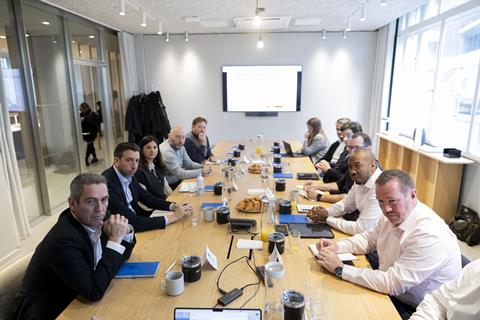
Leach agreed that visibility is where the returns come through. “When you can predict clashes or delays early, you avoid the ripple effects that hit cost and programme,” he said.
“Digital transformation isn’t about gadgets,” King concluded. “It’s about outcomes. The productivity prize is there for those who connect people, process and technology.”
Priorities for the next 12 to 18 months
Looking ahead, participants identified three clear priorities for the near term: consistency, skills and collaboration.
Speller urged the industry to focus on scaling what works rather than chasing novelty. “We need to stop reinventing the wheel on every job,” he said. “Let’s take the good practice we already have and roll it out properly.”
Building capability was seen to be just as critical, with Poncis called for broader investment in digital literacy. “It’s not enough to have a digital team,” she said. “Everyone needs to understand the tools they’re using.”

On this point, Chambers emphasised the need for leadership through uncertainty. “We’ve got to keep the momentum even when the market is tough,” he said. “Digital isn’t optional any more – it’s survival.”
To do this, Buckle added that the industry should start measuring its digital performance with the same rigour it applies to cost and safety. “If we want to improve, we have to track the right things,” he said.
For King, the next phase of transformation depends on shared ambition. “Real change happens when everyone in the ecosystem – clients, contractors, designers and suppliers – is aligned,” he said. “It’s not about one company winning; it’s about the industry moving forward together.”
AI and digital tools will only make a real difference when they are used every day on live projects, not just in tests.
Success will depend on good data, confident teams, and close collaboration – when these come together, productivity improvements become tangible.
Five takeaways from the roundtable
1. From hype to help
AI and digital tools only matter when they solve real problems on site and improve daily delivery.
2. Data first
Structured, shareable data is the foundation for every successful AI or automation initiative.
3. People power
Cultural change, not coding, will determine whether digital transformation sticks.
4. Collaboration counts
Shared platforms and open communication help build trust and unlock performance.
5. Productivity is the proof
The ultimate test of any digital innovation is whether it delivers measurable gains in time, cost and quality.