





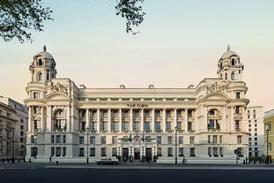
Marshalls’ Michael Roden discusses how commercial landscaping is evolving, why design and engineering is becoming central to project success, and why the construction industry needs to rethink the relationship between design ambition and practical delivery
Commercial landscaping is where built environment projects truly come to life. Whether it’s a public square, transport hub, education campus or corporate HQ, the landscape surrounding a development shapes how people experience, navigate and remember a place. In many ways, it is every bit as important as the building itself.
Yet for years, commercial landscaping has too often been treated as the final layer of a construction project – something considered once the ‘real’ architectural and engineering decisions have already been made.

According to Michael Roden, commercial trading director at Marshalls, that mindset is rapidly changing. As pressure grows around cost certainty, programme risk, carbon reduction, specification scrutiny and buildability, the external environment is no longer a late-stage consideration.
Instead, it is becoming one of the most technically demanding and strategically important aspects of project delivery. For Marshalls Landscaping, that shift is redefining the role manufacturers need to play.
Rather than operating purely as product suppliers, Roden believes the future belongs to businesses capable of combining creative thinking, technical engineering, material expertise and delivery support into one integrated offer.
It is the thinking behind Marshalls’ refreshed approach to design and engineering services, which aims to position the business as a strategic project partner rather than simply a paving or street furniture supplier.
The ambition is clear: move earlier into the design conversation, reduce project complexity before it escalates and help clients create spaces that are both inspiring and buildable.
Here, Roden discusses how commercial landscaping is evolving, why design and engineering is becoming central to project success, and why the construction industry needs to rethink the relationship between design ambition and practical delivery.
Q: Commercial landscaping is often seen as a finishing trade rather than a strategic project consideration. Is that perception changing?
Absolutely – and it needs to. Landscaping projects now sit at the centre of multiple pressures: sustainability targets, accessibility requirements, safety standards, SuDS integration, hostile vehicle mitigation, biodiversity expectations, maintenance considerations and greater financial commercial constraints.
What used to be viewed as ‘surface level’ work is now deeply connected to project performance.
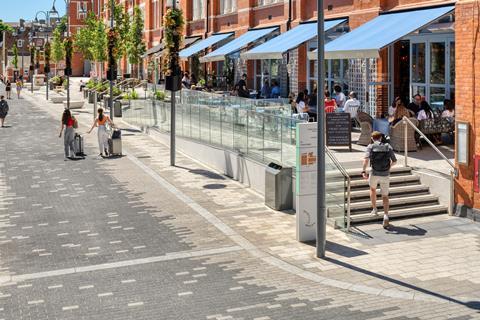
At the same time, the expectations on these spaces have changed dramatically. Clients want environments that are not only functional and durable, but also socially valuable, visually distinctive and capable of supporting long-term environmental goals.
That means landscaping decisions can no longer happen in isolation or too late in the process. The earlier design, engineering and buildability conversations happen, the more opportunity there is to remove risk, reduce carbon, improve efficiency and ultimately deliver better places that people really want to be in.
One of the biggest shifts we’re seeing is that clients value partners who can simplify complex decisions. They don’t necessarily want more consultants involved. They want fewer silos, clearer accountability and more joined-up thinking.
Q: What pressures are driving that evolution in the market?
The sheer complexity of project delivery.
Construction teams are being asked to do more with less while simultaneously navigating tighter budgets, material volatility, labour shortages, compliance pressures and increasingly ambitious sustainability objectives.
At the same time, expectations around design quality have risen significantly.
There is a misconception that value engineering means compromising ambition. In reality, good value engineering should protect the intent of a project while making it more practical, efficient and deliverable.
That is where integrated design and engineering input becomes incredibly important.
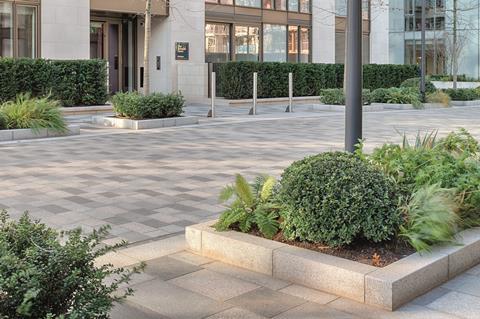
The challenge many teams face is that external works involve multiple stakeholders making decisions at different stages. You may have landscape architects, consulting engineers, contractors, procurement teams, local authorities and specialist consultants all influencing the outcome.
If those conversations are disconnected, risk builds very quickly and decisions made previously can start to unravel.
We often see projects where products are specified without full consideration of installation constraints, maintenance implications, loading requirements, drainage integration or programme sequencing. None of those issues are insurmountable, but the later they are identified, the more expensive and disruptive they become.
What clients really value is proactive technical collaboration early enough to prevent problems rather than react to them. That’s a very different conversation to simply supplying materials.
Q: Marshalls is repositioning its design and engineering offer quite heavily. What prompted that decision?
Internally, we’ve known for years that our design and engineering capability is one of the strongest differentiators we have. The challenge is that much of the market still primarily associates manufacturers with products rather than strategic expertise.
When clients actually engage with our design and engineering teams, the feedback is consistently very positive. They value the technical knowledge, the collaborative approach and the ability to simplify complex challenges.
But historically, many people simply haven’t realised the full scope of what we can support with. We’ve been in business for over a century – that’s a lot of knowledge to share. We wanted to move the conversation away from ‘technical support’ and towards design partnership.
Because that is genuinely where the value lies. The industry doesn’t need more fragmented advice. It needs integrated thinking. That’s a big difference.
The fact that we’re a manufacturer first and foremost gives us a huge advantage. Our practical understanding about how products are manufactured and perform in the real world matters enormously. With all that knowledge we can help bridge the gap between creative ambition and construction reality.
That could involve helping simplify pavement build-ups, reducing unnecessary material usage, improving installation efficiency, integrating drainage strategies more effectively or identifying opportunities to reduce embodied carbon without compromising performance.
Those are commercially meaningful interventions and more frequently, are becoming central to project success.
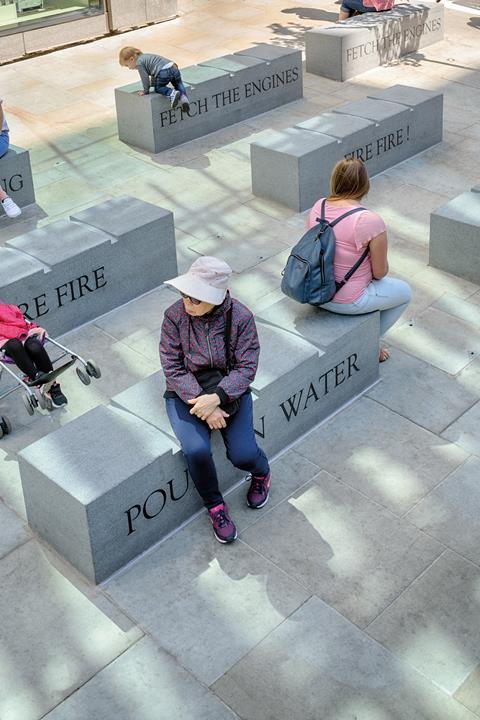
Q: There is growing discussion around the role of manufacturers in project risk reduction. How do you see that responsibility evolving?
I think manufacturers have a much bigger role to play than historically expected. The traditional model was often transactional. A specification would arrive, a product would be supplied and responsibility sat elsewhere. But modern construction doesn’t really operate effectively that way anymore.
Clients want confidence. They want reassurance that solutions are buildable, compliant, coordinated and properly thought through.
What we’re seeing more is that the strongest relationships are built when manufacturers contribute genuine technical expertise rather than simply supplying products. That means engaging earlier, asking more intelligent questions and helping identify issues before they become problems onsite.
Sometimes the most valuable thing we can do is challenge assumptions. For example, there are projects where a minor design adjustment can significantly reduce installation complexity, material waste or long-term maintenance requirements. But unless somebody is looking holistically at the project, those opportunities are often missed. And that’s really what sits at the heart of Marshalls Design and Engineering, now known as MaDE.
There is also a growing expectation around accountability. Clients are understandably nervous about risk transfer, particularly on technically complex public realm schemes. If manufacturers want to remain relevant strategically, we have to move beyond simply saying ‘here’s a product’ and instead demonstrate how we help projects succeed.
Q: How important is collaboration between manufacturers, designers and contractors today?
It’s absolutely critical. The projects that perform best are almost always the ones where collaboration starts early and remains consistent throughout delivery. One of the recurring issues across the industry is that too many conversations happen in isolation rather than collaboratively.
Design decisions are made, then handed to contractors. Contractors raise buildability concerns. Procurement teams look for savings. Engineering reviews happen later. Then everyone ends up revisiting decisions under time pressure.
When manufacturers are brought into the conversation earlier, alongside landscape architects, engineers and contractors, projects become much more coordinated. You can resolve technical constraints earlier. You can rationalise specifications. You can identify carbon savings opportunities. But most importantly, everyone is singing from the same hymn sheet!
The truth is, everyone on a project is under pressure. Designers want to protect vision and quality. Contractors need programme certainty and buildability. Clients want value and reduced risk.
The role of a good technical partner is to help those priorities work together rather than compete against each other.
Q: Sustainability has become a major priority across construction. How is that affecting commercial landscaping?
Historically, sustainability discussions around landscaping were often heavily product focused – recycled content, sourcing credentials, embodied carbon figures and so on. Those things remain important, but the conversation is now becoming much broader.
Clients are recognising that sustainable outcomes are also heavily influenced by design decisions, engineering efficiency and long-term operational performance. For example, reducing unnecessary excavation depth can have a significant carbon impact. Optimising pavement design can reduce material usage and transportation requirements. Better coordination can minimise waste and rework. Even maintenance considerations play a role.
A well-designed landscape that performs effectively over a longer lifecycle is inherently more sustainable than something requiring frequent replacement or remediation.
We’re also seeing much greater integration between landscaping and wider environmental strategies.
SuDS, urban cooling, biodiversity, active travel and climate resilience are no longer peripheral considerations. They are becoming central to how places are designed. That means landscaping teams need both creative and technical capability. You can’t separate aesthetics from engineering anymore.
Q: There is often tension between design ambition and commercial reality. How do you balance the two?
That tension will always exist – but I actually think the best projects emerge when those conversations happen properly. The danger is when value engineering becomes purely cost cutting.
If you only focus on reducing immediate expenditure, you can very quickly undermine the quality, usability and longevity of a space. But equally, design ambition without technical practicality creates different problems.
Without sounding like a politician, the goal should always be an outcome that satisfies the entire brief. We talk about this a lot at Marshalls, we talk a lot about making ambitious visions buildable.
That means protecting the intent of a scheme while identifying smarter ways to deliver it. And that can look like a number of things – sometimes that involves material alternatives. Sometimes it involves engineering efficiencies. Sometimes it involves simplifying details or improving installation sequencing.
But above all else, the sooner we can have the conversations, the better the outcomes. If you wait until procurement stage to start discussing cost pressures, the options available become far more limited and far more disruptive. What clients value is proactive technical advice that allows them to make informed decisions before problems escalate. And nobody wants that.
Q: How has client expectation changed in recent years?
Clients are significantly more informed and significantly more demanding – understandably so.
There is far greater scrutiny around technical performance, sustainability evidence, compliance and long-term value. At the same time, clients expect speed. Construction programmes are compressed, teams are stretched and everyone is under pressure to make decisions faster.
That means technical support needs to be responsive, practical and easy to engage with.
The one thing we hear repeatedly from contractors and specifiers is that they value clarity. They don’t want unnecessary jargon or overly complicated processes. They want direct access to expertise and confidence that issues will be resolved quickly. We talk about trust a lot, but it’s hugely valuable.
Clients want partners who understand project pressures, communicate honestly and behave collaboratively rather than transactionally. The businesses that will succeed long term are the ones that combine technical capability with sound, honest human advice.
Q: Do you think the construction industry still underestimates the importance of landscapes versus buildings?
In some areas, yes. There is still occasionally a tendency to view external spaces as secondary to the building itself.
But in reality, it’s the landscapes we all experience that are what people experience first and remember longest. Take the transformation of Birmingham City Centre as a great case in point; one of the country’s great cities that is going through a significant transformation. Yes, the buildings and architecture in Birmingham is some of the finest in Europe, but it’s the public spaces, transport infrastructure, active travel schemes and ‘dwell’ spaces that are bringing the city to life.
It shapes how people move, interact and feel within a space. Landscaping influences accessibility, wellbeing, safety and environmental performance. And when it’s done well, it adds enormous social and commercial value.
Done poorly, it can undermine an otherwise successful development. The best projects recognise that landscape, engineering and architecture are not separate disciplines competing for importance.
They are interconnected components of place-making. And it is why technical expertise in landscaping has become increasingly important.
Because commercial landscape projects today are far more sophisticated than many people realise.
Q: Finally, what do you think the future looks like for manufacturers in construction?
I think manufacturers will be judged not just on what they make, but on the expertise they bring. What creates real value is the ability to help clients solve problems, reduce complexity and deliver better outcomes. That means manufacturers need to think more like strategic partners.
The businesses that succeed will be the ones capable of combining technical intelligence, sustainability understanding, design thinking and practical delivery support. Construction is becoming too complex for siloed approaches and clients need confidence.
For us, that is really what this next chapter is about. With over a century in landscaping we’re part of the country’s landscaping DNA. For us now, it’s about moving from being seen as a product manufacturer to being recognised as a creative and technical partner capable of helping shape better places from the ground up. Because ultimately, the future of commercial landscaping is not just about what gets installed. It’s about the intelligence behind how those spaces are designed, engineered and built to last.