





facebook
Twitter
Linkedin
Feedback

Saturday18 May 2013

The Passivhaus diaries, part one: Green for go

  • Email
  • Comments (16)
  • Save

Early lessons and preparations

Geoff and Kate Tunstall first approached the Green Building Store (GBS) two years ago wanting to build a cost-effective, energy-efficient retirement home on a plot of land in their garden. Following some initial meetings with myself they were encouraged to go down the German Passivhaus route.

To take the project forward, GBS enlisted the help of energy consultant Peter Warm and Huddersfield architect Derrie O'Sullivan. Getting the right design has taken a couple of false starts, with the initial L-shaped design with conservatory rejected for failing to perform to Passivhaus standards, after modelling with Passivhaus Planning Package (PHPP) software.


Passivhaus Green Building Centre

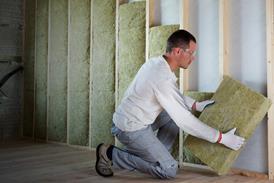
A subsequent design, following a more classic Passivhaus shape - rectangular, with the longest side facing south for optimum solar gain - met the desired 15 kWh/m2/annum level for space heating. The Tunstalls' desire for a conservatory was incorporated into the building envelope as an integral solar space, with exterior brise soleil to minimise overheating. The project will also use super insulation, stringent airtightness, maximum use of passive solar gains and a mechanical ventilation and heat recovery system to achieve the 15 kWh/m2/year space heating demand.

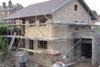
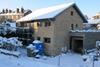
After two long years in the pipeline we finally begin on site this week, starting with excavation work and preparation of foundations. A JCB has been booked and we're hoping the weather will be kind to us.

Passivhaus floor plan: Green Building Centre

The last couple of weeks have probably been the most important in terms of making sure that the project goes smoothly. Our site foreman Jude Wilson and I have been working on the detailed drawings, based on Derrie's original designs. For a Passivhaus construction, it is vital that the pre-build drawings are completely accurate so that all the team from suppliers to builders on site are 'singing from the same hymn sheet'.

Last week we also held a training day on Passivhaus construction for the entire building team. Though we are very experienced at building energy efficient homes, this is our first Passivhaus and I wanted everyone to understand the significance of the project and the particular areas (such as the avoidance of thermal bridging and maximisation of airtightness) that we need to watch out for. I always aim for a partnership approach to construction – encompassing everyone from our clients and architect to those on site - and try to avoid the 'blame culture' common in the construction industry.

To visit the Green Building Store, go to http://www.greenbuildingstore.co.uk/denbydalehouse.php.

Share

Related company resources

Readers' comments (16)

  • This is for me one of the best initiatives Building has done in Recent years. Passive house construction is new and exciting and needs to be demonstrated to a wide audience. The straight forward way this article is written is very useful. We need more demonstration projects like this - I look forward to reading the whole story - perhaps it can be published as one document at the end. Keep up the good work. JC

    Unsuitable or offensive? Report this comment

  • Really looking forward to reading your progress updates - hopefully with site photos!

    Unsuitable or offensive? Report this comment

  • Hope to see more photos and drawings... Looking forward for new posts.

    Unsuitable or offensive? Report this comment

  • Not New, Not Clever. Passivhaus has been around for years and has been proven on many occaisions to fail in operation. On a fairly recent visit arrange by the BRE,3 out of 5 homes visited had turned off the MVHR and retro-installed heating systems. Even reading this article it quite clearly shows its limitation: had to redisgn the building, can only build rectangular boxes, and it only focuses on heating. Try gooling Active Housing - surely this must be the next step!

    Unsuitable or offensive? Report this comment

  • Whilst PassivHaus is clearly not new (first developed in 1992), having missed out on the CEPHEUS project in 2001 it is certainly new for the UK (there is just one certified PassivHaus in Wales and none in Scotland or England). Arguably the simplicity of the PassivHaus concept is the key to appreciating the cleverness of the integrative design. The out dated autonomous house concept has been shown to have higher maintenance costs and higher life cycle primary energy / CO2 emissions are avoided through focusing upon energy efficiency. Energy efficiency on the other hand has long been demonstrated to be cheap and abundant. PassivHaus is not about compromising living standards or quality; rather it is about optimising the quality of living. Why turn the thermostat down by 1C, and compromise comfort, in order to reduce carbon emissions by 10% and save £67 per annum when you could reduce space heating carbon emissions by 80-90%, live at 20C and have an annual heating bill of about £67 by living in a PassivHaus? It would appear that Matt Coates is clearly ill informed about PassivHaus concepts, design and operation. There are a number of Occupancy Studies that clearly demonstrate that the PassivHaus concept is sound and successful (one well published study was undertaken as a part of the CEPHEUS project). If Mr Coates reads the "Active Housing" web site more carefully he would find that the concept is complimentary to PassivHaus rather than in disagreement (Interpreting Active Housing). One of the core principles of PassivHaus is to deliver comfort with a minimal heating requirement. Finally, PassivHaus is not the last word in sustainable buildings but it could be argued that it should be a core part of the definition. (Incidentally I note that “Active Housing” also finds issue with the concept of the autonomous house.)

    Unsuitable or offensive? Report this comment

  • Really looking forward to following progress. I was only vaguely aware of Passivhaus principles when we designed our home about 12 years ago. 'Unconstrained' by PH requirements we ended with a super-insulated house but with far from optimal form. Oh how I wish I'd known then what I know now and had used PHPP as a design tool. As for 'new and clever' I have seen too many clever eco-homes that leak heat in winter and cook in summer or are heated by the halogen lights and poorly insulated hot water system giving the illusion of near zero heating. Best of luck.

    Unsuitable or offensive? Report this comment

  • Bill and Jude and the rest of the wonderful Green Building Company team don't only do 'new'. They took on a 250-year-old barn conversion for us in 2007 and though constrained by listed building criteria managed to create a home that uses just a fraction of the energy of our previous dwelling. Most of the gains are down to good airtightness, not least in their 'traditional' wooden windows and to high standards of insulation - and all without detracting from the original 'character' of the historic building. No wonder our archtect, Derrie O'sullivan, gets in involved with a Passivhaus and that Bill and his team get 'Queens Awards' We look forward to future installments on their progress.

    Unsuitable or offensive? Report this comment

  • NOT NEW, NOT CLEVER - just SIMPLE & EFFICIENT When we decided on the design of this house, we were looking for a design that would be energy efficient, simple in design, and cost effective. Passivhaus is not new, that is the problem, the UK is way behind its European neighbours. We visited houses in Austria where the government positively encourages such builds with loan schemes, and where there are 100s of examples of successful builds. We did not want a house that was complicated to maintain or overly expensive to build. No, not new, not over clever, just simple and efficient.

    Unsuitable or offensive? Report this comment

  • Having met Bill a while back and been given a tour of his premises and a good explanation of what they are doing as a company, I have no doubt that what is finally delivered at Denby Dale will be fundamentally a quality home that does what it says. It will also probably be 'green' in the wider sense (not just heating as Matt Coates suggests) - GBS has a lot of good products to offer. It's also good to see a sustainable house that is closer to what the average man on the street (not least West Yorkshire planners) expects a house to look like. Not that I am personally against more avantgarde modern design in the right place! I look forward to seeing more of the project and wish Bill and the team all the best.

    Unsuitable or offensive? Report this comment

  • I will watch with interest. We have a new build (1 yr old) and had GSHP installed and the insulation is good - but it is a BIG house (6/7 bed) and costs are fairly high to heat it and the water. Would have loved to go down the route you guys are going, but it seemed all but impossible to find a builder/contractors who did this sort of build. We are happy with our house, but eagerly await your updates.

    Unsuitable or offensive? Report this comment

View results 10 per page | 20 per page

Have your say

You must sign in to make a comment

sign in register
  • Email
  • Comments (16)
  • Save
Sign in

Email Newsletters

I'm searching for in
Desktop Site | Mobile Site