
















Both the Stirling Prize and the Neave Brown Award went to council-commissioned homes this year. Satish Jassal, whose Rowan Court scheme for Haringey won the latter, says public housing is once again being treated as a serious design challenge

I always believed in the architecture we were producing. What I never imagined was that someone like me, running a small practice, would one day be standing on stage receiving the RIBA Neave Brown Award for Housing at the Stirling Prize ceremony.
Neave Brown’s work has always been an inspiration, not simply for the buildings he designed, but for his belief that good housing should be for everyone. That architecture has a social responsibility and that the quality of someone’s home should not be determined by their income.
To have our work recognised with an award bearing his name is an extraordinary honour.
I do not look like a “traditional” architect. I do not sound like one, and I certainly do not think like one. Perhaps that is why this award means so much to me.
As I have reflected on the evening, something else has stayed with me. Looking across the winners of the Stirling Prize and the other special awards announced that night, I began to realise just how different the list looked.
I do not look like a ‘traditional’ architect. I do not sound like one, and I certainly do not think like one
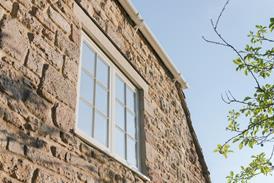
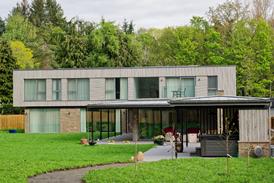
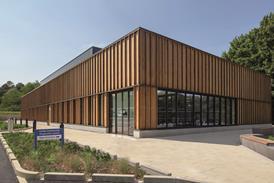
Mary Duggan Architects and RUFF Architects won the Stirling Prize, Architectural Thread took home both the Stephen Lawrence Prize and the Conservation Award, while Takero Shimazaki Architects shared the Reinvention Award. And then there was our practice, Satish Jassal Architects, winning the Neave Brown Award for Housing for Rowan Court.
What struck me was the range of people and practices being celebrated, including female-led practices, architects from a variety of backgrounds and smaller studios making their mark on the profession. These are not necessarily the faces, names or practices that many people would traditionally associate with the highest honours in British architecture.
It was also significant that both the Stirling Prize and the Neave Brown Award went to council-commissioned housing. At a time when delivering genuinely affordable homes remains one of our greatest challenges, it is heartening to see the profession recognising the architectural ambition and social value of public housing.
Beyond the individual winners, I kept returning to a wider question: what does it say that this year’s highest honours went to council homes?
Neave Brown made his name designing council housing in Camden, at a time when local authorities were among the most ambitious clients in the country. For two council-commissioned schemes to win in the same year suggests some of that ambition is returning, and that the profession is once again treating public housing as a serious design challenge rather than a numbers exercise.
At a time when delivering genuinely affordable homes remains one of our greatest challenges, it is heartening to see the profession recognising the architectural ambition and social value of public housing
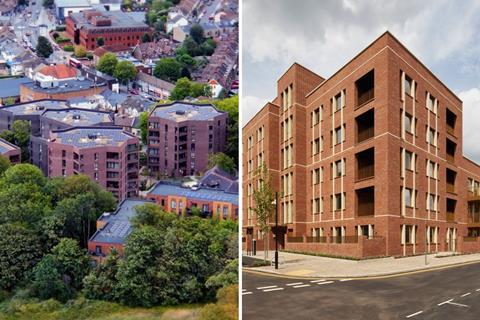
Rowan Court provides 46 council homes in Seven Sisters, north-east London, for the London Borough of Haringey, as part of the council’s programme to build 3,000 new council homes by 2031. The original brief was for 12 homes on a leftover triangle of grass at the edge of an existing estate. By extending the site onto a strip of disused garages and adding a new mews street and public square, we were able to deliver almost four times as many homes and repair the estate around them, with new paving, lighting and a community garden that residents now look after themselves.
The mix runs from one-bedroom flats to four-bedroom family townhouses, including wheelchair-accessible and intergenerational homes, all built to a tight social housing budget. We wanted to show that council housing does not have to mean a compromise on quality or ambition.
Who decides what counts as excellent matters too. Judging panels are becoming more diverse, and who sits on the jury inevitably shapes what is valued and celebrated. RIBA deserves credit for broadening representation through its awards, and this year’s results suggest that homes designed for people on lower incomes are being valued as highly as landmark buildings.
But it is not just architects and judging panels that are changing. Our clients are too. I am increasingly meeting people in positions of influence within local authorities, housing associations and development organisations who bring a much wider range of backgrounds and perspectives to their roles.
It is clients who create the opportunities for architecture to happen. They commission the buildings, set the ambitions and choose the architects who will deliver them. In social and affordable housing especially, councils and housing associations decide not just what gets built, but the quality of people’s homes and the character of whole neighbourhoods. As those decision-makers become more representative of the communities they serve, I hope we will see greater openness to new practices, ideas and approaches to design.
Good housing is not simply about delivering numbers
Architects have a responsibility here too. We need to listen, challenge established thinking and resist assuming that what worked for one community will work for another. Good housing is not simply about delivering numbers. It is about understanding people and creating well-designed, sustainable places that improve everyday life, and that matters all the more as we push to build more social housing.
A broader range of voices, from those commissioning homes to those designing and living in them, can only be good for architecture, housing and the built environment.
Of course, winning awards is one thing. The real measure of progress is whether recognition leads to more opportunities, more commissions and a wider range of voices helping to shape our built environment. And I am optimistic that it will. I have to be.
The profession is changing, perhaps more slowly than some of us would like, but the direction is encouraging. What excites me most is not simply who is being recognised today, but what this might mean for the people who will live in the next generation of council and housing association homes. Perhaps British architecture is beginning to look a little more like the society it serves.
And I hope that one day a list of winners like this, led by social housing and designed by a wider range of architects, will no longer feel remarkable. It will simply feel normal.
Postscript
Satish Jassal is director of Satish Jassal Architects. He is a London Mayor’s Design Advocate, sits on the Harrow, Haringey, Lewisham, Lambeth and OPDC design review panels. He is a board member and chair of the services committee at CDS Cooperatives housing association.







No comments yet