










Most debate about digital construction is about the tools. Trevor Foster at HBC argues the bigger gains come from how IT teams work with site staff. He draws on a year of separating and rebuilding the contractor’s systems after its management buyout

In a large business, support functions can feel removed from the people they serve. IT sits in one office, construction teams sit in another – or on site – and everything relies on a ticket. You raise a request, wait, and the process feels impersonal.
When HBC became independent following the management buyout (MBO), we had the chance to do things differently. Having spent this year shaping HBC’s IT function, my view is that the technology matters less than the attitude behind it.
This is evolution not a revolution
It’s tempting to call this building an IT function from scratch, but HBC – formerly Henry Boot Construction – was already an established business. A few of the team came across with knowledge of group processes, and I joined with fresh eyes. Combining the two has helped us identify what really works.
The biggest change is our attitude towards IT. The MBO has let us create a fully integrated, internal team – just three of us, supporting around 140 colleagues across roughly 15 live projects – that is approachable, visible and able to get out to sites. Too much change at once can be disruptive, so we introduce it gradually.
At the end of the day, IT doesn’t produce anything. But we ensure people can work productively and efficiently, and that does impact the bottom line.
Why being on site matters
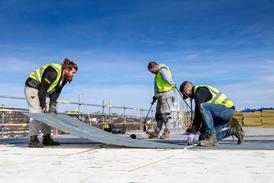
Site teams rarely get back to the office. If they hit a problem, they power on and work around it. By being on site, we can talk about those problems and fix them without a ticket.
Site teams rarely get back to the office. If they hit a problem, they power on and work around it
We visit based on need, to stay flexible, but a fortnightly visit to each site is the goal, and our team floats around so people see us regularly. We don’t necessarily see fewer tickets now, but fixes are faster and easier, and we can tackle things that would otherwise have been left unlogged. Many are hardware issues that teams would carry on working through, often at their own inconvenience.
Site teams don’t want a long email chain or another Teams call. They want someone to hear about the problem with their laptop, sort it, and confirm it’s done. IT is relationship management as much as technology, and we want colleagues to talk to us without it feeling like a big deal.
Patience over pace
The MBO at the turn of the year was a huge opportunity, but it brought changes in workflow and systems. Our job has been to keep disruption to a minimum. While part of Henry Boot, our systems were fully intertwined – from email addresses through to Enterprise Resource Planning (ERP) and HR – so much of our work over the past 10 months has happened in the background. I came in with ambitious plans and still have many, but they must be implemented with as little disruption as possible.
We have also begun digitising decades of ‘analogue’ knowledge, so the business can capitalise on the 30-40 years’ experience some colleagues have
We have also begun digitising decades of ‘analogue’ knowledge, so the business can capitalise on the 30-40 years’ experience some colleagues have. In practice, that means spending informal time with teams. Knowledge built over 15 or 20 years has become second nature, so we capture not just the steps but why things are done that way and the intended outcome. These colleagues have effectively done years of real-world testing for us. By documenting what works and challenging assumptions, we can share it widely and improve processes gradually.
Letting the business lead
As an in-house team within a construction company, we can choose systems that work directly for HBC rather than an umbrella covering everything. Our direction comes from operational teams: we understand their role and barriers, find solutions, and report back.
We also take a fresh look at what we already have, identifying which products best solve which issues. Over the coming months and years we will inevitably move to new systems.
I receive around 30 vendor emails a day pitching a tool with AI in it, with little difference between them
We have no set criteria for new tools, but always keep impact and modernisation in mind. If there is a material benefit to users or the business, we’ll review it – but it must move the dial for efficiency. I receive around 30 vendor emails a day pitching a tool with AI in it, with little difference between them, so we must ensure we choose the best solutions for the best value.
AI is a good example. It can be a game changer for efficiency and admin, but it must be used properly. Rather than telling everyone to use it, we’re looking at it case by case, working with teams on how it fits their processes. We’re doing a lot of exploration and testing in preconstruction, where we see admin that could potentially be optimised. We mainly use Copilot and in-house tools, though some external systems have AI functionality; whatever we use must focus on what we do specifically.
As with other departments, IT has a budget managed within the team, with two-way feedback from the directors on decisions. Discussions centre on user feedback – we don’t want to chase KPIs that might show ROI but don’t improve how IT serves our people.
Ultimately, IT in construction is less about technology and more about the people it serves. Getting out to site, listening to operational teams and introducing change patiently are what make colleagues’ working lives easier. The tools will evolve, but the approach shouldn’t.
Trevor Foster is head of IT and systems at HBC







No comments yet