












Tributes have poured in since the untimely death of the much-loved former chief executive of the Greater Manchester Combined Authority. His impact in the city and nationally was huge, and he spoke to Building just last month, shortly before he died
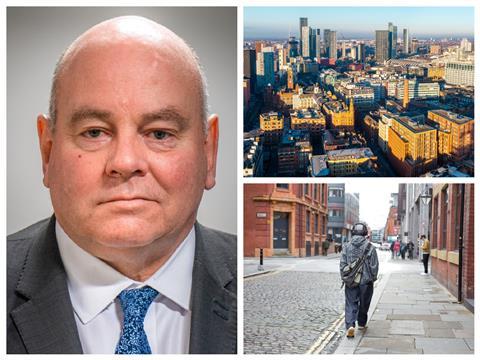
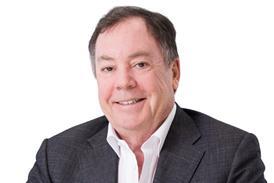
“A devastating loss” is how Greater Manchester’s elected mayor Andy Burnham described the death of Eamonn Boylan early this month, praising a 40-year career which shaped the city. Housing minister Matthew Pennycook likewise said on X he was “devastated” by the death of a “giant in the world of housing”.
They were just two of the many to pay their respects to the Hartlepool-born public servant, who has been at the heart of much of the recent success of the Manchester city region.
Boylan, whose first big job in local government as deputy chief executive at Manchester City Council in the 1990s involved leading the highly regarded Hulme regeneration project, ended up driving the revitalisation of the whole city region as boss of the Greater Manchester Combined Authority (GMCA) from 2017 to 2024.
He also took these lessons nationally via executive stints in national housing quango Homes England, including briefly, last year, as chief executive.
In an interview with Building, conducted late last month for a separate article, Boylan, who only retired from Homes England last October, spoke enthusiastically about Manchester’s story, and why regeneration success is predicated on commitment to clear plans over long periods. Here we look at his legacy, using his words to supplement the tributes of others.
Vision
Over the last three decades Greater Manchester (GM) has been a leader in the renaissance of UK city regions, and an innovator in devolution and funding for regeneration - with Boylan frequently at the centre of it. Andrew McIntosh, director of place for the GMCA, says Boylan’s death was shocking. “He has been a stalwart for the last 30-odd years. It’s difficult that he’s not survived to see the fruits of his labour. It’s very sad.”
But the loss will be felt by the city too. “He’s one of the architects of where we are just now,” McIntosh says. “He still had a lot to give.”
The thing that has been fundamentally important in driving successful regeneration in Manchester has been a commitment to clear plans – place-based plans – over a lengthy period of time
Eammon Boylan
Key to the Manchester approach, Boylan told Building when he spoke last month, has been an ability to hold firm to a vision. “The thing that has been fundamentally important in driving successful regeneration in Manchester has been a commitment to clear plans – place-based plans – over a lengthy period of time,” he said.
“Always being very clear that regen is not a three-year programme, or a three or a five-year funding opportunity. It’s about the realisation of a long-term vision.”
This approach has allowed Manchester to bend available funding to its goals, rather than shape its plans around the money coming from central government. He gave the regeneration of Ancoats as an example. “That’s achieved by a long-term vision,” he said, “underpinned by a series of negotiations and a series of partnerships, but always geared towards the delivery of a well-established and shared vision.”
Loan funding
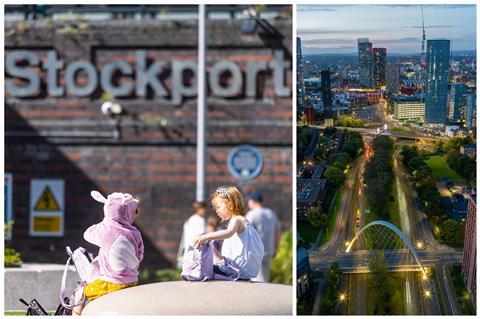
McIntosh says Boylan’s time early in his career on the Hulme regeneration project, and later as chief executive at Stockport Council from 2010 to 2017, where he helped turn around the fortunes of the Greater Manchester town by setting up a Mayoral Development Corporation, were all hugely influential. “I think we need to remember his leadership, not just from a combined authority point of view but predating that,” McIntosh says.
One of the things Boylan particularly contributed to across Manchester was the combined authority’s innovative use of loan funding to get its priority projects delivered, which could then be recycled into other projects as loans were paid off. A £300m housing loan fund set up in 2015 was recycled three times over by 2025, delivering 11,000 homes. It has now been superseded by the £2bn Good Growth Fund, much of which consists of loan funding, and which is the flagship regeneration funding vehicle for the Combined Authority.
The Housing Investment Fund that we established, that’s been the fund that’s delivered much of the exponential growth in and around the city centre
Eammon Boylan
Boylan said: “The Housing Investment Fund that we established, that’s been the fund that’s delivered much of the exponential growth in and around the city centre. That’s been recoverable loans only. So, it’s not cost the public sector a penny. In fact, the public sector has made a return on it.”
McIntosh says of Boylan: “He’s been instrumental to what is the investment approach that we’ve adopted in the GM context, and now is the basis upon which we’ve really built the Good Growth Fund.
“Instrumental in what has been a novel approach to investing in projects that seeks to recycle investment and maximise the public purse.”
Planning for growth
Long-term thinking of the kind Boylan espoused, however, is only possible at a city region scale with stable leadership and grown-up co-operation. “The principles of collaboration run deep in GM,” Boylan said. “We started 25 years before anybody else. From the abolition of the Metropolitan County Council in 1986, we continued to work together across a whole range of issues including transport [and] the airport. There’s a long history of working in that way. But you just need to keep working at it”.
It was in a bid to deepen that collaboration around a shared GM vision of the future, that Boylan embarked on one of his other big achievements – the first city-region scale plan outside of the capital since the 2010 abolition of regional spatial strategies, now known as Places for Everyone. The plan, which took over a decade from inception to be adopted, sets a requirement for 175,185 homes in nine of the city region’s 10 authorities by 2039 – Stockport, ironically, ultimately withdrew from the process – and releases green belt sites for 20,000 homes.
I had the bright idea of doing two years’ worth of work to create a spatial framework for the Greater Manchester. About 13 years later it was adopted
He said: “I had the bright idea of doing two years’ worth of work to create a spatial framework for the Greater Manchester. About 13 years later it was adopted.
“What was the point of going through that agony? It was trying to give the investment community the confidence to see what our long-term vision was in respect of housing growth, transport growth, employment growth, [and] infrastructure requirements going forward.”
He added that this enabled the GMCA, developers and local authorities to have a “different level of conversation” with utility firms about any help they might want, thereby ensuring investments weren’t made in advance of need. This meant the development pipeline wasn’t just a growth strategy “on a piece of paper”.
Boylan said: “It’s about how can we create clarity of purpose both at the macro, and at the slightly more technical level.”
City region devolution
Boylan was also at the heart of efforts to secure greater devolved powers for Manchester, working alongside former Manchester Council chief executive Howard Bernstein. Building spoke with Boylan shortly after Rachel Reeves last month announced she intends to pilot fiscal devolution – allowing city regions to keep more of the taxes they raise locally – a move which he warmly welcomed.
“We’ve been arguing since when I was carrying Howard’s bags as he went into battle with [former Conservative chancellor] George Osborne, we always saw ourselves on a journey,” he said.
Where the initial city deals that accompanied the setting up of the mayor-led GMCA largely simply gave local accountability for the delivering national programmes, Boylan and others pushed for more significant change. In 2022, Greater Manchester negotiated a single integrated settlement which meant it could pool the resources it got from government – and was only accountable for delivering certain agreed outcomes, enabling the creation of the Good Growth Fund.
Reeves’ additional announcement is significant, he said, potentially allowing the combined authority to borrow against future tax revenue. But it’s also just an extension of the approach to borrowing and risk they’ve already piloted. “It’s a very welcome move. If you look at the way in which the existing Metrolink network was brought forward, a significant chunk of the money was borrowed by Greater Manchester on the basis of future revenues from the farebox,” he said. “There’s a long tradition of borrowing against future revenue.”
“I suspect it will mean deploying resources in a more flexible way with local control and local accountability, and taking local risk, in a way that we’ve started to do through the housing fund, [and] started to do through the single settlements.”
Spreading growth out
Boylan shared the GMCA’s current preoccupation with spreading economic activity out from the successful Manchester-Salford city core to the surrounding boroughs. He said: “The biggest challenge is how do we create the conditions across the whole of the conurbation that can enable the delivery of sustainable regeneration, in those places where values are simply not sufficient to sustain longer term investment strategies.
“If Andy [Burnham] was speaking to you, he would say that what we’ve achieved to date has been really, really good, but has it been sufficiently inclusive in terms of its benefits for the whole of the city region? And I know his answer would be ‘no it’s not’.
“It’s been quite difficult to deliver that while we’ve been relying almost purely on financial instruments and recoverable loans.”
In contrast, he said: “The idea of blending some of some of those [loan] products with a wider palette of funding including grant and patient equity,” Boylan said, “does give you an opportunity to look at different schemes in a different way and also look to potentially to deliver different outcomes, particularly around affordability.”
Ultimately, he was confident about Manchester’s leadership’s ability to continue to deliver, following the principles he worked to, despite deepening viability challenges.
When Boylan left the combined authority in 2024, he told Place North West he wanted to be remembered not for being a leader “standing out in front and pointing at things”, but instead “encouraging people to coalesce around shared objectives”. As someone who “nurtured organisations and people”.
He was certainly that, but as his words here show, he was also so much more.
Building spoke to Eamonn Boylan on 24 March as part of the research for a piece on regeneration in Manchester which will run on Monday next week as part of Building’s Regen Connect series.
Through ongoing analysis and expert commentary, Regen Connect highlights the policies, funding streams and local priorities that matter most to the construction and development sector.
This coverage will culminate in a special report to be published at our Building the Future Live Conference in London on 7 October.
How you can get involved:
Throughout the year, our team will be gathering insight from across the sector to inform editorial features, debates and events. We welcome contributions from practitioners who want to share experience or shine a light on emerging trends.
Click here for more on the campaign
Be part of the conversation – contact us to contribute or get involved by emailing our deputy editor at dave.rogers@building.co.uk and to find the campaign on social media follow #regenconnect






No comments yet