











After years of impressive growth, the global engineering practice saw its revenue drop in 2025 and its UK business was hit hard by the cuts to the high-speed rail vision. Daniel Gayne sat down with Heather Polinsky, the firm’s new CEO nominee, to find out how she plans to get the business back to winning ways
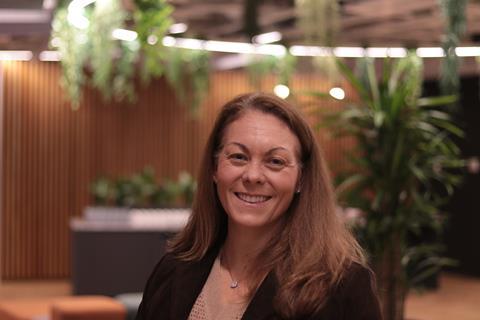
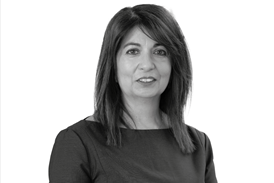
Heather Polinsky is not afraid to be clear about the problem she is tasked with solving. “As you have probably seen, Arcadis’ growth has stalled a little bit,” she tells me as we meet on the eve of her ascension to the position of CEO nominee.
Until its full-year results for 2025 were published last month, the company’s revenue had grown every year since 2019. The period of expansion, helped along by a series of acquisitions in multiple sectors, was only the latest chapter in a story which saw a rural Dutch land reclamation company slowly transform into a global engineering giant.
But 2025 saw the end of the firm’s hot run, with a 3% drop in net revenue on the back of headwinds in its property investment and environmental restoration businesses, as well as the winding down of some large transport schemes.
To some firms, a drop in revenue of this size after a good run of results might not be such a bad thing, but with departing CEO Alan Brookes deciding to take an early retirement, his replacement at Arcadis sees an opportunity to mount a new push for growth.
So, who is the 52-year-old American to whom Arcadis has turned for its next chapter – and what’s her plan to get things growing again?
Malcolm and the military: Polinsky’s career before Arcadis
As she talks me through her personal biography in Arcadis’ fifth-floor office in EightyFen in the City, the 52-year-old American is keen to issue a disclaimer. “For some reason, many people think I was in the army. I wasn’t actually in the army,” she tells me.
She did, however, begin her career working for the military. After studying environmental science at university and completing an engineering internship at a military base near Boston, Polinsky got a job in 1995 working at the Army Environmental Centre, now known as the Army Environmental Command.
After confessing my ignorance to the existence of such an organisation, Polinsky explains: “What it does is help the army do projects that are sustainable – everything from green ammunition to evaluating the impacts of activities that occurred in the 1940s, 50s, 60s, and how to reduce that impact and clean it up.”
One of her most notable jobs during this early period was helping the US government to transition the land around the Panama Canal, as it moved toward its handover to the Panamanian government following the Carter-Torrijos treaty signed in 1977. This, she recalls, was a “great experience in working in international diplomacy” as well as a “quite complex project” involving many stakeholders, including politicians.
“It was a great experience for me, and that’s where I started my career, in both the taste for working in an international setting and also working on the environment.”
After getting her masters in engineering management, she moved to work at Malcolm Pirnie, the US civil and consulting engineer, in 1999, where her “knack” for working with federal government clients was noticed. “I gravitated towards doing projects there, and the projects that I got involved in tended to be bigger and broader and more complex,” she says.
At Malcolm Pirnie, she moved into a business development role, continuing to work with lots of military clients, with a particular focus on munitions. This earned her a rather unusual role as president of the National Association of Ordinance and Explosive Waste Contractors, which she notes, “you wouldn’t necessarily expect for a female and a non-explosive ordnance disposal technician”.
Evidently they were happy with her work. She now has a lifetime achievement award from the organisation.
Rising through the ranks at Arcadis
By the time Arcadis came knocking on Malcolm Pirnie’s door in 2009, Polinsky was on its board. After leading the merger between the firms from Malcolm Pirnie’s side, she was made senior vice-president in Arcadis’ US business, continuing to work in business development until around 2017, when she expressed an interest in operations.
“People had always said I would be good at operations,” she says. “So I asked to consider doing something different.”
When the firm’s American CEO fell ill in 2019, she stepped in as chief operating officer for North America.
Polinsky says she had only just “got excited that I had figured that job out” when a strategic shift at Arcadis opened up the opportunity to take another step up. In 2023, the business decided to move to a global model in an attempt to minimise duplication.
Polinsky was asked to take a role in this new structure, running the “resilience” business across the world. In Arcadian lingo, resilience means everything climate, energy, water and environment related.
Polinsky brings up the benefits of this global operating model repeatedly throughout our conversation, and it is clearly something she wants to further entrench under her leadership. Before the shift to a global business area, she says, the firm had major inefficiencies stemming from duplication and was missing out on opportunities in certain markets because of its failure to leverage its international skills base.
“Until I stepped into the COO position, I had very little vantage point outside of North America on what was going on in the organisation, and the amazing projects that we do around the world,” she says.
Growth can come from one big, major win, but you need to have the agility so that we don’t become dependent on it
The previous model left regional leaders “very isolated”, she says, relating a story of how a former boss of the UK business once told her that, if he heard another country chief talking about a successful digital tool they had built, he would tell his staff, “I want one of those”, rather than trying to transfer the other country’s tool over to Britain.
As well as adjusting its organisational structure, the firm also changed its local decision-making processes – before ruling out exciting projects at a local level, regional leaders were expected to “elevate it and look at the full capability across Arcadis and make a decision”.
Polinsky gives the Fraser River Tunnel as an example of the kind of project the firm would not have been able to do under its previous model. A major infrastructure project in Vancouver scheduled to open in 2030 for which Arcadis did not have the capability and resources on the ground, the firm was nonetheless able to take on the job by leveraging its workforce in the UK and Australia.
“A submerged tunnel in Canada is not something that happens every day,” she says. “So they needed global capability.”
Heather Polinsky CV
1995 | Graduates with a Bachelor of Science in Environmental Studies from William & Mary, a public university in Williamsburg, Virginia. Joins the US Army Environmental Command as project manager.
1998 | Completes Masters in Technology Management at University of Maryland.
1999 | Joins Malcolm Pirnie.
2006 | Named president of the National Association of Ordnance and Explosive Waste Contractors.
2007 | Made a member of Malcolm Pirnie’s board of directors.
2009 | Leads Malcolm Pirnie’s strategic merger into Arcadis.
2011 | Becomes senior vice-president at Arcadis, serving as market sector lead for the US army and Department of Defence work.
2012 | Made client development director for Arcadis’ federal client development programme in the US.
2018 | Named director of the east region of Arcadis’ US business.
2020 | Promoted to chief operating officer of the entire US business after CEO falls ill.
2021 | Takes up global role as president of resilience business, with a team of more than 10,000 worldwide. Adds mobility to biref in 2025.
2026 | Appointed as CEO nominee to replace the retiring Alan Brookes.
‘Honing in’ on target areas
By the time Arcadis’ CEO transition process had moved into high gear, Polinsky had added the mobility business to her resilience brief. Alan Brookes, who had been appointed chief executive in 2023, was expected to step down in May 2027.
The board had brought in an external consultant to identify executive team members with the capacity to step in as CEO, as well as carrying out external benchmarking and interviewing external candidates. This work came in handy when Brookes decided to bring forward his departure.
“When it became evident that Alan wanted to move on faster, then there was all of that structure in place and that we could do a nice transition,” says Polinsky, who explains that Brookes had decided that he “wanted to enjoy life a little bit more, a little sooner”.
Polinsky found out that she would be asked to step in last autumn. The job change will see her and her husband make the switch from Washington DC to Amsterdam, along with their twin children and mini goldendoodle puppy Bailey.
She took the reins at Arcadis at the start of this month [March], though formally she remains CEO nominee until the shareholders have their say at the firm’s AGM in May.
[HS2] had a huge impact on our financial performance
So what is her strategy? Essentially, it is focusing more sharply on the things that Arcadis is already good at and where the market is growing. “That’s water, energy and resources, it is data centres or technology and life sciences, and then lastly, major infrastructure projects.”
Polinsky frames this not as a repudiation of the strategy pursued in Arcadis’ global model, but as the logical next step after it. “In our global model, we maybe invested a little bit more evenly across all the sectors, and [now] we want to really hone in and be famous in those areas that I just mentioned,” she says.
“We’ve gotten a little broader, and we’ve got to get a little bit more focused as an organisation […] We are going to continue to refine our strategy so we can get back to growth.”
This will involve additional investments, as well as more acquisitions – of course focused in those target markets. However, Polinsky notes that “given our current financial performance, we will probably be focusing on more mid to small-size acquisitions that really create a way for us to differentiate ourselves in the market”.

Learning things the hard way on HS2
In the UK, where Peter Hogg recently stepped up as country director. it is those same markets on which Arcadis is focused. Polinsky mentions the AMP8 investment plan for the water industry, energy grid renewal, and data centres as key areas.
On the first of these, she boasts that Arcadis has “won almost every pursuit that we went after”, while on the second she says the business is taking capabilities developed in Germany and elsewhere in Europe and bringing them to the UK to “speed delivery and ensure schedule and cost certainty”.
But the UK business is starting from a slightly weakened position after a bruising experience with HS2, a project with which Arcadis has had major involvement since 2017 and had been expecting to be in for the long haul. The firm was part of the ASC joint venture developing detailed designs for phase 1, as well as being involved in other parts of the scheme.
That was until a major refocus of the project was announced by then-prime minister Rishi Sunak in October 2023, which included a slow-down of some parts of phase one and the scrapping of subsequent phases.
“Arcadis was really heavily supporting HS2 and the stop or slowdown or refocusing of it had a huge impact on our financial performance,” Polinsky admits. UK net revenue fell 2.1% from £575m in 2024 to £564m in 2025. With HS2 excluded from those figures, the business would have seen 8.1% growth.
Yet Polinsky refuses to lay the blame on the UK government for its sudden policy reversal and is frank about the mistakes Arcadis may have itself made.
A passion for sustainability

It is not just about growth without limits for Heather Polinsky. Sustainability is something she became acutely conscious of in childhood. She was born in the Philippines and returned to live there when she was 10.
Her father worked for the US military and, through its morale and welfare programmes, she learnt to scuba dive, visiting the pristine waters around the South China and Philippines seas. “The coral was vibrant and the fish were vibrant. I have not been able to find that since,” she says.
The experience is part of what drove her towards environmental work, and she has shared her passion for scuba with her twin sons, who recently got their licences. However, on a trip to the Philippines together, the diving experience was not quite what she remembered, prompting her son to show her the film Chasing Coral, which documents the disappearance of the world’s coral reefs.
“The impact that we have on the world is such that so you can visually see it, even in your own lifespan,” she says.
Today, Polinsky says she is still driven by “this concept of, how do you really create a more sustainable environment where you care about and protect health, water, air, environment, but also allow for the development that needs to occur and the investments that need to occur”.
“We were over-invested, let’s say, or not diversified enough within the market, and that has taken time for us to overcome, which is why we need to get not just growth but also agility back. Growth can come from one big, major win, but you need to have the agility so that we don’t become dependent on it.”
Agility is one of the Polinsky watchwords that comes up a few times in our conversation. It comes up when we discuss Arcadis’ “place” business, which had specialised in high-rise residential, but has had to pivot towards healthcare and education due to the UK’s sagging residential market. And it comes up again when I ask her about data centres.
Arcadis is involved in 280 data centre projects around the world, which it claims is around 1% of the market. Given the dependence of this market on the AI boom, and the rumblings about the possibility of it being a bubble, isn’t that a risk?
Not if you are agile, says Polinsky.
If we weren’t in a global business model, I think we would have had a hard time
“The skill set, from a data centre perspective, is very similar to skill sets that are required in a lot of other manufacturing areas,” she says. “We’re talking about cost and commercial management, complex clean rooms, and we’re talking about MEP capabilities – being able to apply those to other advanced manufacturing processes, whether it’s life sciences or other things, is something that we’re trying to create in an agile organisation”.
Polinsky says Arcadis’ global business model is an asset as far as agility is concerned, and it helped them to get over the loss of HS2. “If we weren’t in a global business model, I think we would have had a hard time,” she says.
“We have hundreds of people that sit here in the UK working on projects around the world, but previously they were working on projects like HS2.”
Despite the company’s experience with the sudden cancellation of the northern leg of Britain’s biggest infrastructure project in a generation, Polinsky says it has not made the firm shy about the UK – or big projects in general.
“We’re always going to support the UK,” she says. “We are trying to diversify the projects and diversify the relationships that we have so we can do a lot of big projects, not eliminate the big projects.”







No comments yet