









In a series celebrating the Building Awards finalists, we look at the Architectural Practice of the Year shortlist
Earlier this year Building announced the names of all the firms that made it onto the shortlists for our prestigious annual Building Awards.
Now we are shining the spotlight on each category in turn and publishing a selection of the images that impressed the judges.
Today’s shortlist is for Architectural Practice of the Year.
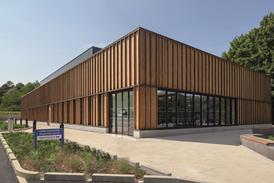
DB3 Group

DB3 Architects has continued to evolve in response to a rapidly changing built environment, combining architectural and engineering expertise with a broader professional services offer that helps clients navigate increasingly complex regulatory and delivery challenges. Its integrated approach spans principal designer services, NEC supervision, clerk of works, client adviser and design management.
Sustainability remains central to the practice, demonstrated through projects including the National Library of Wales decarbonisation programme and St Fagans Museum EnerPHit retrofit, alongside a commitment to the RIBA 2030 Climate Challenge.
DB3 Architects also places people and clients at the heart of its business. More than 1,100 hours of CPD have supported staff development, while its Client Journey Map and feedback processes have helped deliver an impressive net promoter score of 64.78. Through apprenticeships, education, volunteering and local employment, it is also creating lasting social value within the communities it serves.
GRID Architects
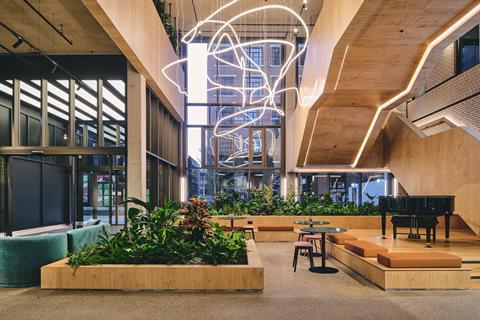
GRID Architects combines design quality, commercial awareness and responsible practice to deliver projects that respond to the realities of today’s built environment. In a challenging living sector, the practice has demonstrated resilience by helping clients navigate viability, funding and delivery pressures, while maintaining architectural ambition.
Its integrated expertise spans planning, technical delivery, Building Regulations principal designer services, interiors, landscape and CDM, enabling GRID to support projects from acquisition through to completion. This approach has strengthened relationships with established clients including Muse, L&Q and Berkeley Group, while attracting new commissions from Landsec U+I, Native Land and Fusion. On top of this, GRID Interiors, the firm’s in-house interior design studio, has grown by 300% in the past year.
Alongside this, GRID Architects invests in professional development, wellbeing and community engagement, demonstrating a practice where commercial success, environmental responsibility and social value work together.
Join us for the 2026 edition of the Building Awards
This year’s event will take place at the Grosvenor House Hotel on 3 November.
There are 19 awards being handed out, so make sure you are in the room for construction’s night of nights and to celebrate excellence.
Tickets are selling fast, so secure your place today.
HLM Architects

HLM Architects combines more than six decades of experience with a progressive approach to creating socially responsible, sustainable places. Employee ownership has helped foster a collaborative culture, while significant growth – including a 22% increase in revenue, 79 new starters and studios in Dublin and Plymouth – demonstrates the strength of its next phase.
Innovation and research underpin the practice, from HLM Place’s data-led approach to placemaking to pioneering work on regenerative design. Its regenerative twin research demonstrated an 84% reduction in whole-life carbon, while projects including the London Institute for Healthcare Engineering and Wetherby Pembridge School showcase design excellence and meaningful user-focused outcomes.
Sustainability, inclusion and social value are integral to HLM’s operation. More than 4,500 hours of social value were delivered in 2025, alongside a 5% employee profit share. Through apprenticeships, alternative pathways, community engagement and industry collaboration, HLM is helping shape a more inclusive, innovative and resilient profession.
P+HS Architects
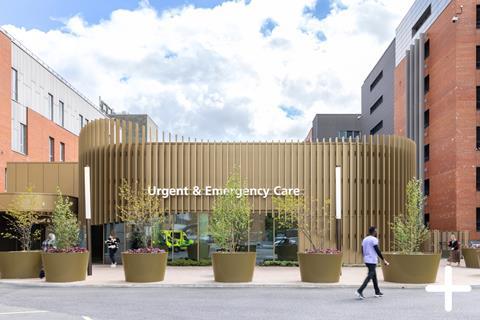
P+HS Architects has enjoyed a standout year, combining sustained growth with an impressive track record of delivering buildings that make a tangible difference to people and communities. Growing 20% year-on-year to a team of 113, the practice has responded to a challenging market by engaging clients and stakeholders earlier, strengthening collaboration and embedding learning through a formal post-occupancy evaluation process.
Sustainability is evident across its work, from future-proofing Leicester General Hospital’s new endoscopy unit with photovoltaics and heat-pump infrastructure, to bringing 1,000m² of redundant space at Pilgrim Hospital back into clinical use.
Investment in people is delivering results, with 24% of staff promoted internally, engagement up 30 points and attrition at just 8%. Combined with more than 350 hours of pro bono support and outstanding client satisfaction, P+HS demonstrates a practice delivering excellence with measurable impact.
Ryder Architecture
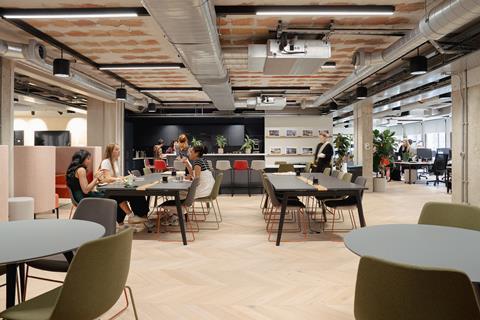
Ryder has marked its first year as an employee ownership trust by combining resilience, innovation and a renewed focus on its people and clients. Despite challenging market conditions, the practice has returned to target profit levels, while emerging sectors including hospitality, retail and sport now account for 18% of turnover.
Innovation is driving both practice and project delivery, from its bespoke AI chatbot Ted to pioneering research with the University of the West of England into bio-based materials and lower-carbon specification. Sustainability reporting is also becoming more robust through increased use of primary supply-chain data.
Ryder’s commitment to people extends from its L26 leadership programme to its Reinvention campaign, championing a more diverse and sustainable route into built environment careers. Client relationships remain central after 20 years of structured feedback, while health and safety is embedded across every UK project.





No comments yet