















First phase of Battersea Power Station scheme was priced to make no money, financial regulator’s judgment into contractor’s former boss finds
One of the four major contracts that ending up costing Carillion millions of pounds in losses was priced to make the firm no money, new documents have revealed.
The listed contractor went into liquidation eight years ago in one of the biggest collapses in UK plc history.
A judgment handed down yesterday against the firm’s former chief executive Richard Howson by the Financial Conduct Authority (FCA) revealed that Carillion’s scheme to build more than 850 flats on the first phase of the Battersea Power Station development in London was bid at a 0% profit margin.
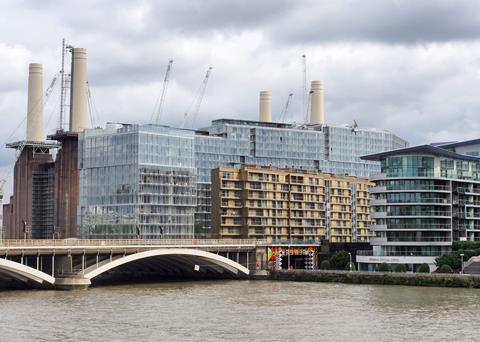
It said: “The contract was signed on 27 December 2013 with an original contract completion date in September 2016. The contract was tendered at a value of £443.7m with a 0% profit margin.”
As well as 866 apartments, Carillion’s job also involved building retail and leisure units.
The judgment added: “Carillion encountered a number of issues with the Battersea contract in 2015 and 2016, which caused significant delays to the project. These issues in large part arose from pressure caused by the client issuing a large volume of variations to the work and the late provision of key utilities to the work site.”
It said the job had seen a “contract reset” by January 2016 “which increased the contract value to £472.4m and extended the contract completion date to 24 March 2017”. The judgment said that by summer 2016 Carillion was forecasting a margin of 2.2%. “This increase in value was partially attributed to a claim of £11.5m for a further reset.”
But by the time it announced a huge £845m profit warning in a trading update on 10 July 2017, a £38m provision had been booked against the Battersea scheme.
Three other major jobs were also haemorrhaging money, the judgement said, with provisions for a hospital scheme in Liverpool totalling £68m in the July 2017 update while an £86m provision was made for a road scheme in Scotland called the Aberdeen Western Peripheral Route. Another hospital job in Sandwell, near Birmingham, called the Midland Met was given a provision of £48m bringing the total amount for the four jobs at the time to £240m.
The Liverpool scheme was originally tendered at £286m with a margin of 3.56% booked, while Carillion’s original share of the Aberdeen scheme – which was being carried out in joint venture with Balfour Beatty and Galliford Try – was £177.8m and predicted to make a profit margin of 7%. The Midland Met job was signed for a contract value of £296.7m and a profit margin of 5.97%.
The figures are contained in the FCA’s 102-page judgement made against Howson who the regulator fined £237,700 for his part in a series of misleading statements being issued by the collapsed contractor.
Howson stepped down as chief executive after more than five years in the role on the same day Carillion issued its £845m profit warning in July 2017.



4 Readers' comments