












For new entrants, old hands and employers alike, skills and competency ‘passports’ that record education, training and verified practical experience could make hiring easier and more effective
Employers have become leery of hiring for a host of reasons, including diminished workload, poor pipeline visibility and the added burden of recent legislation affecting pay, national insurance, pension contributions and employee rights.
“The reality is that it can take several months to gauge whether a new relationship between employer and employee will work,” says Suzannah Nichol, chief executive of Build UK, one of several organisations addressing workforce requirements. “Legislation brought in to protect people has made life much riskier for employers, and we’re seeing the results in lower recruitment.”
Employer-employee relations can flounder on competencies as much as behaviours. In its annual State of the Nation report, published in March, the Institution of Civil Engineers quoted a senior figure in the infrastructure industry: “It takes five to seven years for [new entrants to the industry] to become really useful.”
A lot of training, coaching, additional learning and on-the-job experience is required to get staff to that point. On the way, employees will almost certainly work across a number of projects and roles. They might move between sectors, and possibly between companies. With each change there’s a new element of risk. On the employer’s side: will the person provide the skills and capabilities required – is their CV trustworthy? On the employee’s: will this company recognise and value my hard-won track record?
The same questions are increasingly asked by companies seeking to plug their skills gaps by retaining staff they already have, and by recruiting seasoned professional and technical workers from adjacent industries.

Presenting the evidence
Mark Farmer, chair of the Built Environment Futures Assembly (BEFA), member of the Construction Skills Mission Board and founder of construction consultancy Cast, called attention to a potential solution at BEFA’s Built Environment Strategic Workforce Planning for 2030 conference in April. “My vision of the future is that we have a universal skills and competency passporting system.
“We have the means to create personal digital records – of education, training, CPD and practical experience – for everyone, whether you are a QS, engineer or architect, an electrician, bricklayer or piling rig operator. Each person could map and share their competencies via an app on their phone or a chip and pin card in a way that is dynamic, sharable, and policed.
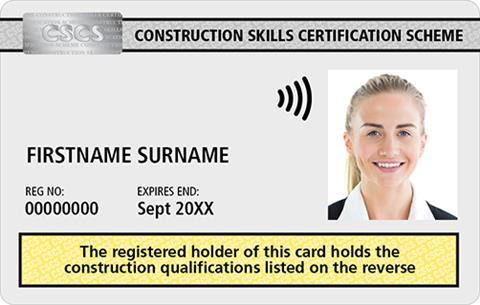
“We have building blocks for this functionality in carding schemes like the CSCS. We should think about broadening what they do.” Farmer said that creation of the single construction regulator, probably in 2028, will sharpen focus on demonstrating and verifying competence, right across the supply chain. This will provide a strong compliance-led justification for a digital passporting system, in addition to the benefits of making it easier to match talent with employer needs.
“A digital competency passport should be a licence to work in the built environment,” Farmer suggested, acknowledging: “It’s emotive, but we want to regain public trust in our industry. This is a way of creating a robust audit trail.
“There’s then the benefit of improved communication and trust between employers and staff, and the way that incentivises upskilling.”

Mismatched, underdeveloped and underutilised capabilities cause workplace frustration and friction. For an industry grappling with decades-long productivity and efficiency challenges, potentially major gains might be achieved.
Farmer set out his argument just as the government’s skills body, Skills England, was wrapping up an industry survey on passporting. Responses were still being digested when this article was published – findings are due this summer, Skills England said. But professional engineering institutions and education providers answered positively.
Building confidence
The survey probed a passporting proposal set out last November in a policy paper on post-16 education and skills, by the Department for Education, Work & Pensions and the Department for Science, Innovation & Technology. “Skills passports could set out individuals’ skills and competencies, enabling these to be documented, endorsed and transferred between employers and sectors, increasing visibility for employers and improving people’s training progression,” they suggested.
Passports would support the new lifelong learning entitlement. From January 2027, this will provide access to funding both for traditional two- or three-year study programmes, and also for shorter modular courses that can be built up over time, potentially to degree level.
Independent Higher Education represents 90 independent education providers, including BEFA’s parent organisation, the University of the Built Environment. It sees advantages if a passporting scheme makes it easier to interpret and compare the wide range of credentials and documentation used by education providers, training organisations and employer-led internal training initiatives. “This information is rarely presented in a consistent format and often lacks clarity around the underlying skills profile, methods of competency assessment, validity periods or overall credibility,” it said. “A skills passport could address this by bringing verified information into a single, standardised format, offering employers greater confidence in both the content and its relevance.”
For fresh graduates, passports would provide a means of recording and communicating the course curriculum and modules studied. This would make it easier for employers to compare degrees with identical names but different content.
For workers with experience under their belt, passports would make it easier to demonstrate transferable skills, technical capability and applied learning, “rather than relying on qualifications alone as proxies for competence”, the IHE said.
In its response to the survey, the Royal Academy of Engineering (RAEng) agreed: “A skills passport could support individuals as a tool that helps them move between employers, sectors, and career stages.” An effective scheme will bridge between existing occupational standards and sector frameworks, and reduce overlaps and duplications, the RAEng said.
Passport control
A workable passporting scheme needs:
- Professional institutions to define competence standards
- Regulators to mandate a common national framework
- Government to align funding and qualification rules around modular, stackable units
- Educators and awarding bodies to deliver training mapped to those units
- A system (and employer buy-in) for validating real world competence
- Standards bodies to maintain a shared data model.
- All requiring unified governance spine so that modules and assessments are interoperable, portable, and recognised across the entire AEC ecosystem.
First steps
In practice, momentum in development of passporting schemes is growing fastest at the vocational and trade end of the jobs spectrum, but there is growing professional interest, showing its potential for much wider application.
The Construction Leadership Council (CLC) is working with Skills England to identify the basic principles for a passporting ecosystem and test deliverability. The Ministry of Housing, Communities and Local Government is involved in the discussion. This summer the MHCLG issued a call for evidence on developing a strategy for the built environment professions, trades and occupations. Farmer, who leads the CLC’s people and skills workstream, is hopeful that the idea and key concepts of passporting will take root.
The Construction Industry Training Board is developing “competence pathways”, which will map out routes to entering trades and professions, and then progressing within them.
In the energy sector, a collaboration between Offshore Energy UK (OEUK) and Renewable UK has developed an “energy skills passport” that recently moved from concept to real world application, to support workers’ transition from the oil and gas sector to offshore wind. It currently maps competencies across a handful of roles in each subsector and is now growing the number, making agreed occupational profiles visible via an online portal.
“There are a number of transferable lessons,” says OEUK head of energy services agreement, employment and skills, Irene Bruce. “Portability depends on industry agreement about standards, role requirements and the evidence needed to demonstrate capability. And workforce mobility depends on collaboration between employers, industry bodies, government, skills organisations, trade unions and education providers.”
Energy & Utilities Skills launched its own passport scheme in January 2025 to help plug the skills gap created by a surge in green energy, transmission and distribution projects. It is underpinned by clear occupational standards, industry-defined competence frameworks, robust methods for assessing competence, and taxonomy of skills and knowledge.
The scale and speed of projects have created urgency, says Stephen Barrett, EU Skills director of strategic engagement. “Passporting enables someone from another industry to demonstrate that they meet the standard to work in ours, which means they don’t need to go through an entire new set of training. And if they do require training, we can be precise about what’s needed. It improves efficiency.”
“EU Skills’ experience of passporting is highly relevant,” Farmer says, “and CLC is collaborating with them to see how we can accelerate our progress.”
The Built Environment Futures Assembly
BEFA is a leadership forum convened to help the sector increase its capacity, capability and competency, with a particular focus on professional and technical roles. It is chaired by Mark Farmer and hosted within the University of the Built Environment. BEFA and the University are championing skills passports and modular, stackable approaches to education and training, to improve the alignment and availability of skills with employers’ needs.







No comments yet