








This is part of a special report produced in partnership with Gleeds
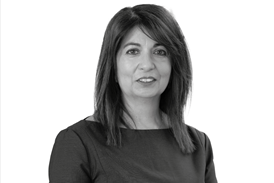
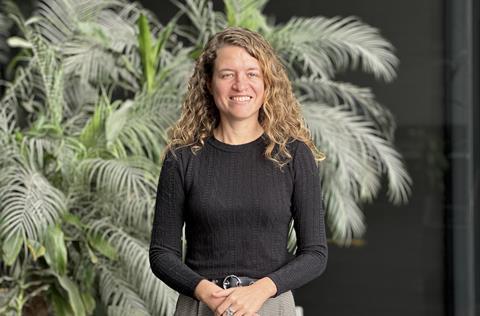
Alessandra Peña leads BDP Pattern’s Lima studio at a pivotal moment for sport and infrastructure across Latin America. Based in Peru’s capital, where she has lived for most of her life, she is an associate architect and studio head, overseeing a core team of five, with project teams expanding to as many as 25 as needed.
“I was raised in a home where art was always something very important,” she says. Her father, a watercolour artist, instilled an early appreciation for creation – a thread that still runs through her life. Alongside architecture, she publishes art books featuring watercolours, preserving and sharing a personal legacy that shaped her own creative path.
Architecture, she explains, offered the possibility “to create something” tangible – to combine design, art and impact. Like many 18-year-olds, she chose her degree with curiosity rather than certainty. “I was very lucky – I fell in love with it and continued down that path.”
After qualifying in Lima and gaining additional accreditation in Italy, Peña spent several years working abroad before returning to Peru in 2018. That decision, prompted by personal reasons, proved career-defining.
“It’s strange how I managed to get this position in an international studio once I got back home,” she reflects. A major project was unfolding in Lima at the time – and she found herself at the centre of it.
>> Download the Women in Construction 2026 special report <<
Since 2019 she has been part of BDP Pattern, the sports and entertainment division of BDP, and for almost five years has led the Lima studio. Her role spans project leadership, regional business development and studio management.
She co-ordinates with support teams in the UK and Canada on payroll and HR, oversees local operations and actively seeks new opportunities across the region.
The project that marked her arrival on the international stage was the Lima 2019 Pan American Games. Eight venues were designed and built in just 18 months – in a country where, as she notes, significant investment in sports infrastructure had not taken place “for 40 to 50 years”.
International architects and engineers collaborated to deliver facilities at speed, introducing new standards and processes to the local market.
“It was amazing to have the opportunity not only to learn all of this and to try to make it work,” she says, “but also to contribute to something that I know is being used by the city.” The success of the venues has had lasting impact; Lima has been selected again to host the Games in 2027, in part because the infrastructure is already proven.
For Peña, the experience confirmed that complex sports infrastructure – while culturally specific – benefits from rigorous international expertise. That philosophy has carried into her latest major achievement: leading the architectural design for the redevelopment of El Campín Stadium in Bogotá.
Facing challenges similar to those in Lima, she saw the project as an opportunity to transfer knowledge across borders. “You can bring better standards wherever you are in the world and show the proper way to do complex infrastructure,” she says. “Knowledge transferred.”
Working across Peru, Italy, India and Colombia has required constant adaptation. “It’s not just the language barrier,” she explains. “It’s a totally different culture… even just how projects are structured through their timelines is different in each country.” Learning to navigate those variations – technically and culturally – has become one of her strengths.
On attracting more women into the sector, Peña observes that representation often appears balanced at entry level but diverges over time. “It’s down the career path that things start to switch and change,” she says. Flexibility, she argues, is essential. With the right balance, women should be able to continue progressing.
Peña most admires women who pursue what they truly want – not to prove anything, but because it is meaningful to them. “Women sometimes have this incredibly high standard that they need to do it all,” she reflects. Instead, she values authenticity: doing what you want to do, and doing it well.
Her advice to women entering the profession in Peru is grounded in experience. “Don’t be afraid of being the only woman in the room,” she says. “Eventually you enter other rooms where there are more women.” The key is persistence – and choosing work that feels rewarding.