






This is part of a special report produced in partnership with Gleeds
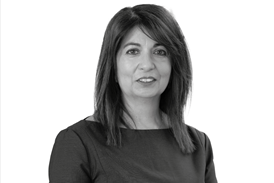
Originally from Athens and now based in Birmingham, Demi Korontzi-Deakin has spent more than 23 years in the built environment, leading complex infrastructure and transformation programmes across rail, utilities and the environment.
Today she sits on Gleeds’ UK infrastructure senior leadership team, leads the business unit’s management group, and acts as commission lead for the Environment Agency, Scottish Water and Yorkshire Water.
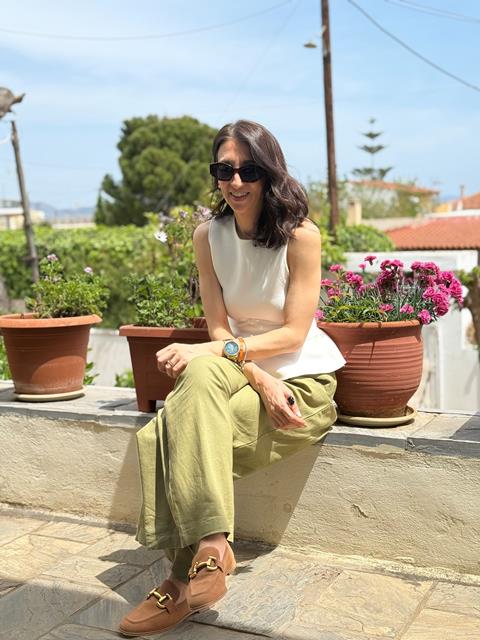
Korontzi-Deakin specialises in what she describes as “turning delivery pressure into delivery performance – clear governance, disciplined controls, strong stakeholder alignment and teams that can execute confidently”. In practice, she adds, “I help programmes run more efficiently, teams work smarter, and outcomes land with evidence.”
Her route into infrastructure began early. According to her parents, from the age of six or seven she was announcing she wanted to become a mathematician and a meteorologist.
Civil engineering became her focus and at 17, she moved to the UK to study, initially intending to return home after qualifying. Instead, she became deeply motivated by the UK’s focus on hydraulics, flood alleviation and environmental initiatives – work that felt purposeful and progressive. Infrastructure, she explains, changes lives in tangible ways.
>> Download the Women in Construction 2026 special report <<
After an MSc in environmental pollution control, she took roles in river, drainage and hydraulic modelling with Haswell, Severn Trent Water and Atkins. She moved into flood defence and asset management at the Environment Agency, before progressing into senior programme and transformation roles at HS2. A defining career moment came at HS2, where she established and led the programme’s first internal management consultancy. She created the vision, strategy and business plan, built the team and delivered measurable results in its first year, including significant cost avoidance and more than 10% improvement in on‑time delivery.
HS2 also presented some of her toughest professional challenges. She led a major civils client-team transformation and ran the covid-19 emergency and safety measures workstream to keep around 350 main works civils sites safely operational at the start of the national lockdown in 2020.
High-profile programmes, she notes, come with pace, complexity and competing priorities, while everyone expects certainty. Her response has been grounded in composure and clarity. She focuses on strong governance, honest reporting and early risk decisions, while building teams that are trusted and empowered. She also describes herself as an “extroverted introvert”, showing up confidently for stakeholders and teams while protecting space to think and reset. That balance, she says, has been essential for performance – and mental wellbeing – on high-pressure programmes.
Korontzi-Deakin is direct about what the industry must do to attract more women. “We need to stop treating inclusion as an initiative and start treating it as a performance standard,” she says. Progression pathways must be visible and fair, flexible working should not quietly limit leadership opportunities, and sponsorship – not just mentorship – needs to be embedded. Women stay in the sector, she argues, when they can see a future, feel valued in the culture and know their wellbeing will not be the price of progression.
She hopes she serves as a role model, particularly for women who do not fit the traditional mould. Her leadership style, she says, is “direct, collaborative and values-led”, and she is proud of “delivering results without losing empathy”. The most powerful message she can send, she believes, is that you don’t have to change who you are to be taken seriously – but you do have to be excellent, consistent and visible.
Outside work, resilience matters just as much. She is a committed spin and yoga regular, a lover of European cinema, and maintains a shoe collection approaching 400 pairs. She starts each day with a smile and a loud “good morning”, determined to bring positive energy to her team. High pressure, she believes, does not have to mean low morale.
Her advice to women entering the industry is characteristically clear: “Don’t wait to feel ‘ready’. Put your hand up, build your competence fast, and learn the commercial side early, because confidence grows when you can evidence your value.”