










This is part of a special report produced in partnership with Gleeds
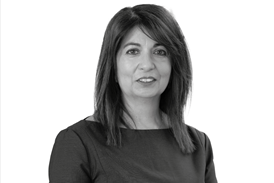
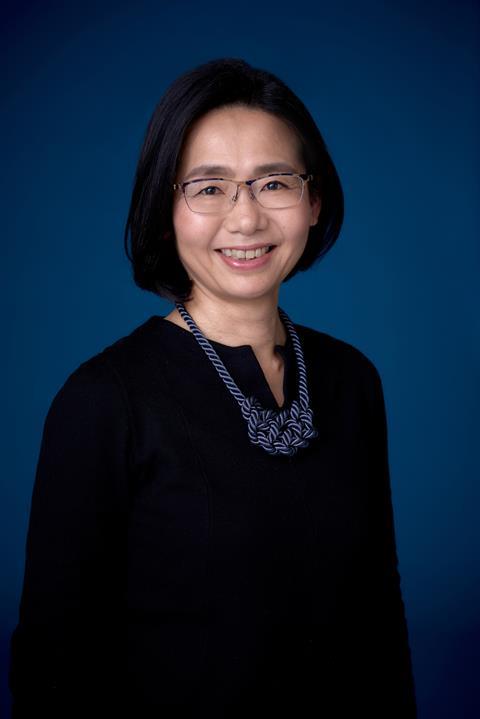
“Develop technical credibility early.” For Tomoko Maekawa, Japan managing director of ES Global, that advice is both practical guidance and personal philosophy. Based in Tokyo, she leads the Japanese subsidiary of UK-based ES Global, specialising in temporary and modular structures for major events, exhibitions and complex built environment projects.
Her team is lean but highly specialised. As managing director, she is responsible for overall strategy, client relationships, commercial performance, governance, risk management and co-ordination with global teams.
Much of her work involves balancing “commercial ambition with disciplined risk control”, ensuring projects are delivered safely, on time and to the required quality standards while aligning global standards with local regulatory realities.
Maekawa has worked for over 25 years across international business and the built environment sector. Her pathway, she explains, “was not linear”. For many years she operated as a self-employed freelancer, and her current role is “the first time I have formally belonged to a corporate structure”.
She entered the industry through international business and project management, gradually moving closer to delivery and commercial leadership, developing expertise in cross-border co-ordination and complex stakeholder environments.
She does not identify a single breakthrough moment. Instead, progress came through accumulated experience and accepting increasing responsibility. “Consistency over time has been more important than any one breakthrough event,” she says.
>> Download the Women in Construction 2026 special report <<
Among the projects that stand out is the Microsoft Shinagawa HQ renovation, which she led as a project manager and considers “the culmination of [her] development in that role”.
Since she become managing director, the company’s most significant undertakings have been the design and build of four national pavilions for the Osaka Expo – the US, Canada, the UK and Australia. These were the first major projects delivered under her leadership, involving compressed timelines, high public visibility and complex international co-ordination. The scale of responsibility during that period was substantial.
One of Maekawa’s biggest professional challenges has been understanding what clients truly need. “One major challenge has been accurately identifying what clients truly require – not only what they say they want, but the underlying objectives driving their requests.” Through trial, reflection and refinement, she learned to listen beyond the surface and structure solutions that align commercial, technical and strategic priorities.
She also highlights the tension between global corporate frameworks and local market conditions. Navigating that balance requires clarity in governance while remaining pragmatic in execution – a discipline that reflects her broader leadership style.
Outside work, Maekawa practises tai chi and aikido. She values “calmness under pressure, respect for structure, and the ability to redirect force rather than confront it directly”. Those principles translate directly into how she leads: influence without unnecessary confrontation, discipline without rigidity.
On attracting more women into the industry, she says: “The industry requires structural change, not symbolic change.” Legal and operational systems were built for a different labour market; in a period of demographic decline, they must evolve. If the sector remains unappealing to women, she warns, it will struggle to attract the next generation more broadly.
She does not actively seek to be seen as a role model, but acknowledges visibility matters. If her presence expands the perception of what leadership can look like, that is positive.
Her proudest achievements are not individual milestones but moments when she helped change established industry practices in Japan, contributing to structural improvement.
And her advice remains clear: build expertise first. In Japan, reliability and competence carry weight. “Confidence should be built on capability. Once that foundation is strong, leadership becomes sustainable.”








No comments yet