

















Applications have closed for the government’s first chief construction and scientific adviser, but can anyone realistically fulfil what the job spec asks?

On Monday night the deadline passed to apply for what may be the most demanding job in the built environment: the first ever chief construction and scientific adviser.
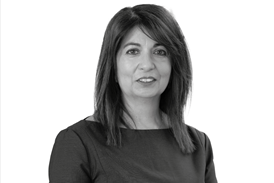
Thouria Istephan, the current interim holder of the more limited role – without the “scientific” part added – made it clear in our interview this month that she’s not putting her hat in the ring. Who, one wonders, will?
Istephan, characteristically frank, has been clear about why the role looks the way it does. For her, the role’s primary function is one of “challenge and scrutiny” and is a central plank of the post-Grenfell building safety reforms as recommended by the official inquiry, which the government backed and she worked on for years.
On paper, the job spec is formidable. To precis the advert, MHCLG is looking for a senior leader with end‑to‑end construction project experience and deep technical expertise as well as strong skills in stakeholder engagement, change leadership and communication. Crucially, it adds a formal scientific remit, tasking the adviser with leading independent science and engineering advice and feeding that expertise into government decision‑making.
For many in the industry, the description invites an obvious question: how could any one person do this seemingly enormously wide-ranging and enormously important job?
Few are better placed to question the role than Paul Morrell. A past chief construction adviser (CCA) when the role was very different, he thinks the government is trying to combine too many responsibilities into one role.
The risk, at least for now, is that roles and responsibilities overlap and confusion results
Morrell argues the role overlooks what once made it effective. In his day, the CCA mediated the relationship between government and industry. The job did not include regulation because it would have compromised that mediator role – after all, it is hard to have a friendly relationship with industry and then the following day be part of the system that is regulating it.
During his tenure Morrell avoided any involvement with the detail of regulation, instead he focused on the industry’s relationship with government as sponsor and client. Cut to today’s role, and the advert described someone who will “lead delivery of robust, high-quality science, construction, and engineering evidence and advice”. That means the department is looking for someone who can demonstrate considerable experience in three complex and discrete areas: science, construction and engineering.
Morrell is far from alone in doubting such a figure exists, I spoke with Fenwick Elliott’s Simon Tolson and PRP’s Andrew Mellor and they have similar concerns. All three agree that to get close to the job description the department would need to hire someone from academia, but then that person would most likely lack the industry contacts and stakeholder relationships needed for the job.
Morrell says that during his time as CCA he had the benefit of working with Jeremy Watson, the scientific adviser for the Department for Communities and Local Government, having previously been head of research at Arup. He says Watson focused on technical aspects, particularly around giving advice for address climate change through policy. Their two jobs complemented each other but were very different, requiring two very different people with their own areas of expertise.
Istephan’s own reading of the job spec is more flexible. She makes it clear in her interview that she wanted industry professionals to apply for the CCSA role, not just academics. And she admits the multifaceted nature of the role refers to the office not the individual who carries it out. Her point is that whoever is eventually appointed, they will need to be someone who “knows what they don’t know” and can “orchestrate and corral” to find the expertise they need, which would involve using the government’s chief scientific adviser network to support them.
In this context, the addition of “scientific” may matter less than it seems. The government has a bunch of chief scientific advisers already, (intriguingly the MHCLG website indicates it already has one of its own, a professor Richard Prager).
And of course there is the appointment of Barbara Lane as chair of the Building Advisory Committee, one of three statutory committees established under the Building Safety Act. Lane, an engineer and a fellow at Arup, is also known for being an impressive expert witness on fire safety to the Grenfell Inquiry. She is expected to be a strong and effective person in this post.
However, the unresolved question is how all these roles are meant to interact, and how they link in with the Building Safety Regulator’s work. The risk, at least for now, is that roles and responsibilities overlap and confusion results.
Istephan may not be applying, but acknowledgement that no one person can hold all the answers is important. The success of the new CCSA will rely less on the breadth of their CV and more on whether they are empowered to build a genuine team around them, inside and outside government. Passion for building safety has to be a given. What we do not know yet is whether the role – as it has been designed – gives its first occupant the space and authority to turn that passion into lasting change.
Chloë McCulloch is the editor of Building








1 Readers' comment