













As interim chief construction adviser, Thouria Istephan is using her short tenure to push for deep, systemic change – from professional standards to products reform and the future of the advisory role for her successor. In her first interview in the role she talks to Chloe McCulloch about why she is driven to be part of transformational change in the construction industry – and how long that might take

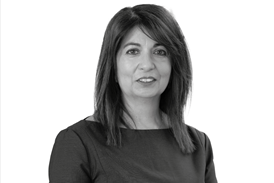
“I’m an open book, so ask away.” Thouria Istephan, interim construction adviser, is smiling and looking relaxed as we talk in a small, anonymous meeting room, deep in the MHCLG building in Westminster. As a recording device is set up on the desk in front of her, she jokes that any transcription software might struggle with her Huddersfield accent. Actually, she laughs, she didn’t speak a word of English until she came to the UK when she was 10 years old, having been born in Iraq to a British mother and an Iraqi father.
Huddersfield is the place of her formative years, before spending her working life in London as an architect – 25 years at Foster + Partners, where she became a technical partner. Since 30 September last year her full focus has been on finding ways to make an impact fast in a role that that only lasts for one year, when she will hand over to a permanent successor. In February she published a statement to coincide with her completing five months in the interim role (or, as Istephan points out, “two and a half months really” given that she only works half weeks).
Clearly, Istephan has not had long to get to grips with the newly created advisory role focused on arguably the biggest challenge facing construction: building safety. As interim chief construction adviser, she provides “independent challenge, scrutiny and advice to the government on building safety and regulatory reform” – one of the key recommendations to come from the Grenfell Inquiry.
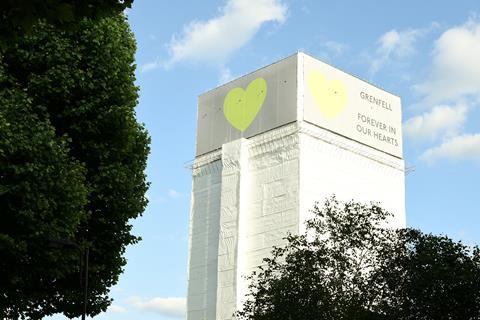
Istephan was, of course, on the Grenfell Inquiry panel, and so for her this role is an opportunity to play a part in bringing about the changes that she and others identified as so vital if we are to prevent another disaster similar to the 2017 fire at Grenfell Tower that claimed 72 lives.
Here she talks about what she has managed to get done so far, what she still wants to achieve and the hopes she has for her successor, having recently started the recruitment process for the permanent role that comes with an expanded title of chief construction and scientific adviser (CCSA). She also explains her deep conviction that both industry and government must undergo a full cultural reset so that building safety is no longer bracketed as a “compliance issue” – denigrated in some quarters for slowing projects down or costing more – but becomes a priority for everyone.
Fully aware that not all voices in construction agree with her, she is clear that it is going to take hard work and time to persuade some elements of the industry to confront the lessons of Grenfell if it is to build safely for the future.
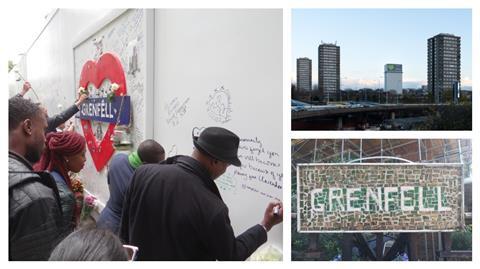
Why it matters: being on the Grenfell Inquiry panel
Istephan, 61, first came to the public’s attention on the day the Grenfell Inquiry published its final report in September 2024. She had a tough message for the industry she has spent her working life within, saying the inquiry would make no apologies for the “new burdens and responsibilities” which would be imposed.
She went on to talk movingly, at times holding back tears, about the personal and professional impact being on the inquiry had on her, and about the lasting responsibility the industry carries towards the victims and all those affected by unsafe buildings.
I’m still surprised by myself, because I’m not really that emotional
Asked now if she realised how much her words and the way she said them would resonate with people listening at the time, she says the emotion she showed on the day took her by surprise. “I rehearsed that so much […] I didn’t want that to happen. I’m still surprised by myself, because I’m not really that emotional.”
While unintended, she thinks that showing a human side was important because ultimately the work of the inquiry was about people. She says other members of the inquiry team also felt the emotional impact: “You would have to be made of stone if it didn’t. Seeing people in front of you that [have been] harmed, and also seeing people in the stand that are accountable and answerable, is a difficult thing.”
She adds: “My point [to the industry] is that you need to feel the heavy weight on your shoulders, because if you don’t do that, you’re going to think it doesn’t matter. And it does matter. It matters massively.”
A bridge between the Grenfell Inquiry’s findings and future reform
Istephan is clearly driven by “unfinished business” from the Grenfell Inquiry and is determined to make a difference in the time she has. Her five-month statement indicates that she made certain to start by talking to key people in government and industry and working out how she can be a “bridge” between them.
She says she sought advice from Paul Morrell, who held the title of construction adviser from 2009-12, when the remit was very different. Morrell, she says, had some helpful insights on how to get things done in government, as well as sharing his experience of co-authoring an independent review into construction product testing.
“Paul was very generous with his time, [his advice was] pure, simple and honest,” she says.
There will always be good and bad actors out there, so it’s really important to formulate better outcomes
Last month saw the release of the construction products reform white paper and following its progress is one of four key priorities that Istephan has set for herself (the others being: professional standards; evidence gathering and preventing near misses; and the permanent CCSA role). “I would like to see the consultation play out,” she says. Being an architect and a specifier, she says, means she has had a long interest in construction products, heightened after hearing evidence in the inqury about “the dishonesty that surrounded some of the [product] information.”
Before her term is up she will be able to review the consultation feedback and be part of evaluating next steps. “There will always be good and bad actors out there,” she says, “so it’s really important to formulate better outcomes. But these things take time, as frustrating as that is.”
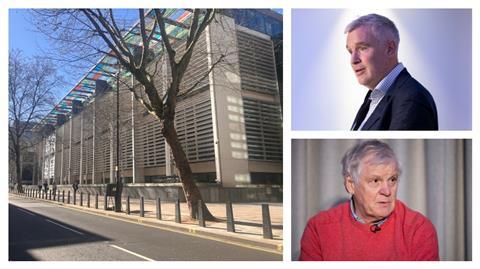
Finding her successor: the new chief construction and scientific adviser
Her time with officials has for a large part focused on helping to shape the role her permanent successor will take on. According to the job advert released in March, it will be upgraded to a full-time position, with the term running for three years and a salary of £120k to £139k, plus the lengthened title to include being a scientific adviser. The deadline for applications is 13 April, with interviews scheduled for May.
Continuity between her and the next appointment is front of mind. She anticipates there will be at least a month-long handover: “The idea is that there is some transfer, talking through what’s being developed, what needs to be done next. Just working that through is really important. You don’t want a disconnect in terms of what I’m doing and what the next incumbent will do.”
To gauge how others in the industry view the significance of the permanent role, we spoke to a few people with an interest in fire safety. Most agree it is a pivotal role but some think recruiting for it could be a challenge, with a small pool of possible candidates having the right combination and level of experience and expertise to lead transformational change.
There’s no one person that can hold all those skills. So I see that as the office, not as the individual
Simon Tolson, a partner at law firm Fenwick Elliott, describes the criteria as “setting a high bar for applicants” and notes it is a “highly complex position requiring the balancing of numerous priorities and managing diverse stakeholder expectations”. He adds: “They are looking for a true polymath. Not many of those will run after £139k.”
Paul Morrell agrees that finding a suitable candidate will be a tall order: “The job advert is for somebody with senior-level experience across the whole lifecycle of a project, with an authoritative technical knowledge of ‘building safety, construction engineering, material science, risk management and regulatory frameworks’, and with proven ability in building working relationships, the leadership of change and communication skills,” he says. “If such a person exists, then I’ve never met them.”
He would also like to understand how the new post will fit in the context of multiple government departments with an interest in construction, the regulator and all the committees and advisory groups, such as the Building Advisory Committee.
Istephan admits that the role is challenging. “One person can’t do everything. There’s no one person that can hold all those skills. So I see that as the office, not as the individual.”
The new appointee, she says, will act as a figurehead, drawing on the expertise of others. She thinks that being one of 20 or so scientific advisers working across different departments will also help: “The individual is one that will orchestrate, corral [others] using their network. What is really amazing about the scientific officer point is that it opens out that network to lots of really skilled people.”
What matters, in her view, is appointing someone who understands the whole construction process from beginning to end – not someone narrowly specialised in one technical niche. She says that architects and engineers are good examples of professions that are not experts in everything but they have the ability to curate knowledge and understand its impact on the built environment.
They need to have enough seniority and experience of what it is like to work in the industry, because a big part of the challenge is “changing behaviours – and that requires some soft skills too”.
The three-year term is also important to encourage fresh thinking. The opposite in her view would be “stagnation, the worst thing you can possibly have”. In short, Istephan thinks the permanent role of providing challenge and scrutiny for government and industry is essential: “People are really fighting for that, and they want more, because the built environment is a lot more complex than it ever was when I first started.”
Competence is the strand that cuts across everything
Finding a successor is one step towards the overall goal of making competence the defining issue for the built environment today. From the inquiry’s findings to her current advisory role, Istephan argues that competence is the “the strand that cuts across everything”, and it could be found in every weakness uncovered by the inquiry across government, the professions, contractors and client organisations. She says that, without competence “at your core, you are not going to get anywhere”.
Overseeing the standards and regulation of key professions will be one of the central functions of the proposed single construction regulator. This gives her a lot of hope and she is keen to see responses to the consultation.
Her conversation flows from one safety topic quickly to another, seeing them all as linked and interdependent. This is why she backs the idea of a single regulator bringing together oversight of building control, construction products and the professions.
Certain professions were, she says, “very severely criticised” during the inquiry. In particular it identified a lack of competence and reliable professional standards among fire engineers, leading to a major ongoing government effort to professionalise, regulate and expand the workforce. Part of the reforms now focus on protecting the fire engineering function by law.
The learning from Grenfell is that the architect had not done an over-cladding project before. So the question is, why were they hired?
As an architect herself, Istephan believes architects working on higher risk buildings also need “protected function”. Though she hates the term itself, as it implies protectionism, she says the title of architect alone does not ensure that a person performing a safety‑critical role is actually competent to do so.
“The law requires a client to appoint a competent person with the right skills, knowledge, experience and behaviours,” she explains. “So how do you evaluate that? For high-rise residential, [that requires] a lot of knowledge and experience.
“The learning from Grenfell is that the architect had not done an over-cladding project before. So the question is, why were they hired?”
It is not just a question of technical skill; she believes behaviours, ethics and professional judgment – the ability to scrutinise decisions and challenge poor practice – are just as essential components of competence. And she gives short shrift to people in the industry who have said “just tell me what to do”, something she says she hears far too often.
That attitude, in her view, simply demonstrates their own incompetence, because true competence requires knowing why you are doing something and what outcome you are trying to achieve.
For Istephan, competence must be measurable and continually reviewed. She urges organisations to adopt the same discipline in tracking and improving competence as they apply to financial performance: setting objectives, measuring progress and avoiding stagnation.
This is a point she says she has raised with the Construction Leadership Council, and hopes to see it taken up with their membership. She has also had discussions with other bodies such as the RICS, the RIBA and Build UK about their continuous professional development plans. She seems encouraged as a result.
True costs and winning over the sceptics
Asked if she has found that company bosses are all on board with the drive towards a robust and unified regulatory system, she hesitates over a “yes” or ”no”. She goes on: “There are [some] very good people out there. What I’m very conscious of is you often speak to like-minded people, don’t you? That outreach is not difficult. I’m very conscious that there are others out there [and the challenge is] incentivising them to do what should make good business sense.”
She wants to make a strong case for businesses to stop undercutting each other and offering clients cheap solutions: “Everybody should make a profit, but you [should] be proud of the work that you are doing, that your workforce is actually competent.”
The evidence shows that it costs a lot of money if you get it wrong – just get it right at the first time
What about complaints that the new safety regime has gone too far and is adding burdens that make some developments unviable? Istephan is familiar with the argument and unsurprisingly rejects it.
“The evidence shows that it costs a lot of money if you get it wrong – just get it right at the first time,” she adds. “I don’t see that it’s incompatible with developing at the rate that we need to develop. Far from it.
“I actually think it’s good business sense to give a lot more thought to who you’re hiring, development in terms of the design and understanding how it’s going to be built. So this whole idea of capital costs, and the lifetime costings, has been around for as long as I remember. It’s siloed ways of thinking and the lack of interconnectivity that is causing a lot of the problems.”
Critically, she places responsibility not only on contractors and consultants but on client organisations, who, she says, “pull the biggest levers”. Clients define expectations, set budgets, appoint teams and influence behaviours throughout the supply chain. There are, she says, some “really, really good client organisations that set the standards […] I would love that to happen more, because there are, unfortunately, too few of them.”
So, if she has seen what ”good looks like”, what’s the bad version? “I mean, people are too laissez faire about stuff, or all the things that we’ve heard in [the inquiry] evidence: it’s for them to do, and they offload risk.” Without client leadership, she argues, reforms will always struggle to take hold.
Ultimately, she is clear in her mind that people who oppose reform on cost grounds have the wrong approach: “What measure do we have in terms of costs? That’s the thing. [I get a lot of] ‘oh that’s all very well Thouria’ or ‘it’s pie in the sky’. But I’ve seen how it [can] work. And then, when you see Grenfell and those missed opportunities that would have stopped that, then […] it’s unforgivable”.
Working with the Building Safety Regulator
Istephan’s role is also to understand and challenge the work of the Building Safety Regulator, and she says her meetings with BSR chair Andy Roe have become more frequent over the time she has been in post.
When asked about delays developments have experienced at gateway 2, she acknowledges that Roe inherited an imperfect system and says the BSR is tackling the backlog. She says Roe has been very open about what needs to happen.
She thinks part of the answer is in better guidance for the industry, but also the technology used for gateway submissions could enable the BSR to interrogate designs more efficiently.
One of the things that I’m working on with different people, is to look at those watch points, the red flags, so that the regulators can be more agile
Data and technology is a topic she is keen to talk about because she believes they hold the key to spotting near misses and building an evidence base to track industry progress. She recalls the expert witness Professor Jose Torero who told the inquiry that officials ignored numerous near misses that should have raised red flags before the Grenfell disaster because they relied on poor statistics.
“One of the things that I’m working on with different people, is to look at those watch points, the red flags, so that the regulators can be more agile, they can challenge more in terms of why people are proposing certain things. Is your proposal saying ’this is safe for people to live in, safe for the duration of the buiding’s lifespan’?”
Just the day before this interview, Istephan had a meeting with the BSR’s residents’ panel, a forum of people with experience of living in higher-risk buildings who can share their views on building safety. It is part of the work she believes is important to always keep the interests of residents in mind.
Regulations and how buildings fit together, she says, are seen as dry and technical matters, but the impact they have on human lives is enormous. She wants everyone working in the built environment to remember that – and to always be conscious that “what you’re doing it for is actually people”.
All of the issues on Istephan’s desk will require work long after she steps down in September, but she is certain of one thing: the moral weight of Grenfell means that work must continue. “All the things that we’re talking about is a direct consequence of Grenfell […] the DNA of the correction is as a direct result of that tragedy.”
Some people may want to forget, but Istephan believes momentum is on her side: “I hope to God it won’t be forgotten. What is happening now is consequential.”
What next for Thouria Istephan?
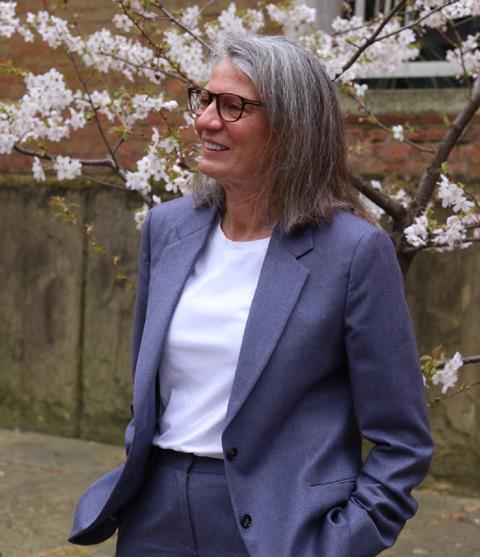
Istephan is adamant that she is not applying for the permanent chief construction and scientific adviser role: “I’m only here to help out”.
After September, she wants a bit of a rest and then to think about her options. Retirement is not one of them. But whatever she ends up doing, she wants to feel it has purpose – and she wants to do it on her own terms.
The generations that are coming up are the ones that you can instil much better behaviours. They are our future, after all
Mentoring is something she has done for a long time and something she would like to do more of: “I think the generations that are coming up are the ones that you can instil much better behaviours. They are our future, after all.”
Equally, going back to being an architect and “doing bits of work” would suit her: “I’d be happy to be in the background. Being in the spotlight is not my thing, I had to be very brave to do that, quite frankly.”
Plus her mother back in Huddersfield would not forgive her if she took another high profile role on right now: “She’s already saying, I haven’t seen you since Christmas.”
Family and friends have supported her through all of her work during the Grenfell Inquiry, which was particularly challenging during the covid pandemic. “I’ve been incredibly fortunate, because [this work] is important, but my goodness, it takes it out of you.”







1 Readers' comment