







Its purchase of developer Regal London last year might have been the first most in the UK had heard of Arada. But in the UAE it has been building up a reputation for green, wellbeing-led development for the better part of a decade. Daniel Gayne took a look around some of its schemes to find out what it plans to bring to Britain
In recent years, Dubai has become a symbol in the British mindset for everything our country is perceived not to be.
While frowned on by some – including, recently, the leader of the Liberal Democrats – who see it as an authoritarian tax haven for disloyal UK millionaires, for others it is a shining example of the kind of economic dynamism they believe is lacking back home.
In arguably no sector is this more true than in construction. Time will tell how the current regional conflict bears on the city’s future, but the years since the pandemic have seen a return to boom times for Dubai.
Knight Frank reports a 94% increase in prime villa prices between the start of 2020 and the end of 2024. Meanwhile, despite an abject need for housing, residential development in the UK, and particularly London, has trundled and spluttered to a near halt.
So why, given this unfavourable comparison, would a successful Emirati developer, place a £500m wager on the London market?
That is the question that hangs around Arada, the real estate firm which last September bought a 75% stake in London-based developer Regal. Earlier this year, Building travelled to the region to find out the story of Arada’s rise in the UAE, why it is coming to London, and what it plans to bring with it from the shiny world of Emirati real estate.
Making its name with two green schemes
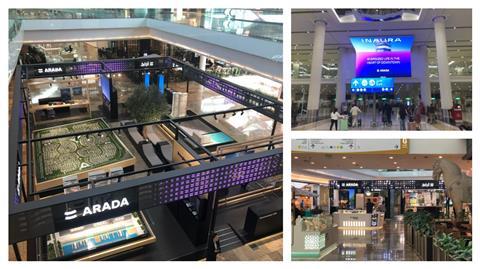
Though not yet a big name in the UK, Arada makes itself known as soon as I touch down in the Emirates, with a huge billboard for the company hanging over baggage reclaim. After checking into the hotel, I wander into the attached mall and almost immediately run into its sharp sans-serif branding again, this time in a swish showroom complete with scale models and smiling sales people. It is clear that Arada has become an established brand here, despite its relative youth.
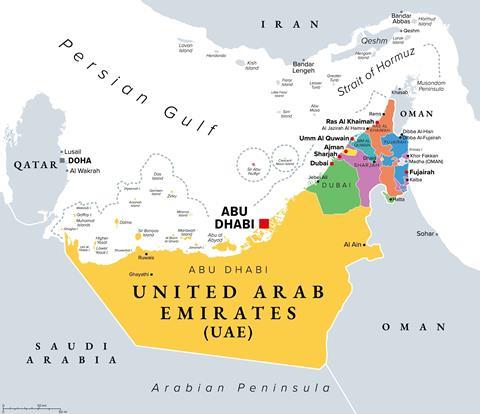
The company was established in 2017 by Saudi prince Khaled bin Alwaleed bin Talal Al Saud and Sheikh Sultan bin Ahmed Al Qasimi, who remain the vice-chair and chair, respectively. The latter is currently the deputy ruler of Sharjah, which is one of the seven emirates that form the UAE. And it is there, rather than Dubai, that Arada got its start and where much of its development has so far taken place.
Sharjah borders Dubai immediately to the north, and though the urban areas are essentially contiguous, the vibe shift is noticeable almost immediately as you pass the airport and cross the border. Each emirate in the UAE is somewhat self governing, and while Dubai has embraced rampant commerce, opened itself up to foreign buyers and relaxed some social restrictions, Sharjah has done less of all three, remaining more low-rise, more affordable, more socially conservative, and having a greater focus on culture and education. It is only in recent years that foreigners have been allowed to own property in the emirate.
The first development we visit is Aljada, the firm’s first and biggest scheme. This 24 million sq ft mixed-use development is a far cry from the Dubai experience of isolated high-rise schemes strung together haphazardly by traffic-jammed roads.
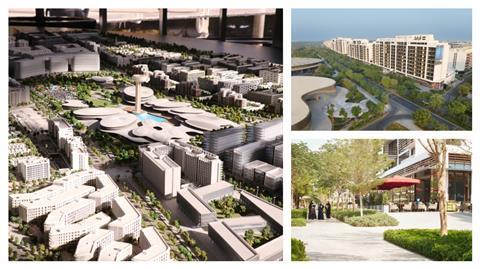
Aljada is a fully masterplanned, middle density neighbourhood, with all the amenities that requires. When complete, it will include not just 25,000 homes, but also schools, three mosques, three hotels, a hospital, student accommodation, retail outlets, a commercial district, a Zaha Hadid-designed shopping mall, and a cultural centre designed by Japanese Pritzker winner Tadao Ando.
Not all of this has been built yet, of course. Construction began in 2018 and so far just under half of the scheme has been built, with full completion expected between 2030 and 2032. “That gives you an idea how quick you can deliver a full city from a desert,” Ahmed Alkhoshaibi, Arada’s chief executive, tells me.
The fact that the desert is where Aljada is located is easy to forget while you are within its boundaries. This is an incredibly verdant neighbourhood, more strikingly so because of the yellow-grey tones of the surrounding urban and natural environment.
One of Alkhoshaibi’s goals with Aljada was to “break the theory that locals don’t want to walk” and a focus on greenery and planning were the keys to this. “When we masterplanned Aljada, we said the first thing is walkability,” he says. “So we drew the green spines and the pedestrian pathways.”
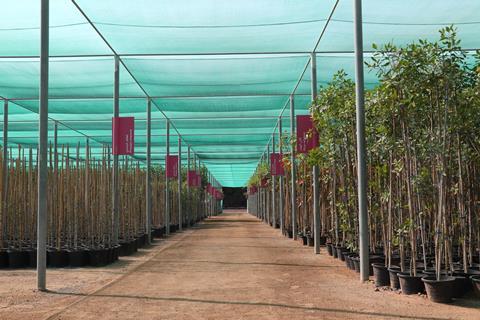
Arada operates its own tree nursery on one of Aljada’s last-to-be-developed plots. There they are growing around 140,000 trees of 50 different varieties from all over the world. These include ghaf, a deep-rooted desert survivor and the UAE’s national tree, as well as acacias, tamarind, eucalyptus, and others imported from arid parts of South Africa, Australia and Mexico.
The water to sustain this growth comes from an AED70m (£14m) sewage treatment plant, which will eventually be run on waste from the communities themselves (sewage is currently being brought in by tanker). Arada staff on our tour champion the company’s investment in this self-sustaining approach to water management, but one still wonders how much energy it takes to keep all these plants alive and healthy in such adverse conditions.
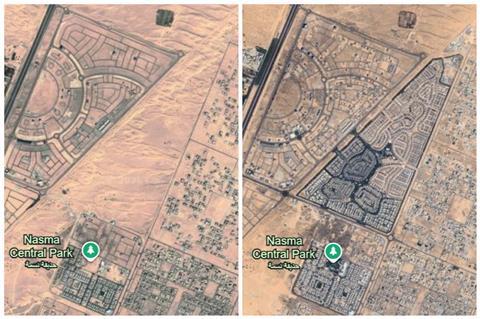
But, if the level of greenery in Aljada is striking, in Masaar, roughly 13km further inland, it is truly baffling. Around 11,000 of the planned 30,000 trees have so far been planted in Aljada. In Masaar, they have already planted 33,000 of an intended 50,000. Masaar is the first of a series of forested communities that Arada plans to build in Sharjah.
If Aljada is a bona fide urban extension, Masaar is a bit closer to a gated community, with amenities like swimming pools, sports facilities, and a 13km publicly accessible bicycle track running around its edge. But, while it is less ambitious in its scale than Aljada, it takes the idea of developing leafy, walkable communities in the middle of the desert even further, with the whole scheme linked up by ‘green spines’.
“We were happy with what we’ve achieved for Aljada so far, but we thought we could push the envelope when it comes to greenery,” says Alkhoshaibi. Where Aljada’s greenery makes you feel like you’re in a tree-lined Mediterranean city, Masaar is a little bit closer to a walk around a country park.
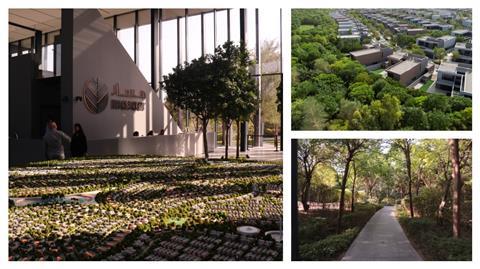
While the green spaces are undeniably attractive, the townhouses and villas themselves are somewhat bland and blocky, though undeniably spacious. But, according to Arada, demand is hot. At the first Masaar development, 1,700 homes have been handed over, with the rest expected to be completed by the end of the year. Meanwhile, Masaar 2, which will be built along the same model on plots nearby, has already sold out.
According to Alkhoshaibi, the initial scheme served as proof of concept for a different kind of development in the UAE. While the first phase took three years to sell, the 2,000 homes at Masaar 2 were “sold in three hours”. A third community is currently out for planning and Arada eventually wants to build eight versions of Masaar.
Beyond Sharjah: Arada’s schemes in Dubai and beyond
But, while Sharjah has played a big role in the company’s origins, Alkhoshaibi shies away from my suggestion that it is core to the business’ identity, or that it sets it apart from Dubai-focused developers. “We’re by far the largest developer in Sharjah, and we’ve transformed the emirate of Sharjah completely,” he says, while emphasising that Arada has “always made it clear that we’re a UAE developer”, rather than an essentially Sharjah business.
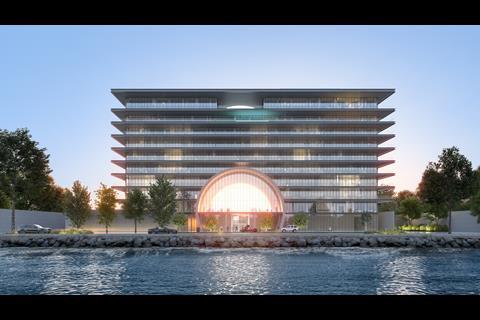
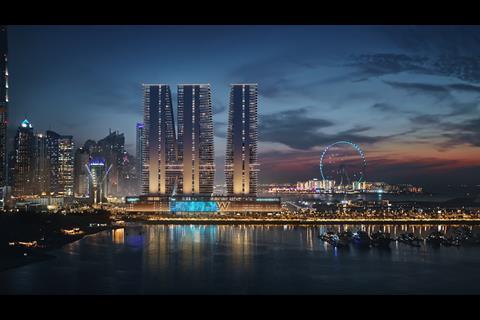
Indeed, recent years have seen the firm launch a push into higher-end development in Dubai. This includes two schemes near the sea, the Armani beach residences at Palm Jumeirah and W Residences at Dubai Harbour, as well as two tall schemes in the city centre, Inaura and Akala.
With these schemes, Alkhoshaibi says, they wanted to show the market “that we can do ultra luxury”. That is certainly the impression given by the publicity released around the schemes. Prices start at more than £4m for a two-bed property at the yet-to-be-built Palm Jumeirah scheme, designed by Tadao Ando.
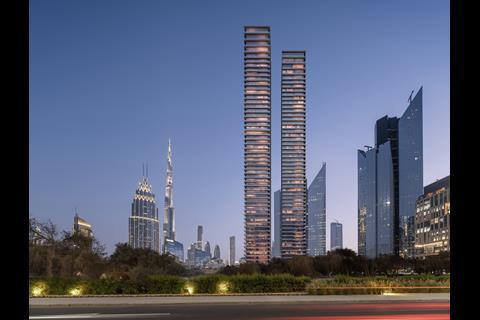
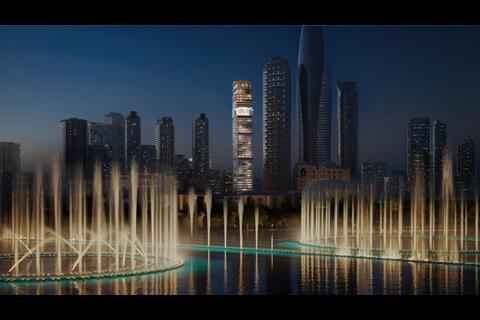
But Alkhoshaibi also insists that the company has always had aspirations beyond the borders of the seven emirates. “When we established in 2017 we always had a clear vision, not just to be a national developer, but to be international and to be probably one of the first successful global developers,” he says.
“I studied different developers, like Lendlease, other operators, and saw that they really haven’t achieved a certain level when it comes to space making on a global standard. So we said, ‘let’s get it right in the UAE, then Saudi Arabia, then London, then Australia’.”
That is not quite the order in which things shook out. The Saudi move has been pushed back and is still not expected until later this year, while the push into Australia happened very early. The company now has nine developments there and around 7,000 homes in the pipeline.
Betting on Britain: Why Arada came to London
Which brings us to the UK. Why make the move for Regal with the British market in such a tricky spot?
Alkhoshaibi’s answer is simple. “You always enter a market when it’s down, you never buy when it’s up,” he says. “When everyone’s leaving and everyone’s like, ‘stay away from London’, that’s the time for us to enter.”
He says Arada is a “long-term player” which believes in London and believes, further, that its current doldrums are “a phase you cannot sustain”. He notes that, typically, property markets crash because of oversupply – which is evidently not the case in the British capital.
“It’s basic economics,” he says. “Where there’s undersupply, there’s demand. [People] can’t buy because there are some issues when it comes to lending and taxes. That’s not going to stay like that.”
After all, buying the dip is what Arada did in the UAE. While recent years have been a hot period for real estate in the country, 2017 was by no means the top of the market. “People laughed at us when we set up. They said, ‘why would you start developing? You’re a young company, the market is down, you’ve got big government entities like EMAAR’,” Alkhoshaibi says.
“If you can operate in a downturn, you’ll do well. Companies that are set up in a strong market, when the market drops, they struggle, because they got used to operating their whole infrastructure around a booming market.”
When Arada bought Regal, it set out an ambition to increase its London residential pipeline to 30,000 units over the next three years – a threefold increase from the 10,000-unit pipeline it inherited. Almost immediately, it demonstrated its intent to deliver on this promise.
In November 2025, Arada acquired an 80% stake in the £2.5bn Thameside West scheme from private developer Keystone. Then, in December, it bought the former Salvation Army HQ near Elephant & Castle, which it plans to use for a hotel and co-living scheme.
Thameside West is a big opportunity for Arada to develop its vision. “It’s probably the last of this scale of waterfront in a strategic and connected location,” Alkhoshaibi notes.
Arada in numbers
£26bn Total value of total projects under development
2,500+ Arada employees
15,000 Units delivered
4,000 Units under construction
55,000 Units in the pipeline
£1bn Total fundraising through Sukuk (sharia-compliant bonds) issuance
£7bn Value of units sold so far
B1/B+ Corporate ratings from Moody’s and Fitch
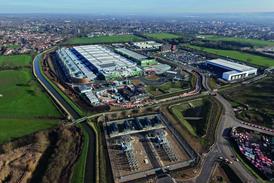
The inherited masterplan, drawn up by Foster + Partners, envisages a mixed-use regeneration spanning 47 acres of former industrial land at the western end of London’s Royal Docks. Under the existing proposals, half of the site will be dedicated to green space, with a kilometre of active waterfront and 5,000 homes.
Construction had been set to begin in 2027 but its new owners are revising the six-building first phase, with a view to a new submission later this year.
“Fosters have done a good job, but we have some ideas to add more greenery, more open space, and having a central component when it comes to fitness and wellness, introducing some branded residences,” says Alkhoshaibi. Given the scheme was initially refused planning permission by Newham in 2019 before being called in by the GLA, it would be interesting to see how any Arada-ised revisions fare upon contact with the British planning system.
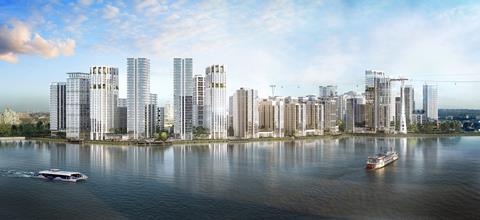
Indeed, London is not Dubai – and the company knows this. It is “very much not the case” that they plan to bring Dubai-style development to the UK, one of the firm’s PRs tells me. So what do they plan to bring over?
The soundbite that Alkhoshaibi repeats a few times is that they are focused on helping people live “happier, healthier, more meaningful lives”. That’s a bit platitudinous but, from my visit, the impression I get is that it boils down to two things.
Firstly, there is that greenery that we saw in Masaar and Aljada, and which the firm seems to want to extend at Thameside West. Secondly, there is the company’s use of a diverse group of vertically-integrated businesses to plump up its amenity offer, with a focus on wellness and functional medicine that goes beyond what is typically seen in UK real estate.
Bringing over brands and pushing the envelope on wellness
Many of the social assets in Aljada, like schools and hotels, are owned by the company and operated by partners, while many of the food and beverage offerings around the neighbourhood are wholly-owned businesses which Arada has either created or acquired.
Alkhoshaibi says that this vertical integration approach helps them to give their developments character and activity from the start. “We understood that getting the good brands early is difficult when you create a new masterplan, because they don’t make much money and they even lose money,” he says. “It’s when the crowd comes [that they are interested].
“But it is a chicken and egg thing. You need the F&B to bring the crowd. We thought, OK, if we own the brands, which we’ve done, we can put them in, and we can subsidise them to activate the place.”
Boost, Hungry Wolves and Brooki (apparently “a very viral cookie brand in Australia”) may not be household names in the UK, but Arada is hoping they might become so. At least some of these are likely to come along with them to the British market.
You might even start to see some of these brands in the wild. A core part of the company’s philosophy so far as these subsidiaries are concerned is that they should be able to survive on their own. “90% of these brands are outside our communities,” Alkhoshaibi says. “That’s how I test them. If you can’t survive outside, then you’re not operating.”
Could Arada make a splash in the UK contractor market?
Arada’s subsidiaries do not just include cookie companies and gyms. Arada Industries invests in construction-related entities such as crane companies like Raimondi and Terex. Ahmed Alkhoshaibi, Arada’s chief executive, says they have found it “strategic” as a developer to own the cranes, because it means they can remove and replace contractors with less friction.
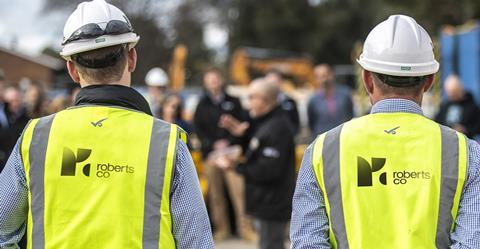
Now they have the option for even greater control, having last autumn bought their own contractor. Roberts Co is a tier one contracting company in Australia which does a large amount of public sector work in the country, as well as delivering Arada’s housing stock there.
Alkhoshaibi says the firm was acquired so that Arada had a delivery arm in Australia because of the “challenging” contracting market there. During our visit to the UAE, one of Arada’s PRs hints that the contractor could be brought to the UK and Alkhoshaibi, when asked, does not rule this out.
“Regal or Arada London have a construction division,” he says. “We feel that eventually that will be integrated and become [part of] Roberts Co, but that will be later on.
“Unless, with the scale we are growing to, we see that there’s a need – then we will take that call. We see there’s a need in Saudi Arabia. So Roberts Co’s next step will be entering UAE and Saudi Arabia. Not to be an exclusive contractor, but to support when we need because, again, the market is booming, and one of the biggest challenges here is finding contractors to deliver the homes that we’re selling.”
He says that, if it were to come to London, it would primarily be “focusing on our projects and potentially maybe government, social infrastructure, because that’s where they have the expertise”.
This is an approach that Alkhoshaibi says is particularly important when it comes to fitness brands. If you want people to see a hotel or residential development’s gym as a real amenity rather than an afterthought, it needs to have a reputation for being a good gym.
“Why are hotel gyms so dead? Because they are [run by] hotel operators,” he says. “Personal trainers need to make money, and hotels are not busy, so they don’t want to go to a hotel.”
To this end, Arada has developed a model where trainers are on a roster, cycling between hotels and standalone gyms operating under Arada’s fitness vertical Formative. Alkhoshaibi claims Formative is now the largest fitness operator in the UAE, with 40,0000 members across 20 clubs.
“Formative will expand to the UK as a standalone business, and that will help the residential,” he adds.
While Arada boasts about the quality of its fitness offer, it is not exactly unusual nowadays for British residential development to include a fitness component. An area where Arada may be a little ahead of the game in the UK is with its focus on functional medicine and longevity.
Functional medicine looks to identify and address the root cause of diseases rather than just treating symptoms. It has become increasingly popular in recent years, initially with a wealthy clientele looking to gain an edge in life.
Alkhoshaibi says that what is true about hotel operators running gyms is also true of developers offering this kind of high-level wellness. “You cannot just hire two nurses and a doctor” and call it functional medicine, he says.
Everwell is the vertical that is focused on these. We get a glimpse into one of their clinics, operating within an Arada-owned gym in Dubai. Here you can get full diagnostics done, including an extensive blood panel, ECG, food intolerance tests, and more.
Once these come back, the staff put together a tailored plan which is meant to improve sleep, nutrition and exercise. This might include treatments using peptides, stem cell therapies, or a cocktail of intravenous infusions.
This “medical-grade” wellness offer will be the central selling feature of the proposed Akala development, a 220m-tall twin tower scheme between Dubai International Financial Centre (DIFC) and Downtown Dubai. “You can live to 100, 200 maybe living in Akala,” says Alkhoshaibi, only half-joking. How much of this will be rolled out in the UK remains to be seen.
Building’s trip to the Middle East took place before the US-Israeli bombing of Iran at the end of February, which marked the start of an ongoing conflict that has seen the UAE and its gulf neighbours targeted by Iranian drone and missiles. A spokesperson for Arada says that, despite the conflict, the company is taking a “business as usual approach” to its operations in the UAE and that demand in Dubai remained “resilient”. As a demonstration of this, it noted that it had recently sold a £19m penthouse on the Palm Jumeirah.
However, Arada says that to “mitigate any future fluctuations in demand” it is adapting its marketing approach “to engage different buyer segments and target markets”. It also says it has “reinforced our emergency preparedness measures across all locations, and we are also maintaining a flexible working approach where appropriate, enabling our teams to balance operational requirements with personal and family needs”.
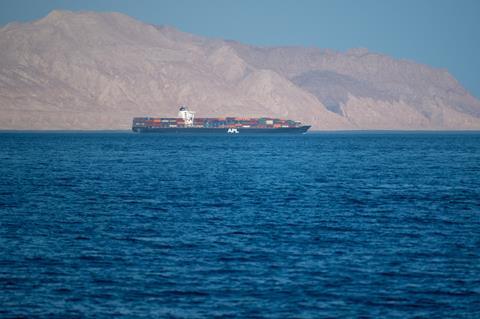
Nor, according to the spokesperson, does the conflict affect Arada’s global plans. The company, they say is “well-capitalised and supported by a strong balance sheet, which provides a solid foundation in periods of uncertainty. Given this level of diversification and financial strength, we do not anticipate any near-term impact on our global expansion plans, including in the UK.”
As for every other prospective developer in the UK, how long this remains true will depend on how protracted the conflict is, and on how much damage is done to the Middle East’s oil infrastructure before it is resolved.
What the future has in store is anyone’s guess. In under 10 years, Arada has become a recognised and respected name in UAE real estate. It will be fascinating to see, in 2035, whether Arada London has done the same.





No comments yet