












The conflict in the Middle East is not ideal, but the industry is getting used to dealing with these bumps in the road, the cladding contractor’s Europe chief executive Jalal Fitoury tells Dave Rogers
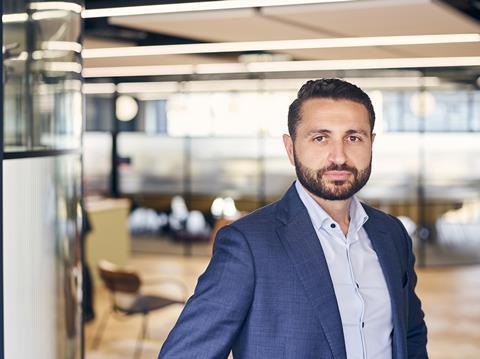
Despite the turbulent events of the past few months, Permasteelisa’s Europe chief executive Jalal Fitoury is still upbeat. The industry has become more attuned to dealing with geopolitical adversity, he says, in the wake of the covid pandemic and the war in Ukraine.
But he does admit that he would prefer the crisis in the Middle East – where conflict and fragile, temporary truces appear to alternate regularly and repeatedly – to finally be over: “The Middle East [situation] creates a lot of uncertainty, it creates nervousness. Are investment decisions still happening? And so on.”
He adds: “To be honest, I think the industry has become more resilient. Post covid and Ukraine, we have learnt to deal with a level of uncertainty.
“The mood is still positive because we can see resilience in the industry. In the past – when covid hit us – we were all in shock and thinking, ‘what does this mean?’. Most things got paused. I don’t see that now. It’s ‘let’s try to work around this and find a solution, rather than stop and pause’.”
London remains the core market
A couple of years ago, Liam Cummins, then Permasteelisa’s chief executive before being appointed by owner Atlas Holdings to become vice-chairman last year, said London was Permasteelisa’s most important market by far. Fitoury concurs and, given it has worked on around 250 buildings in the capital, it needs the city to continue to thrive.
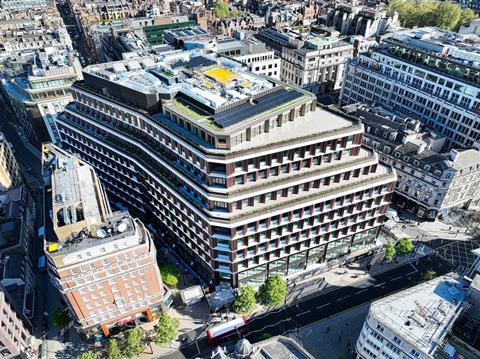
Among the most recent jobs on its CV are the Citi tower refurbishment in Canary Wharf, while it has just completed work on Bovis’s scheme to turn the flagship of collapsed retailer Debenhams into new office and retail space at 334 Oxford Street. Current jobs include towers at 60 Gracechurch Street and 50 Fenchurch Street, being built by Bovis and Multiplex respectively.
Bovis, of course, is also owned by Atlas – the US private equity firm that is backing the UK construction market and known to be looking at adding other firms to its portfolio. It recently made an unsuccessful bid for building products business Brickability.
“We operate independently,” says Fitoury. “We work with Bovis where it makes sense. We do exactly the same with Mace and Multiplex.”
For now, his focus is on London. “London continues to be forward thinking and the investment is coming in,” he says.
“Nobody can look into the future. If this conflict [in the Middle East] continues, at some point it will get more difficult. But the market has shown a lot of resilience. Uncertainty requires trust and collaboration, for people to work together to find solutions that work.”
The list of jobs that Permasteelisa is eyeing for the future include the redevelopment of 99 Bishopsgate in the City – most of the tenants, which include likely builder Multiplex, given its parent Brookfield owns the building, will be out by the end of the summer. It is also targetting the JP Morgan Chase tower at Canary Wharf, gathering momentum with the appointment of Alinea co-founder and tall buildings guru Steve Watts to a key role. Then there is One London – the renamed 1 Undershaft – and 18 Blackfriars, now called the Round.
There is, however, no doubt that commercial work in the capital has slowed, with 18 Blackfriars probably the most stalled of the four above given that contractors were due to be appointed to the scheme last summer.
The market has shown a lot of resilience. Uncertainty requires trust and collaboration, for people to work together to find solutions that work
But Fitoury says Permasteelisa has five pre-construction services agreements (PCSAs) on its books, which he adds is a good thing. While any contractor will always say that PCSAs need to be converted and turned into money, Fitoury adds: “PCSAs can be two things. They can help find an investment model that will work, or they can be stage three or four, where we’re starting to deliver the project and working through milestones for the developer.”
PCSAs also give both sides clarity – or they are supposed to – on what jobs will eventually cost.
Financial challenges and problem jobs
On the subject of costs, Permasteelisa’s accounts in the past three years have been hit by some significant losses. In its most recent results, the firm said pre-tax losses widened from £6.8m to £10.3m in the year to March 2025. Turnover, which is all from the UK, was up a quarter to £182m.
It said an organisational restructure would continue and be aimed at improving overall project performance. Last autumn the company made changes to its senior leadership to reflect a new regional focus, with chief operating officer Lee Marks and group chief people officer Nathalie Lion leaving.
The company said at the time: “The roles no longer form part of our structure as we have completed a critical phase of our transformation programme. As we announced recently, we have moved to a regionally-led leadership structure in each of our four strong operating regions.”
Fitoury says the firm is making progress on clearing problem jobs in the UK, previously described by the company as “complex legacy projects”. So, what went wrong?
“Sometimes we engaged on a project we didn’t fully understand and, on other occasions, [it was] inflationary pressure.” Most of the problem jobs, he says, were signed before the war in Ukraine broke out in 2022.
Fitoury says the UK accounts do not give the full picture of a global business which works in Europe, Asia, the US and Middle East. It files its global accounts in the Netherlands and the firm has a turnover of around €650m (£562m).
But Europe accounts for around 45% of group turnover – so around £253m – and of that London makes up about 70% of its business – £177m. It is important, then, to finally clear the decks.
Fitoury agrees: “It’s coming to an end now. The balance sheet will be stronger, we’re making good progress. We’ve reduced the risk tremendously and we’re continuing to do that. This year will see an improvement.”
Originally from Libya, Fitoury has been at the firm for 15 years having joined from consultant Royal Haskoning. He was working on the De Rotterdam project, architect OMA’s “vertical city” of three interconnected mixed-use towers completed in 2013 – and so was Scheldebouw, the Dutch facades firm owned by Permasteelisa since the 1990s.
That was his introduction to the firm, and he joined as a project manager. Since then, he has worked in the Netherlands, Scandinavia and the US. Now, he is based in London.
Future focus
He sees potential opportunities in the Middle East – given the region’s penchant for tall towers – with Saudi Arabia and the Gulf states of the UAE the immediate priorities.
Another opportunity is the refurbishment sector. “Big towers need to be brought back to life. We’re seeing less and less demolition,” he says.
To meet the growing demand for retrofit, Permasteelisa launched a new slimline Closed Cavity Façade technology earlier this year which it says will “transform projects by freeing up net internal area (NIA), reducing embodied carbon and improving shading”.
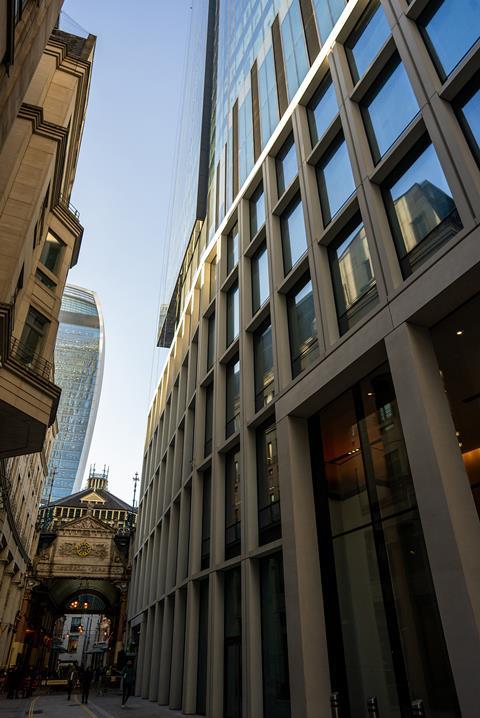
The new product still reduces heat gain and provides high transparency, but is similar to a single-skin wall, allowing developers to maximise the NIA of a building.
“[Refurbishment is] a massive market that we’re actively pursuing,” Fitoury says. “With sustainability targets, there need to be solutions to meet [today’s] performance criteria. With refurbishment, the starting point is understanding what’s out there.”
[Refurbishment is] a massive market that we’re actively pursuing. With sustainability targets, there needs to be solutions to meet [today’s] performance criteria
Part of all this is growing its FaçadeCare business, which aims to extend the lifespan of facades on buildings across the UK. The business has grown by 60% in the past 12 months.
FaçadeCare specialises in maintaining and protecting facades, which reduces running costs and improves environmental performance.
It is a new line of work and Fitoury reports growing demand: “A facade represents up to 30% of a building’s total construction cost, so extending its lifespan is crucial.
He thinks the volatility of the past few years – from covid to the Green party’s gains at last month’s local elections – is something the industry is now getting used to. “Are we able to absorb the shocks in the system? I think we’ve started to find momentum on how to deal with volatility in general.”
A brief history of Permasteelisa
The business can trace its roots back to 1868 when a German blacksmith called Josef Gartner set up a steel workshop in Gundelfingen an der Donau in Bavaria. It branched out into construction in the 1920s.
In the 1950s, Gartner completed a facade scheme in Cologne and, in 2001, Gartner joined Permasteelisa which had been set up in Italy in the 1970s.
In the meantime, Dutch firm Scheldebouw, which had been set up in the 1930s to make aluminium parts and furniture for ships and aircraft, had been bought by Permasteelisa in the 1990s. When Gartner was bought, the firm was effectively an amalgamation of all three firms.
Permasteelisa was bought in 2020 by current owner Atlas Holdings, nine years after being bought by Japanese firm Lixil. That firm had tried to sell it to a Chinese company three years before but its sale was blocked by the US government.
At the time, it was believed the US was worried about a business, which had carried out work on US embassies around the world, being owned by a Chinese firm.




No comments yet